Compare commits
| Author | SHA1 | Date | |
|---|---|---|---|
 leejet leejet
|
ee620760a2 | ||
|
leejet
|
aad5d345bb | ||
|
leejet
|
61895e4f78 | ||
|
leejet
|
7d652f317b |
@@ -1,10 +0,0 @@
|
||||
Checks: >
|
||||
modernize-make-shared,
|
||||
modernize-use-nullptr,
|
||||
modernize-use-override,
|
||||
modernize-pass-by-value,
|
||||
modernize-return-braced-init-list,
|
||||
modernize-deprecated-headers,
|
||||
HeaderFilterRegex: '^$'
|
||||
WarningsAsErrors: ''
|
||||
FormatStyle: none
|
||||
@@ -1,5 +1,4 @@
|
||||
build*/
|
||||
docs/
|
||||
test/
|
||||
|
||||
.cache/
|
||||
|
||||
@@ -1,73 +0,0 @@
|
||||
name: 🐞 Bug Report
|
||||
description: Report a bug or unexpected behavior
|
||||
title: "[Bug] "
|
||||
labels: ["bug"]
|
||||
body:
|
||||
- type: markdown
|
||||
attributes:
|
||||
value: |
|
||||
Please use this template and include as many details as possible to help us reproduce and fix the issue.
|
||||
- type: textarea
|
||||
id: commit
|
||||
attributes:
|
||||
label: Git commit
|
||||
description: Which commit are you trying to compile?
|
||||
placeholder: |
|
||||
$git rev-parse HEAD
|
||||
40a6a8710ec15b1b5db6b5a098409f6bc8f654a4
|
||||
validations:
|
||||
required: true
|
||||
- type: input
|
||||
id: os
|
||||
attributes:
|
||||
label: Operating System & Version
|
||||
placeholder: e.g. “Ubuntu 22.04”, “Windows 11 23H2”, “macOS 14.3”
|
||||
validations:
|
||||
required: true
|
||||
- type: dropdown
|
||||
id: backends
|
||||
attributes:
|
||||
label: GGML backends
|
||||
description: Which GGML backends do you know to be affected?
|
||||
options: [CPU, CUDA, HIP, Metal, Musa, SYCL, Vulkan, OpenCL]
|
||||
multiple: true
|
||||
validations:
|
||||
required: true
|
||||
- type: input
|
||||
id: cmd_arguments
|
||||
attributes:
|
||||
label: Command-line arguments used
|
||||
placeholder: The full command line you ran (with all flags)
|
||||
validations:
|
||||
required: true
|
||||
- type: textarea
|
||||
id: steps_to_reproduce
|
||||
attributes:
|
||||
label: Steps to reproduce
|
||||
placeholder: A step-by-step list of what you did
|
||||
validations:
|
||||
required: true
|
||||
- type: textarea
|
||||
id: expected_behavior
|
||||
attributes:
|
||||
label: What you expected to happen
|
||||
placeholder: Describe the expected behavior or result
|
||||
validations:
|
||||
required: true
|
||||
- type: textarea
|
||||
id: actual_behavior
|
||||
attributes:
|
||||
label: What actually happened
|
||||
placeholder: Describe what you saw instead (errors, logs, crash, etc.)
|
||||
validations:
|
||||
required: true
|
||||
- type: textarea
|
||||
id: logs_and_errors
|
||||
attributes:
|
||||
label: Logs / error messages / stack trace
|
||||
placeholder: Paste complete logs or error output
|
||||
- type: textarea
|
||||
id: additional_info
|
||||
attributes:
|
||||
label: Additional context / environment details
|
||||
placeholder: e.g. CPU model, GPU, RAM, model file versions, quantization type, etc.
|
||||
@@ -1,33 +0,0 @@
|
||||
name: 💡 Feature Request
|
||||
description: Suggest a new feature or improvement
|
||||
title: "[Feature] "
|
||||
labels: ["enhancement"]
|
||||
body:
|
||||
- type: markdown
|
||||
attributes:
|
||||
value: |
|
||||
Thank you for suggesting an improvement! Please fill in the fields below.
|
||||
- type: input
|
||||
id: summary
|
||||
attributes:
|
||||
label: Feature Summary
|
||||
placeholder: A one-line summary of the feature you’d like
|
||||
validations:
|
||||
required: true
|
||||
- type: textarea
|
||||
id: description
|
||||
attributes:
|
||||
label: Detailed Description
|
||||
placeholder: What problem does this solve? How do you expect it to work?
|
||||
validations:
|
||||
required: true
|
||||
- type: textarea
|
||||
id: alternatives
|
||||
attributes:
|
||||
label: Alternatives you considered
|
||||
placeholder: Any alternative designs or workarounds you tried
|
||||
- type: textarea
|
||||
id: additional_context
|
||||
attributes:
|
||||
label: Additional context
|
||||
placeholder: Any extra information (use cases, related functionalities, constraints)
|
||||
@@ -1,15 +0,0 @@
|
||||
## Summary
|
||||
|
||||
<!-- Describe what changed and why. Keep the PR focused on one clear change. -->
|
||||
|
||||
## Related Issue / Discussion
|
||||
|
||||
<!-- Link related issues, discussions, or previous PRs if applicable. -->
|
||||
|
||||
## Additional Information
|
||||
|
||||
<!-- Add verification notes, screenshots, sample output, or other context when applicable. -->
|
||||
|
||||
## Checklist
|
||||
|
||||
- [ ] I have read and confirmed this PR follows the [contribution guidelines](https://github.com/leejet/stable-diffusion.cpp/blob/master/CONTRIBUTING.md).
|
||||
@@ -14,8 +14,6 @@ on:
|
||||
paths:
|
||||
[
|
||||
".github/workflows/**",
|
||||
".dockerignore",
|
||||
"docker/Dockerfile*",
|
||||
"**/CMakeLists.txt",
|
||||
"**/Makefile",
|
||||
"**/*.h",
|
||||
@@ -23,16 +21,11 @@ on:
|
||||
"**/*.c",
|
||||
"**/*.cpp",
|
||||
"**/*.cu",
|
||||
"examples/server/frontend",
|
||||
"examples/server/frontend/**",
|
||||
]
|
||||
pull_request:
|
||||
types: [opened, synchronize, reopened]
|
||||
paths:
|
||||
[
|
||||
".github/workflows/**",
|
||||
".dockerignore",
|
||||
"docker/Dockerfile*",
|
||||
"**/CMakeLists.txt",
|
||||
"**/Makefile",
|
||||
"**/*.h",
|
||||
@@ -40,17 +33,11 @@ on:
|
||||
"**/*.c",
|
||||
"**/*.cpp",
|
||||
"**/*.cu",
|
||||
"examples/server/frontend",
|
||||
"examples/server/frontend/**",
|
||||
]
|
||||
|
||||
env:
|
||||
BRANCH_NAME: ${{ github.head_ref || github.ref_name }}
|
||||
|
||||
concurrency:
|
||||
group: ${{ github.workflow }}-${{ github.head_ref && github.ref || github.run_id }}
|
||||
cancel-in-progress: true
|
||||
|
||||
jobs:
|
||||
ubuntu-latest-cmake:
|
||||
runs-on: ubuntu-latest
|
||||
@@ -62,16 +49,6 @@ jobs:
|
||||
with:
|
||||
submodules: recursive
|
||||
|
||||
- name: Setup Node
|
||||
uses: actions/setup-node@v4
|
||||
with:
|
||||
node-version: 20
|
||||
|
||||
- name: Setup pnpm
|
||||
uses: pnpm/action-setup@v4
|
||||
with:
|
||||
version: 10.15.1
|
||||
|
||||
- name: Dependencies
|
||||
id: depends
|
||||
run: |
|
||||
@@ -83,13 +60,13 @@ jobs:
|
||||
run: |
|
||||
mkdir build
|
||||
cd build
|
||||
cmake .. -DSD_BUILD_SHARED_LIBS=ON -DGGML_NATIVE=OFF -DSD_BUILD_SHARED_GGML_LIB=ON -DGGML_BACKEND_DL=ON -DGGML_CPU_ALL_VARIANTS=ON -DCMAKE_BUILD_WITH_INSTALL_RPATH=ON -DCMAKE_INSTALL_RPATH='$ORIGIN'
|
||||
cmake .. -DGGML_AVX2=ON -DSD_BUILD_SHARED_LIBS=ON
|
||||
cmake --build . --config Release
|
||||
|
||||
- name: Get commit hash
|
||||
id: commit
|
||||
if: ${{ ( github.event_name == 'push' && github.ref == 'refs/heads/master' ) || github.event.inputs.create_release == 'true' }}
|
||||
uses: prompt/actions-commit-hash@v2
|
||||
if: ${{ ( github.event_name == 'push' && github.ref == 'refs/heads/main' ) || github.event.inputs.create_release == 'true' }}
|
||||
uses: pr-mpt/actions-commit-hash@v2
|
||||
|
||||
- name: Fetch system info
|
||||
id: system-info
|
||||
@@ -115,161 +92,6 @@ jobs:
|
||||
path: |
|
||||
sd-${{ env.BRANCH_NAME }}-${{ steps.commit.outputs.short }}-bin-${{ steps.system-info.outputs.OS_TYPE }}-${{ steps.system-info.outputs.OS_NAME }}-${{ steps.system-info.outputs.OS_VERSION }}-${{ steps.system-info.outputs.CPU_ARCH }}.zip
|
||||
|
||||
ubuntu-latest-cmake-vulkan:
|
||||
runs-on: ubuntu-latest
|
||||
|
||||
steps:
|
||||
- name: Clone
|
||||
id: checkout
|
||||
uses: actions/checkout@v3
|
||||
with:
|
||||
submodules: recursive
|
||||
|
||||
- name: Setup Node
|
||||
uses: actions/setup-node@v4
|
||||
with:
|
||||
node-version: 20
|
||||
|
||||
- name: Setup pnpm
|
||||
uses: pnpm/action-setup@v4
|
||||
with:
|
||||
version: 10.15.1
|
||||
|
||||
- name: Dependencies
|
||||
id: depends
|
||||
run: |
|
||||
sudo apt-get update
|
||||
sudo apt-get install build-essential libvulkan-dev glslc spirv-headers
|
||||
|
||||
- name: Build
|
||||
id: cmake_build
|
||||
run: |
|
||||
mkdir build
|
||||
cd build
|
||||
cmake .. -DSD_BUILD_SHARED_LIBS=ON -DSD_VULKAN=ON -DGGML_NATIVE=OFF -DSD_BUILD_SHARED_GGML_LIB=ON -DGGML_BACKEND_DL=ON -DGGML_CPU_ALL_VARIANTS=ON -DCMAKE_BUILD_WITH_INSTALL_RPATH=ON -DCMAKE_INSTALL_RPATH='$ORIGIN'
|
||||
cmake --build . --config Release
|
||||
|
||||
- name: Get commit hash
|
||||
id: commit
|
||||
if: ${{ ( github.event_name == 'push' && github.ref == 'refs/heads/master' ) || github.event.inputs.create_release == 'true' }}
|
||||
uses: prompt/actions-commit-hash@v2
|
||||
|
||||
- name: Fetch system info
|
||||
id: system-info
|
||||
run: |
|
||||
echo "CPU_ARCH=`uname -m`" >> "$GITHUB_OUTPUT"
|
||||
echo "OS_NAME=`lsb_release -s -i`" >> "$GITHUB_OUTPUT"
|
||||
echo "OS_VERSION=`lsb_release -s -r`" >> "$GITHUB_OUTPUT"
|
||||
echo "OS_TYPE=`uname -s`" >> "$GITHUB_OUTPUT"
|
||||
|
||||
- name: Pack artifacts
|
||||
id: pack_artifacts
|
||||
if: ${{ ( github.event_name == 'push' && github.ref == 'refs/heads/master' ) || github.event.inputs.create_release == 'true' }}
|
||||
run: |
|
||||
cp ggml/LICENSE ./build/bin/ggml.txt
|
||||
cp LICENSE ./build/bin/stable-diffusion.cpp.txt
|
||||
zip -j sd-${{ env.BRANCH_NAME }}-${{ steps.commit.outputs.short }}-bin-${{ steps.system-info.outputs.OS_TYPE }}-${{ steps.system-info.outputs.OS_NAME }}-${{ steps.system-info.outputs.OS_VERSION }}-${{ steps.system-info.outputs.CPU_ARCH }}-vulkan.zip ./build/bin/*
|
||||
|
||||
- name: Upload artifacts
|
||||
if: ${{ ( github.event_name == 'push' && github.ref == 'refs/heads/master' ) || github.event.inputs.create_release == 'true' }}
|
||||
uses: actions/upload-artifact@v4
|
||||
with:
|
||||
name: sd-${{ env.BRANCH_NAME }}-${{ steps.commit.outputs.short }}-bin-${{ steps.system-info.outputs.OS_TYPE }}-${{ steps.system-info.outputs.OS_NAME }}-${{ steps.system-info.outputs.OS_VERSION }}-${{ steps.system-info.outputs.CPU_ARCH }}-vulkan.zip
|
||||
path: |
|
||||
sd-${{ env.BRANCH_NAME }}-${{ steps.commit.outputs.short }}-bin-${{ steps.system-info.outputs.OS_TYPE }}-${{ steps.system-info.outputs.OS_NAME }}-${{ steps.system-info.outputs.OS_VERSION }}-${{ steps.system-info.outputs.CPU_ARCH }}-vulkan.zip
|
||||
|
||||
build-and-push-docker-images:
|
||||
name: Build and push container images
|
||||
if: ${{ github.event_name != 'pull_request' }}
|
||||
runs-on: ${{ matrix.runner }}
|
||||
|
||||
permissions:
|
||||
contents: read
|
||||
packages: write
|
||||
id-token: write
|
||||
attestations: write
|
||||
artifact-metadata: write
|
||||
|
||||
strategy:
|
||||
matrix:
|
||||
variant: [musa, sycl, vulkan, cuda]
|
||||
platform: [linux/amd64]
|
||||
runner: [ubuntu-latest]
|
||||
build-args: [""]
|
||||
tag-suffix: [""]
|
||||
include:
|
||||
- variant: cuda
|
||||
platform: linux/arm64
|
||||
runner: ubuntu-24.04-arm
|
||||
tag-suffix: "-spark"
|
||||
build-args: |
|
||||
CUDA_VERSION=13.0.0
|
||||
UBUNTU_VERSION=24.04
|
||||
CUDA_ARCHITECTURES=121
|
||||
GGML_CUDA_FA_ALL_QUANTS=ON
|
||||
GGML_CUDA_ENABLE_DYNAMIC_CPU_BACKENDS=OFF
|
||||
|
||||
env:
|
||||
REGISTRY: ghcr.io
|
||||
IMAGE_NAME: ${{ github.repository }}
|
||||
|
||||
steps:
|
||||
- name: Checkout
|
||||
uses: actions/checkout@v6
|
||||
with:
|
||||
submodules: recursive
|
||||
|
||||
- name: Setup Node
|
||||
uses: actions/setup-node@v4
|
||||
with:
|
||||
node-version: 20
|
||||
|
||||
- name: Setup pnpm
|
||||
uses: pnpm/action-setup@v4
|
||||
with:
|
||||
version: 10.15.1
|
||||
|
||||
- name: Get commit hash
|
||||
id: commit
|
||||
if: ${{ ( github.event_name == 'push' && github.ref == 'refs/heads/master' ) || github.event.inputs.create_release == 'true' }}
|
||||
uses: prompt/actions-commit-hash@v2
|
||||
|
||||
- name: Set up Docker Buildx
|
||||
uses: docker/setup-buildx-action@v3
|
||||
|
||||
- name: Log in to the container registry
|
||||
uses: docker/login-action@v3
|
||||
with:
|
||||
registry: ${{ env.REGISTRY }}
|
||||
username: ${{ github.actor }}
|
||||
password: ${{ secrets.GITHUB_TOKEN }}
|
||||
|
||||
- name: Extract metadata for Docker
|
||||
id: meta
|
||||
uses: docker/metadata-action@v5
|
||||
with:
|
||||
images: ${{ env.REGISTRY }}/${{ env.IMAGE_NAME }}
|
||||
|
||||
- name: Free Disk Space (Ubuntu)
|
||||
uses: jlumbroso/free-disk-space@v1.3.1
|
||||
with:
|
||||
# this might remove tools that are actually needed,
|
||||
# if set to "true" but frees about 6 GB
|
||||
tool-cache: false
|
||||
|
||||
- name: Build and push Docker image
|
||||
id: build-push
|
||||
uses: docker/build-push-action@v6
|
||||
with:
|
||||
context: .
|
||||
platforms: ${{ matrix.platform }}
|
||||
push: ${{ ( github.event_name == 'push' && github.ref == 'refs/heads/master' ) || github.event.inputs.create_release == 'true' }}
|
||||
file: docker/Dockerfile.${{ matrix.variant }}
|
||||
tags: ${{ env.REGISTRY }}/${{ env.IMAGE_NAME }}:${{ env.BRANCH_NAME }}-${{ matrix.variant }}${{ matrix.tag-suffix }}
|
||||
labels: ${{ steps.meta.outputs.labels }}
|
||||
annotations: ${{ steps.meta.outputs.annotations }}
|
||||
build-args: ${{ matrix.build-args }}
|
||||
|
||||
macOS-latest-cmake:
|
||||
runs-on: macos-latest
|
||||
|
||||
@@ -280,16 +102,6 @@ jobs:
|
||||
with:
|
||||
submodules: recursive
|
||||
|
||||
- name: Setup Node
|
||||
uses: actions/setup-node@v4
|
||||
with:
|
||||
node-version: 20
|
||||
|
||||
- name: Setup pnpm
|
||||
uses: pnpm/action-setup@v4
|
||||
with:
|
||||
version: 10.15.1
|
||||
|
||||
- name: Dependencies
|
||||
id: depends
|
||||
run: |
|
||||
@@ -306,8 +118,8 @@ jobs:
|
||||
|
||||
- name: Get commit hash
|
||||
id: commit
|
||||
if: ${{ ( github.event_name == 'push' && github.ref == 'refs/heads/master' ) || github.event.inputs.create_release == 'true' }}
|
||||
uses: prompt/actions-commit-hash@v2
|
||||
if: ${{ ( github.event_name == 'push' && github.ref == 'refs/heads/main' ) || github.event.inputs.create_release == 'true' }}
|
||||
uses: pr-mpt/actions-commit-hash@v2
|
||||
|
||||
- name: Fetch system info
|
||||
id: system-info
|
||||
@@ -334,20 +146,28 @@ jobs:
|
||||
sd-${{ env.BRANCH_NAME }}-${{ steps.commit.outputs.short }}-bin-${{ steps.system-info.outputs.OS_TYPE }}-${{ steps.system-info.outputs.OS_NAME }}-${{ steps.system-info.outputs.OS_VERSION }}-${{ steps.system-info.outputs.CPU_ARCH }}.zip
|
||||
|
||||
windows-latest-cmake:
|
||||
runs-on: windows-2022
|
||||
runs-on: windows-2025
|
||||
|
||||
env:
|
||||
VULKAN_VERSION: 1.4.328.1
|
||||
VULKAN_VERSION: 1.3.261.1
|
||||
|
||||
strategy:
|
||||
matrix:
|
||||
include:
|
||||
- build: "cpu"
|
||||
defines: "-DGGML_NATIVE=OFF -DSD_BUILD_SHARED_LIBS=ON -DSD_BUILD_SHARED_GGML_LIB=ON -DGGML_BACKEND_DL=ON -DGGML_CPU_ALL_VARIANTS=ON"
|
||||
- build: "cuda12"
|
||||
defines: "-DSD_CUDA=ON -DSD_BUILD_SHARED_LIBS=ON -DCMAKE_CUDA_ARCHITECTURES='61;70;75;80;86;89;90;100;120' -DCMAKE_CUDA_FLAGS='-Xcudafe \"--diag_suppress=177\" -Xcudafe \"--diag_suppress=550\"' -DGGML_NATIVE=OFF -DSD_BUILD_SHARED_GGML_LIB=ON -DGGML_BACKEND_DL=ON -DGGML_CPU_ALL_VARIANTS=ON"
|
||||
- build: "vulkan"
|
||||
defines: "-DSD_VULKAN=ON -DSD_BUILD_SHARED_LIBS=ON -DGGML_NATIVE=OFF -DSD_BUILD_SHARED_GGML_LIB=ON -DGGML_BACKEND_DL=ON -DGGML_CPU_ALL_VARIANTS=ON"
|
||||
- build: "noavx"
|
||||
defines: "-DGGML_NATIVE=OFF -DGGML_AVX=OFF -DGGML_AVX2=OFF -DGGML_FMA=OFF -DSD_BUILD_SHARED_LIBS=ON"
|
||||
- build: "avx2"
|
||||
defines: "-DGGML_NATIVE=OFF -DGGML_AVX2=ON -DSD_BUILD_SHARED_LIBS=ON"
|
||||
- build: "avx"
|
||||
defines: "-DGGML_NATIVE=OFF -DGGML_AVX=ON -DGGML_AVX2=OFF -DSD_BUILD_SHARED_LIBS=ON"
|
||||
- build: "avx512"
|
||||
defines: "-DGGML_NATIVE=OFF -DGGML_AVX512=ON -DGGML_AVX=ON -DGGML_AVX2=ON -DSD_BUILD_SHARED_LIBS=ON"
|
||||
# - build: "cuda12"
|
||||
# defines: "-DSD_CUDA=ON -DSD_BUILD_SHARED_LIBS=ON -DCMAKE_CUDA_ARCHITECTURES=90;89;86;80;75"
|
||||
# - build: "rocm5.5"
|
||||
# defines: '-G Ninja -DCMAKE_C_COMPILER=clang -DCMAKE_CXX_COMPILER=clang++ -DSD_HIPBLAS=ON -DCMAKE_BUILD_TYPE=Release -DAMDGPU_TARGETS="gfx1100;gfx1102;gfx1030" -DSD_BUILD_SHARED_LIBS=ON'
|
||||
- build: 'vulkan'
|
||||
defines: "-DSD_VULKAN=ON -DSD_BUILD_SHARED_LIBS=ON"
|
||||
steps:
|
||||
- name: Clone
|
||||
id: checkout
|
||||
@@ -355,50 +175,62 @@ jobs:
|
||||
with:
|
||||
submodules: recursive
|
||||
|
||||
- name: Setup Node
|
||||
uses: actions/setup-node@v4
|
||||
with:
|
||||
node-version: 20
|
||||
|
||||
- name: Setup pnpm
|
||||
uses: pnpm/action-setup@v4
|
||||
with:
|
||||
version: 10.15.1
|
||||
|
||||
- name: Install cuda-toolkit
|
||||
id: cuda-toolkit
|
||||
if: ${{ matrix.build == 'cuda12' }}
|
||||
uses: Jimver/cuda-toolkit@v0.2.22
|
||||
uses: Jimver/cuda-toolkit@v0.2.19
|
||||
with:
|
||||
cuda: "12.8.1"
|
||||
cuda: "12.6.2"
|
||||
method: "network"
|
||||
sub-packages: '["nvcc", "cudart", "cublas", "cublas_dev", "thrust", "visual_studio_integration"]'
|
||||
|
||||
- name: Install rocm-toolkit
|
||||
id: rocm-toolkit
|
||||
if: ${{ matrix.build == 'rocm5.5' }}
|
||||
uses: Cyberhan123/rocm-toolkit@v0.1.0
|
||||
with:
|
||||
rocm: "5.5.0"
|
||||
|
||||
- name: Install Ninja
|
||||
id: install-ninja
|
||||
if: ${{ matrix.build == 'rocm5.5' }}
|
||||
uses: urkle/action-get-ninja@v1
|
||||
with:
|
||||
version: 1.11.1
|
||||
- name: Install Vulkan SDK
|
||||
id: get_vulkan
|
||||
if: ${{ matrix.build == 'vulkan' }}
|
||||
run: |
|
||||
curl.exe -o $env:RUNNER_TEMP/VulkanSDK-Installer.exe -L "https://sdk.lunarg.com/sdk/download/${env:VULKAN_VERSION}/windows/vulkansdk-windows-X64-${env:VULKAN_VERSION}.exe"
|
||||
curl.exe -o $env:RUNNER_TEMP/VulkanSDK-Installer.exe -L "https://sdk.lunarg.com/sdk/download/${env:VULKAN_VERSION}/windows/VulkanSDK-${env:VULKAN_VERSION}-Installer.exe"
|
||||
& "$env:RUNNER_TEMP\VulkanSDK-Installer.exe" --accept-licenses --default-answer --confirm-command install
|
||||
Add-Content $env:GITHUB_ENV "VULKAN_SDK=C:\VulkanSDK\${env:VULKAN_VERSION}"
|
||||
Add-Content $env:GITHUB_PATH "C:\VulkanSDK\${env:VULKAN_VERSION}\bin"
|
||||
|
||||
- name: Activate MSVC environment
|
||||
id: msvc_dev_cmd
|
||||
uses: ilammy/msvc-dev-cmd@v1
|
||||
|
||||
- name: Build
|
||||
id: cmake_build
|
||||
run: |
|
||||
mkdir build
|
||||
cd build
|
||||
cmake .. -DCMAKE_CXX_FLAGS='/bigobj' -G Ninja -DCMAKE_C_COMPILER=cl.exe -DCMAKE_CXX_COMPILER=cl.exe -DCMAKE_BUILD_TYPE=Release ${{ matrix.defines }}
|
||||
cmake --build .
|
||||
cmake .. ${{ matrix.defines }}
|
||||
cmake --build . --config Release
|
||||
|
||||
- name: Check AVX512F support
|
||||
id: check_avx512f
|
||||
if: ${{ matrix.build == 'avx512' }}
|
||||
continue-on-error: true
|
||||
run: |
|
||||
cd build
|
||||
$vcdir = $(vswhere -latest -products * -requires Microsoft.VisualStudio.Component.VC.Tools.x86.x64 -property installationPath)
|
||||
$msvc = $(join-path $vcdir $('VC\Tools\MSVC\'+$(gc -raw $(join-path $vcdir 'VC\Auxiliary\Build\Microsoft.VCToolsVersion.default.txt')).Trim()))
|
||||
$cl = $(join-path $msvc 'bin\Hostx64\x64\cl.exe')
|
||||
echo 'int main(void){unsigned int a[4];__cpuid(a,7);return !(a[1]&65536);}' >> avx512f.c
|
||||
& $cl /O2 /GS- /kernel avx512f.c /link /nodefaultlib /entry:main
|
||||
.\avx512f.exe && echo "AVX512F: YES" && ( echo HAS_AVX512F=1 >> $env:GITHUB_ENV ) || echo "AVX512F: NO"
|
||||
|
||||
- name: Get commit hash
|
||||
id: commit
|
||||
if: ${{ ( github.event_name == 'push' && github.ref == 'refs/heads/master' ) || github.event.inputs.create_release == 'true' }}
|
||||
uses: prompt/actions-commit-hash@v2
|
||||
uses: pr-mpt/actions-commit-hash@v2
|
||||
|
||||
- name: Pack artifacts
|
||||
id: pack_artifacts
|
||||
@@ -445,388 +277,6 @@ jobs:
|
||||
path: |
|
||||
sd-${{ env.BRANCH_NAME }}-${{ steps.commit.outputs.short }}-bin-win-${{ matrix.build }}-x64.zip
|
||||
|
||||
windows-latest-rocm:
|
||||
runs-on: windows-2022
|
||||
|
||||
env:
|
||||
ROCM_VERSION: "7.13.0"
|
||||
GPU_TARGETS: "gfx906;gfx908;gfx90a;gfx942;gfx950;gfx1010;gfx1011;gfx1012;gfx1030;gfx1031;gfx1032;gfx1033;gfx1034;gfx1035;gfx1036;gfx1100;gfx1101;gfx1102;gfx1150;gfx1151;gfx1152;gfx1200;gfx1201"
|
||||
|
||||
steps:
|
||||
- uses: actions/checkout@v3
|
||||
with:
|
||||
submodules: recursive
|
||||
|
||||
- name: Setup Node
|
||||
uses: actions/setup-node@v4
|
||||
with:
|
||||
node-version: 20
|
||||
|
||||
- name: Setup pnpm
|
||||
uses: pnpm/action-setup@v4
|
||||
with:
|
||||
version: 10.15.1
|
||||
|
||||
- name: Cache ROCm Installation
|
||||
id: cache-rocm
|
||||
uses: actions/cache@v4
|
||||
with:
|
||||
path: C:\TheRock\build
|
||||
key: rocm-${{ env.ROCM_VERSION }}-gfx1151-${{ runner.os }}
|
||||
|
||||
- name: ccache
|
||||
uses: ggml-org/ccache-action@v1.2.16
|
||||
with:
|
||||
key: windows-latest-rocm-${{ env.ROCM_VERSION }}-x64
|
||||
evict-old-files: 1d
|
||||
|
||||
- name: Install ROCm
|
||||
if: steps.cache-rocm.outputs.cache-hit != 'true'
|
||||
run: |
|
||||
$ErrorActionPreference = "Stop"
|
||||
write-host "Downloading AMD ROCm ${{ env.ROCM_VERSION }} tarball"
|
||||
Invoke-WebRequest -Uri "https://repo.amd.com/rocm/tarball/therock-dist-windows-gfx1151-${{ env.ROCM_VERSION }}.tar.gz" -OutFile "${env:RUNNER_TEMP}\rocm.tar.gz"
|
||||
write-host "Extracting ROCm tarball"
|
||||
mkdir C:\TheRock\build -Force
|
||||
tar -xzf "${env:RUNNER_TEMP}\rocm.tar.gz" -C C:\TheRock\build --strip-components=1
|
||||
write-host "Completed ROCm extraction"
|
||||
|
||||
- name: Setup ROCm Environment
|
||||
run: |
|
||||
$rocmPath = "C:\TheRock\build"
|
||||
echo "HIP_PATH=$rocmPath" >> $env:GITHUB_ENV
|
||||
echo "HIP_DEVICE_LIB_PATH=$rocmPath\lib\llvm\amdgcn\bitcode" >> $env:GITHUB_ENV
|
||||
echo "HIP_PLATFORM=amd" >> $env:GITHUB_ENV
|
||||
echo "LLVM_PATH=$rocmPath\lib\llvm" >> $env:GITHUB_ENV
|
||||
echo "$rocmPath\bin" >> $env:GITHUB_PATH
|
||||
echo "$rocmPath\lib\llvm\bin" >> $env:GITHUB_PATH
|
||||
|
||||
- name: Build
|
||||
run: |
|
||||
mkdir build
|
||||
cd build
|
||||
cmake .. `
|
||||
-G "Unix Makefiles" `
|
||||
-DCMAKE_PREFIX_PATH="${env:HIP_PATH}" `
|
||||
-DSD_HIPBLAS=ON `
|
||||
-DSD_BUILD_SHARED_LIBS=ON `
|
||||
-DGGML_NATIVE=OFF `
|
||||
-DCMAKE_C_COMPILER="${env:HIP_PATH}\lib\llvm\bin\clang.exe" `
|
||||
-DCMAKE_CXX_COMPILER="${env:HIP_PATH}\lib\llvm\bin\clang++.exe" `
|
||||
-DCMAKE_HIP_COMPILER="${env:HIP_PATH}\lib\llvm\bin\clang.exe" `
|
||||
-DHIP_PATH="${env:HIP_PATH}" `
|
||||
-DCMAKE_BUILD_TYPE=Release `
|
||||
-DGPU_TARGETS="${{ env.GPU_TARGETS }}"
|
||||
cmake --build . --config Release --parallel ${env:NUMBER_OF_PROCESSORS}
|
||||
|
||||
- name: Get commit hash
|
||||
id: commit
|
||||
if: ${{ ( github.event_name == 'push' && github.ref == 'refs/heads/master' ) || github.event.inputs.create_release == 'true' }}
|
||||
uses: pr-mpt/actions-commit-hash@v2
|
||||
|
||||
- name: Pack artifacts
|
||||
if: ${{ ( github.event_name == 'push' && github.ref == 'refs/heads/master' ) || github.event.inputs.create_release == 'true' }}
|
||||
run: |
|
||||
$ErrorActionPreference = "Stop"
|
||||
$dst = "build\bin"
|
||||
$rocmBin = Join-Path "${env:HIP_PATH}" "bin"
|
||||
$requiredRocmPaths = @(
|
||||
(Join-Path $rocmBin "rocblas.dll"),
|
||||
(Join-Path $rocmBin "rocblas\library")
|
||||
)
|
||||
foreach ($path in $requiredRocmPaths) {
|
||||
if (!(Test-Path $path)) {
|
||||
throw "Missing ROCm runtime dependency: $path"
|
||||
}
|
||||
}
|
||||
|
||||
foreach ($pattern in @("rocblas*.dll", "hipblas*.dll", "libhipblas*.dll")) {
|
||||
Copy-Item -Path (Join-Path $rocmBin $pattern) -Destination $dst -Force -ErrorAction SilentlyContinue
|
||||
}
|
||||
|
||||
foreach ($dir in @("rocblas", "hipblaslt")) {
|
||||
$src = Join-Path $rocmBin $dir
|
||||
if (Test-Path $src) {
|
||||
Copy-Item -Path $src -Destination $dst -Recurse -Force
|
||||
}
|
||||
}
|
||||
|
||||
7z a sd-${{ env.BRANCH_NAME }}-${{ steps.commit.outputs.short }}-bin-win-rocm-${{ env.ROCM_VERSION }}-x64.zip .\build\bin\*
|
||||
|
||||
- name: Upload artifacts
|
||||
if: ${{ ( github.event_name == 'push' && github.ref == 'refs/heads/master' ) || github.event.inputs.create_release == 'true' }}
|
||||
uses: actions/upload-artifact@v4
|
||||
with:
|
||||
name: sd-${{ env.BRANCH_NAME }}-${{ steps.commit.outputs.short }}-bin-win-rocm-${{ env.ROCM_VERSION }}-x64.zip
|
||||
path: |
|
||||
sd-${{ env.BRANCH_NAME }}-${{ steps.commit.outputs.short }}-bin-win-rocm-${{ env.ROCM_VERSION }}-x64.zip
|
||||
|
||||
windows-latest-cmake-hip:
|
||||
runs-on: windows-2022
|
||||
|
||||
env:
|
||||
HIPSDK_INSTALLER_VERSION: "26.Q1"
|
||||
ROCM_VERSION: "7.1.1"
|
||||
GPU_TARGETS: "gfx1150;gfx1151;gfx1200;gfx1201;gfx1100;gfx1101;gfx1102;gfx1030;gfx1031;gfx1032"
|
||||
|
||||
steps:
|
||||
- uses: actions/checkout@v3
|
||||
with:
|
||||
submodules: recursive
|
||||
|
||||
- name: Setup Node
|
||||
uses: actions/setup-node@v4
|
||||
with:
|
||||
node-version: 20
|
||||
|
||||
- name: Setup pnpm
|
||||
uses: pnpm/action-setup@v4
|
||||
with:
|
||||
version: 10.15.1
|
||||
|
||||
- name: Cache ROCm Installation
|
||||
id: cache-rocm
|
||||
uses: actions/cache@v4
|
||||
with:
|
||||
path: C:\Program Files\AMD\ROCm
|
||||
key: rocm-${{ env.HIPSDK_INSTALLER_VERSION }}-${{ runner.os }}
|
||||
|
||||
- name: ccache
|
||||
uses: ggml-org/ccache-action@v1.2.16
|
||||
with:
|
||||
key: windows-latest-cmake-hip-${{ env.HIPSDK_INSTALLER_VERSION }}-x64
|
||||
evict-old-files: 1d
|
||||
|
||||
- name: Install ROCm
|
||||
if: steps.cache-rocm.outputs.cache-hit != 'true'
|
||||
run: |
|
||||
$ErrorActionPreference = "Stop"
|
||||
write-host "Downloading AMD HIP SDK Installer"
|
||||
Invoke-WebRequest -Uri "https://download.amd.com/developer/eula/rocm-hub/AMD-Software-PRO-Edition-${{ env.HIPSDK_INSTALLER_VERSION }}-Win11-For-HIP.exe" -OutFile "${env:RUNNER_TEMP}\rocm-install.exe"
|
||||
write-host "Installing AMD HIP SDK"
|
||||
$proc = Start-Process "${env:RUNNER_TEMP}\rocm-install.exe" -ArgumentList '-install' -NoNewWindow -PassThru
|
||||
$completed = $proc.WaitForExit(600000)
|
||||
if (-not $completed) {
|
||||
Write-Error "ROCm installation timed out after 10 minutes. Killing the process"
|
||||
$proc.Kill()
|
||||
exit 1
|
||||
}
|
||||
if ($proc.ExitCode -ne 0) {
|
||||
Write-Error "ROCm installation failed with exit code $($proc.ExitCode)"
|
||||
exit 1
|
||||
}
|
||||
write-host "Completed AMD HIP SDK installation"
|
||||
|
||||
- name: Verify ROCm
|
||||
run: |
|
||||
# Find and test ROCm installation
|
||||
$clangPath = Get-ChildItem 'C:\Program Files\AMD\ROCm\*\bin\clang.exe' | Select-Object -First 1
|
||||
if (-not $clangPath) {
|
||||
Write-Error "ROCm installation not found"
|
||||
exit 1
|
||||
}
|
||||
& $clangPath.FullName --version
|
||||
# Set HIP_PATH environment variable for later steps
|
||||
echo "HIP_PATH=$(Resolve-Path 'C:\Program Files\AMD\ROCm\*\bin\clang.exe' | split-path | split-path)" >> $env:GITHUB_ENV
|
||||
|
||||
- name: Build
|
||||
run: |
|
||||
mkdir build
|
||||
cd build
|
||||
$env:CMAKE_PREFIX_PATH="${env:HIP_PATH}"
|
||||
cmake .. `
|
||||
-G "Unix Makefiles" `
|
||||
-DSD_HIPBLAS=ON `
|
||||
-DSD_BUILD_SHARED_LIBS=ON `
|
||||
-DGGML_NATIVE=OFF `
|
||||
-DCMAKE_C_COMPILER=clang `
|
||||
-DCMAKE_CXX_COMPILER=clang++ `
|
||||
-DCMAKE_BUILD_TYPE=Release `
|
||||
-DGPU_TARGETS="${{ env.GPU_TARGETS }}"
|
||||
cmake --build . --config Release --parallel ${env:NUMBER_OF_PROCESSORS}
|
||||
|
||||
- name: Get commit hash
|
||||
id: commit
|
||||
if: ${{ ( github.event_name == 'push' && github.ref == 'refs/heads/master' ) || github.event.inputs.create_release == 'true' }}
|
||||
uses: prompt/actions-commit-hash@v2
|
||||
|
||||
- name: Pack artifacts
|
||||
if: ${{ ( github.event_name == 'push' && github.ref == 'refs/heads/master' ) || github.event.inputs.create_release == 'true' }}
|
||||
run: |
|
||||
md "build\bin\rocblas\library\"
|
||||
md "build\bin\hipblaslt\library"
|
||||
cp "${env:HIP_PATH}\bin\libhipblas.dll" "build\bin\"
|
||||
cp "${env:HIP_PATH}\bin\libhipblaslt.dll" "build\bin\"
|
||||
cp "${env:HIP_PATH}\bin\rocblas.dll" "build\bin\"
|
||||
cp "${env:HIP_PATH}\bin\rocblas\library\*" "build\bin\rocblas\library\"
|
||||
cp "${env:HIP_PATH}\bin\hipblaslt\library\*" "build\bin\hipblaslt\library\"
|
||||
7z a sd-${{ env.BRANCH_NAME }}-${{ steps.commit.outputs.short }}-bin-win-rocm-${{ env.ROCM_VERSION }}-x64.zip .\build\bin\*
|
||||
|
||||
- name: Upload artifacts
|
||||
if: ${{ ( github.event_name == 'push' && github.ref == 'refs/heads/master' ) || github.event.inputs.create_release == 'true' }}
|
||||
uses: actions/upload-artifact@v4
|
||||
with:
|
||||
name: sd-${{ env.BRANCH_NAME }}-${{ steps.commit.outputs.short }}-bin-win-rocm-${{ env.ROCM_VERSION }}-x64.zip
|
||||
path: |
|
||||
sd-${{ env.BRANCH_NAME }}-${{ steps.commit.outputs.short }}-bin-win-rocm-${{ env.ROCM_VERSION }}-x64.zip
|
||||
|
||||
ubuntu-latest-rocm:
|
||||
runs-on: ubuntu-24.04
|
||||
|
||||
env:
|
||||
UBUNTU_VERSION: "24.04"
|
||||
|
||||
strategy:
|
||||
matrix:
|
||||
include:
|
||||
- ROCM_VERSION: "7.2.1"
|
||||
gpu_targets: "gfx908;gfx90a;gfx942;gfx1030;gfx1031;gfx1032;gfx1100;gfx1101;gfx1102;gfx1151;gfx1150;gfx1200;gfx1201"
|
||||
build: 'x64'
|
||||
- ROCM_VERSION: "7.13.0"
|
||||
gpu_targets: "gfx906;gfx908;gfx90a;gfx942;gfx950;gfx1010;gfx1011;gfx1012;gfx1030;gfx1031;gfx1032;gfx1033;gfx1034;gfx1035;gfx1036;gfx1100;gfx1101;gfx1102;gfx1150;gfx1151;gfx1152;gfx1200;gfx1201"
|
||||
build: x64
|
||||
|
||||
steps:
|
||||
- name: Clone
|
||||
id: checkout
|
||||
uses: actions/checkout@v6
|
||||
with:
|
||||
submodules: recursive
|
||||
|
||||
- name: ccache
|
||||
uses: ggml-org/ccache-action@v1.2.16
|
||||
with:
|
||||
key: ubuntu-rocm-cmake-${{ matrix.ROCM_VERSION }}-${{ matrix.build }}
|
||||
evict-old-files: 1d
|
||||
|
||||
- name: Dependencies
|
||||
id: depends
|
||||
run: |
|
||||
sudo apt install -y build-essential cmake wget zip ninja-build
|
||||
|
||||
- name: Free disk space
|
||||
run: |
|
||||
df -h
|
||||
|
||||
# Remove preinstalled SDKs and caches not needed for this job before
|
||||
# installing ROCm. The legacy ROCm apt packages are large enough to
|
||||
# exhaust ubuntu-latest if cleanup runs after installation.
|
||||
sudo rm -rf /usr/share/dotnet || true
|
||||
sudo rm -rf /usr/local/lib/android || true
|
||||
sudo rm -rf /opt/ghc || true
|
||||
sudo rm -rf /usr/local/.ghcup || true
|
||||
sudo rm -rf /opt/hostedtoolcache || true
|
||||
sudo rm -rf /usr/share/swift || true
|
||||
sudo rm -rf /usr/local/share/boost || true
|
||||
docker system prune -af || true
|
||||
|
||||
sudo apt clean
|
||||
df -h
|
||||
|
||||
- name: Setup Legacy ROCm
|
||||
if: matrix.ROCM_VERSION == '7.2.1'
|
||||
id: legacy_env
|
||||
run: |
|
||||
sudo mkdir --parents --mode=0755 /etc/apt/keyrings
|
||||
wget https://repo.radeon.com/rocm/rocm.gpg.key -O - | \
|
||||
gpg --dearmor | sudo tee /etc/apt/keyrings/rocm.gpg > /dev/null
|
||||
|
||||
sudo tee /etc/apt/sources.list.d/rocm.list << EOF
|
||||
deb [arch=amd64 signed-by=/etc/apt/keyrings/rocm.gpg] https://repo.radeon.com/rocm/apt/${{ matrix.ROCM_VERSION }} noble main
|
||||
EOF
|
||||
|
||||
sudo tee /etc/apt/preferences.d/rocm-pin-600 << EOF
|
||||
Package: *
|
||||
Pin: release o=repo.radeon.com
|
||||
Pin-Priority: 600
|
||||
EOF
|
||||
|
||||
sudo apt update
|
||||
sudo apt-get install -y libssl-dev rocm-hip-sdk
|
||||
|
||||
- name: Setup TheRock
|
||||
if: matrix.ROCM_VERSION != '7.2.1'
|
||||
id: therock_env
|
||||
run: |
|
||||
wget https://repo.amd.com/rocm/tarball/therock-dist-linux-gfx1151-${{ matrix.ROCM_VERSION }}.tar.gz
|
||||
mkdir install
|
||||
tar -xf *.tar.gz -C install
|
||||
export ROCM_PATH=$(pwd)/install
|
||||
echo ROCM_PATH=$ROCM_PATH >> $GITHUB_ENV
|
||||
echo PATH=$PATH:$ROCM_PATH/bin >> $GITHUB_ENV
|
||||
echo LD_LIBRARY_PATH=$ROCM_PATH/lib:$ROCM_PATH/llvm/lib:$ROCM_PATH/lib/rocprofiler-systems >> $GITHUB_ENV
|
||||
|
||||
# setup-node installs into /opt/hostedtoolcache, which is removed above.
|
||||
# Keep Node/pnpm setup after disk cleanup so the server frontend can be embedded.
|
||||
- name: Setup Node
|
||||
uses: actions/setup-node@v4
|
||||
with:
|
||||
node-version: 20
|
||||
|
||||
- name: Setup pnpm
|
||||
uses: pnpm/action-setup@v4
|
||||
with:
|
||||
version: 10.15.1
|
||||
|
||||
- name: Build
|
||||
id: cmake_build
|
||||
run: |
|
||||
mkdir build
|
||||
cd build
|
||||
cmake .. -G Ninja \
|
||||
-DCMAKE_HIP_COMPILER="$(hipconfig -l)/clang" \
|
||||
-DCMAKE_HIP_FLAGS="-mllvm --amdgpu-unroll-threshold-local=600" \
|
||||
-DCMAKE_BUILD_TYPE=Release \
|
||||
-DSD_HIPBLAS=ON \
|
||||
-DHIP_PLATFORM=amd \
|
||||
-DGPU_TARGETS="${{ matrix.gpu_targets }}" \
|
||||
-DCMAKE_BUILD_WITH_INSTALL_RPATH=ON \
|
||||
-DCMAKE_POSITION_INDEPENDENT_CODE=ON \
|
||||
-DCMAKE_INSTALL_RPATH='$ORIGIN' \
|
||||
-DGGML_NATIVE=OFF \
|
||||
-DSD_BUILD_SHARED_GGML_LIB=ON \
|
||||
-DGGML_BACKEND_DL=ON \
|
||||
-DGGML_CPU_ALL_VARIANTS=ON \
|
||||
-DSD_BUILD_SHARED_LIBS=ON
|
||||
cmake --build . --config Release
|
||||
|
||||
- name: Get commit hash
|
||||
id: commit
|
||||
if: ${{ ( github.event_name == 'push' && github.ref == 'refs/heads/master' ) || github.event.inputs.create_release == 'true' }}
|
||||
uses: prompt/actions-commit-hash@v2
|
||||
|
||||
- name: Prepare artifacts
|
||||
id: prepare_artifacts
|
||||
if: ${{ ( github.event_name == 'push' && github.ref == 'refs/heads/master' ) || github.event.inputs.create_release == 'true' }}
|
||||
run: |
|
||||
# Copy licenses
|
||||
cp ggml/LICENSE ./build/bin/ggml.txt
|
||||
cp LICENSE ./build/bin/stable-diffusion.cpp.txt
|
||||
|
||||
- name: Fetch system info
|
||||
id: system-info
|
||||
run: |
|
||||
echo "CPU_ARCH=`uname -m`" >> "$GITHUB_OUTPUT"
|
||||
echo "OS_NAME=`lsb_release -s -i`" >> "$GITHUB_OUTPUT"
|
||||
echo "OS_VERSION=`lsb_release -s -r`" >> "$GITHUB_OUTPUT"
|
||||
echo "OS_TYPE=`uname -s`" >> "$GITHUB_OUTPUT"
|
||||
|
||||
- name: Pack artifacts
|
||||
id: pack_artifacts
|
||||
if: ${{ ( github.event_name == 'push' && github.ref == 'refs/heads/master' ) || github.event.inputs.create_release == 'true' }}
|
||||
run: |
|
||||
cp ggml/LICENSE ./build/bin/ggml.txt
|
||||
cp LICENSE ./build/bin/stable-diffusion.cpp.txt
|
||||
zip -y -r sd-${{ env.BRANCH_NAME }}-${{ steps.commit.outputs.short }}-bin-${{ steps.system-info.outputs.OS_TYPE }}-Ubuntu-${{ env.UBUNTU_VERSION }}-${{ steps.system-info.outputs.CPU_ARCH }}-rocm-${{ matrix.ROCM_VERSION }}.zip ./build/bin
|
||||
|
||||
- name: Upload artifacts
|
||||
if: ${{ ( github.event_name == 'push' && github.ref == 'refs/heads/master' ) || github.event.inputs.create_release == 'true' }}
|
||||
uses: actions/upload-artifact@v4
|
||||
with:
|
||||
name: sd-${{ env.BRANCH_NAME }}-${{ steps.commit.outputs.short }}-bin-${{ steps.system-info.outputs.OS_TYPE }}-Ubuntu-${{ env.UBUNTU_VERSION }}-${{ steps.system-info.outputs.CPU_ARCH }}-rocm-${{ matrix.ROCM_VERSION }}.zip
|
||||
path: |
|
||||
sd-${{ env.BRANCH_NAME }}-${{ steps.commit.outputs.short }}-bin-${{ steps.system-info.outputs.OS_TYPE }}-Ubuntu-${{ env.UBUNTU_VERSION }}-${{ steps.system-info.outputs.CPU_ARCH }}-rocm-${{ matrix.ROCM_VERSION }}.zip
|
||||
|
||||
release:
|
||||
if: ${{ ( github.event_name == 'push' && github.ref == 'refs/heads/master' ) || github.event.inputs.create_release == 'true' }}
|
||||
|
||||
@@ -834,13 +284,8 @@ jobs:
|
||||
|
||||
needs:
|
||||
- ubuntu-latest-cmake
|
||||
- ubuntu-latest-cmake-vulkan
|
||||
- ubuntu-latest-rocm
|
||||
- build-and-push-docker-images
|
||||
- macOS-latest-cmake
|
||||
- windows-latest-cmake
|
||||
- windows-latest-cmake-hip
|
||||
- windows-latest-rocm
|
||||
|
||||
steps:
|
||||
- name: Clone
|
||||
@@ -860,10 +305,11 @@ jobs:
|
||||
id: commit_count
|
||||
run: |
|
||||
echo "count=$(git rev-list --count HEAD)" >> $GITHUB_OUTPUT
|
||||
echo "DEBUG: commit count = $(git rev-list --count HEAD)"
|
||||
|
||||
- name: Get commit hash
|
||||
id: commit
|
||||
uses: prompt/actions-commit-hash@v2
|
||||
uses: pr-mpt/actions-commit-hash@v2
|
||||
|
||||
- name: Create release
|
||||
id: create_release
|
||||
@@ -872,7 +318,10 @@ jobs:
|
||||
env:
|
||||
GITHUB_TOKEN: ${{ secrets.GITHUB_TOKEN }}
|
||||
with:
|
||||
tag_name: ${{ format('{0}-{1}-{2}', env.BRANCH_NAME, steps.commit_count.outputs.count, steps.commit.outputs.short) }}
|
||||
tag_name: >
|
||||
${{ github.ref_name == 'master' &&
|
||||
format('release_{0}_{1}', steps.commit_count.outputs.count, steps.commit.outputs.short) ||
|
||||
format('{0}-{1}', env.BRANCH_NAME, steps.commit.outputs.short) }}
|
||||
|
||||
- name: Upload release
|
||||
id: upload_release
|
||||
|
||||
@@ -1,55 +0,0 @@
|
||||
name: Close inactive PRs
|
||||
|
||||
on:
|
||||
schedule:
|
||||
# Run daily. GitHub cron schedules use UTC.
|
||||
- cron: "30 1 * * *"
|
||||
workflow_dispatch:
|
||||
inputs:
|
||||
debug_only:
|
||||
description: "Dry run: log intended actions without changing PRs"
|
||||
required: false
|
||||
default: false
|
||||
type: boolean
|
||||
|
||||
permissions:
|
||||
issues: write
|
||||
pull-requests: write
|
||||
|
||||
concurrency:
|
||||
group: ${{ github.workflow }}
|
||||
cancel-in-progress: false
|
||||
|
||||
jobs:
|
||||
stale-prs:
|
||||
runs-on: ubuntu-latest
|
||||
steps:
|
||||
- name: Mark and close inactive PRs
|
||||
uses: actions/stale@v10
|
||||
with:
|
||||
days-before-issue-stale: -1
|
||||
days-before-issue-close: -1
|
||||
|
||||
days-before-pr-stale: 365
|
||||
days-before-pr-close: 7
|
||||
|
||||
stale-pr-label: pr:inactive
|
||||
close-pr-label: pr:auto-closed
|
||||
exempt-pr-labels: pr:keep-open
|
||||
|
||||
stale-pr-message: >
|
||||
This PR has been inactive for 365 days. If there is no new activity
|
||||
within 7 days, it will be closed automatically. Comment, push new
|
||||
commits, or remove the pr:inactive label to keep it open. Add
|
||||
pr:keep-open to exempt it from future inactive PR cleanup.
|
||||
|
||||
close-pr-message: >
|
||||
Closing this PR because it has had no activity for 7 days after
|
||||
being marked inactive. If this is still useful or ready to move
|
||||
forward, feel free to reopen it with fresh context or updated
|
||||
details. Sorry for any inconvenience.
|
||||
|
||||
remove-pr-stale-when-updated: true
|
||||
delete-branch: false
|
||||
operations-per-run: 100
|
||||
debug-only: ${{ github.event_name == 'workflow_dispatch' && inputs.debug_only || false }}
|
||||
@@ -12,4 +12,3 @@ test/
|
||||
output*.png
|
||||
models*
|
||||
*.log
|
||||
preview.png
|
||||
|
||||
@@ -1,12 +1,3 @@
|
||||
[submodule "ggml"]
|
||||
path = ggml
|
||||
url = https://github.com/leejet/ggml.git
|
||||
[submodule "examples/server/frontend"]
|
||||
path = examples/server/frontend
|
||||
url = https://github.com/leejet/sdcpp-webui.git
|
||||
[submodule "thirdparty/libwebp"]
|
||||
path = thirdparty/libwebp
|
||||
url = https://github.com/webmproject/libwebp.git
|
||||
[submodule "thirdparty/libwebm"]
|
||||
path = thirdparty/libwebm
|
||||
url = https://github.com/webmproject/libwebm.git
|
||||
url = https://github.com/ggml-org/ggml.git
|
||||
|
||||
@@ -8,71 +8,15 @@ if (NOT XCODE AND NOT MSVC AND NOT CMAKE_BUILD_TYPE)
|
||||
set_property(CACHE CMAKE_BUILD_TYPE PROPERTY STRINGS "Debug" "Release" "MinSizeRel" "RelWithDebInfo")
|
||||
endif()
|
||||
|
||||
if (MSVC)
|
||||
add_compile_definitions(_CRT_SECURE_NO_WARNINGS)
|
||||
add_compile_definitions(_SILENCE_CXX17_CODECVT_HEADER_DEPRECATION_WARNING)
|
||||
add_compile_options(
|
||||
$<$<COMPILE_LANGUAGE:C>:/MP>
|
||||
$<$<COMPILE_LANGUAGE:C>:/utf-8>
|
||||
$<$<COMPILE_LANGUAGE:CXX>:/MP>
|
||||
$<$<COMPILE_LANGUAGE:CXX>:/utf-8>
|
||||
)
|
||||
endif()
|
||||
|
||||
set(CMAKE_LIBRARY_OUTPUT_DIRECTORY ${CMAKE_BINARY_DIR}/bin)
|
||||
set(CMAKE_RUNTIME_OUTPUT_DIRECTORY ${CMAKE_BINARY_DIR}/bin)
|
||||
|
||||
if(APPLE)
|
||||
function(sd_set_macos_rpaths target)
|
||||
get_target_property(target_type ${target} TYPE)
|
||||
if(target_type STREQUAL "EXECUTABLE")
|
||||
set(runtime_paths "@executable_path" "@executable_path/../lib")
|
||||
elseif(target_type STREQUAL "SHARED_LIBRARY" OR target_type STREQUAL "MODULE_LIBRARY")
|
||||
set(runtime_paths "@loader_path" "@loader_path/../lib")
|
||||
set_target_properties(${target} PROPERTIES
|
||||
MACOSX_RPATH ON
|
||||
INSTALL_NAME_DIR "@rpath"
|
||||
BUILD_WITH_INSTALL_NAME_DIR ON
|
||||
)
|
||||
else()
|
||||
return()
|
||||
endif()
|
||||
|
||||
# Release artifacts zip the build output directly, so keep macOS rpaths relocatable.
|
||||
set_target_properties(${target} PROPERTIES
|
||||
BUILD_RPATH "${runtime_paths}"
|
||||
INSTALL_RPATH "${runtime_paths}"
|
||||
BUILD_WITH_INSTALL_RPATH ON
|
||||
)
|
||||
endfunction()
|
||||
endif()
|
||||
|
||||
if(CMAKE_SOURCE_DIR STREQUAL CMAKE_CURRENT_SOURCE_DIR)
|
||||
set(SD_STANDALONE ON)
|
||||
else()
|
||||
set(SD_STANDALONE OFF)
|
||||
endif()
|
||||
|
||||
set(SD_SUBMODULE_WEBP FALSE)
|
||||
if(EXISTS "${CMAKE_CURRENT_SOURCE_DIR}/thirdparty/libwebp/CMakeLists.txt")
|
||||
set(SD_SUBMODULE_WEBP TRUE)
|
||||
endif()
|
||||
if(SD_SUBMODULE_WEBP)
|
||||
set(SD_WEBP_DEFAULT ON)
|
||||
else()
|
||||
set(SD_WEBP_DEFAULT ${SD_USE_SYSTEM_WEBP})
|
||||
endif()
|
||||
|
||||
set(SD_SUBMODULE_WEBM FALSE)
|
||||
if(EXISTS "${CMAKE_CURRENT_SOURCE_DIR}/thirdparty/libwebm/CMakeLists.txt")
|
||||
set(SD_SUBMODULE_WEBM TRUE)
|
||||
endif()
|
||||
if(SD_SUBMODULE_WEBM)
|
||||
set(SD_WEBM_DEFAULT ON)
|
||||
else()
|
||||
set(SD_WEBM_DEFAULT ${SD_USE_SYSTEM_WEBM})
|
||||
endif()
|
||||
|
||||
#
|
||||
# Option list
|
||||
#
|
||||
@@ -80,10 +24,6 @@ endif()
|
||||
# general
|
||||
#option(SD_BUILD_TESTS "sd: build tests" ${SD_STANDALONE})
|
||||
option(SD_BUILD_EXAMPLES "sd: build examples" ${SD_STANDALONE})
|
||||
option(SD_WEBP "sd: enable WebP image I/O support" ${SD_WEBP_DEFAULT})
|
||||
option(SD_USE_SYSTEM_WEBP "sd: link against system libwebp" OFF)
|
||||
option(SD_WEBM "sd: enable WebM video output support" ${SD_WEBM_DEFAULT})
|
||||
option(SD_USE_SYSTEM_WEBM "sd: link against system libwebm" OFF)
|
||||
option(SD_CUDA "sd: cuda backend" OFF)
|
||||
option(SD_HIPBLAS "sd: rocm backend" OFF)
|
||||
option(SD_METAL "sd: metal backend" OFF)
|
||||
@@ -91,212 +31,81 @@ option(SD_VULKAN "sd: vulkan backend" OFF)
|
||||
option(SD_OPENCL "sd: opencl backend" OFF)
|
||||
option(SD_SYCL "sd: sycl backend" OFF)
|
||||
option(SD_MUSA "sd: musa backend" OFF)
|
||||
option(SD_FAST_SOFTMAX "sd: x1.5 faster softmax, indeterministic (sometimes, same seed don't generate same image), cuda only" OFF)
|
||||
option(SD_BUILD_SHARED_LIBS "sd: build shared libs" OFF)
|
||||
option(SD_BUILD_SHARED_GGML_LIB "sd: build ggml as a separate shared lib" OFF)
|
||||
option(SD_USE_SYSTEM_GGML "sd: use system-installed GGML library" OFF)
|
||||
#option(SD_BUILD_SERVER "sd: build server example" ON)
|
||||
|
||||
set(CMAKE_C_STANDARD 11)
|
||||
set(CMAKE_C_STANDARD_REQUIRED true)
|
||||
|
||||
set(CMAKE_CXX_STANDARD 17)
|
||||
set(CMAKE_CXX_STANDARD_REQUIRED true)
|
||||
|
||||
if(SD_CUDA)
|
||||
message("-- Use CUDA as backend stable-diffusion")
|
||||
set(GGML_CUDA ON)
|
||||
add_definitions(-DSD_USE_CUDA)
|
||||
endif()
|
||||
|
||||
if(SD_METAL)
|
||||
message("-- Use Metal as backend stable-diffusion")
|
||||
set(GGML_METAL ON)
|
||||
add_definitions(-DSD_USE_METAL)
|
||||
endif()
|
||||
|
||||
if (SD_VULKAN)
|
||||
message("-- Use Vulkan as backend stable-diffusion")
|
||||
set(GGML_VULKAN ON)
|
||||
add_definitions(-DSD_USE_VULKAN)
|
||||
endif ()
|
||||
|
||||
if (SD_OPENCL)
|
||||
message("-- Use OpenCL as backend stable-diffusion")
|
||||
set(GGML_OPENCL ON)
|
||||
add_definitions(-DSD_USE_OPENCL)
|
||||
endif ()
|
||||
|
||||
if (SD_HIPBLAS)
|
||||
message("-- Use HIPBLAS as backend stable-diffusion")
|
||||
set(GGML_HIP ON)
|
||||
# ggml-hip's device-stub objects must be position-independent, or the
|
||||
# default-PIE sd-cli link fails with `relocation R_X86_64_32 ... cannot be
|
||||
# used when making a PIE object` on distros that default to PIE
|
||||
# (Ubuntu 24.04, Fedora 40+, Debian 12+). The shared-library branch below
|
||||
# already sets this; the static build (the HIP default) did not.
|
||||
set(CMAKE_POSITION_INDEPENDENT_CODE ON)
|
||||
add_definitions(-DSD_USE_CUDA)
|
||||
if(SD_FAST_SOFTMAX)
|
||||
set(GGML_CUDA_FAST_SOFTMAX ON)
|
||||
endif()
|
||||
endif ()
|
||||
|
||||
if(SD_MUSA)
|
||||
message("-- Use MUSA as backend stable-diffusion")
|
||||
set(GGML_MUSA ON)
|
||||
endif()
|
||||
|
||||
if(SD_WEBP)
|
||||
if(NOT SD_SUBMODULE_WEBP AND NOT SD_USE_SYSTEM_WEBP)
|
||||
message(FATAL_ERROR "WebP support enabled but no source found.
|
||||
Either initialize the submodule:\n git submodule update --init thirdparty/libwebp\n\n"
|
||||
"Or link against system library:\n cmake (...) -DSD_USE_SYSTEM_WEBP=ON")
|
||||
endif()
|
||||
if(SD_USE_SYSTEM_WEBP)
|
||||
find_package(WebP)
|
||||
if(WebP_FOUND)
|
||||
add_library(webp ALIAS WebP::webp)
|
||||
# libwebp CMake target naming is not consistent across versions/distros.
|
||||
# Some export WebP::libwebpmux, others export WebP::webpmux.
|
||||
if(TARGET WebP::libwebpmux)
|
||||
add_library(libwebpmux ALIAS WebP::libwebpmux)
|
||||
elseif(TARGET WebP::webpmux)
|
||||
add_library(libwebpmux ALIAS WebP::webpmux)
|
||||
else()
|
||||
message(FATAL_ERROR
|
||||
"Could not find a compatible webpmux target in system WebP package. "
|
||||
"Expected WebP::libwebpmux or WebP::webpmux."
|
||||
)
|
||||
endif()
|
||||
else()
|
||||
find_package(PkgConfig REQUIRED)
|
||||
pkg_check_modules(WebP REQUIRED IMPORTED_TARGET GLOBAL libwebp)
|
||||
pkg_check_modules(WebPMux REQUIRED IMPORTED_TARGET GLOBAL libwebpmux)
|
||||
link_libraries(PkgConfig::WebP)
|
||||
link_libraries(PkgConfig::WebPMux)
|
||||
add_library(libwebpmux ALIAS PkgConfig::WebPMux)
|
||||
endif()
|
||||
add_definitions(-DSD_USE_CUDA)
|
||||
if(SD_FAST_SOFTMAX)
|
||||
set(GGML_CUDA_FAST_SOFTMAX ON)
|
||||
endif()
|
||||
endif()
|
||||
|
||||
if(SD_WEBM)
|
||||
if(NOT SD_WEBP)
|
||||
message(FATAL_ERROR "SD_WEBM requires SD_WEBP because WebM output reuses libwebp VP8 encoding.")
|
||||
endif()
|
||||
if(NOT SD_SUBMODULE_WEBM AND NOT SD_USE_SYSTEM_WEBM)
|
||||
message(FATAL_ERROR "WebM support enabled but no source found.
|
||||
Either initialize the submodule:\n git submodule update --init thirdparty/libwebm\n\n"
|
||||
"Or link against system library:\n cmake (...) -DSD_USE_SYSTEM_WEBM=ON")
|
||||
endif()
|
||||
if(SD_USE_SYSTEM_WEBM)
|
||||
find_package(PkgConfig)
|
||||
if(PkgConfig_FOUND)
|
||||
pkg_check_modules(WebM REQUIRED IMPORTED_TARGET GLOBAL libwebm)
|
||||
endif()
|
||||
if(PkgConfig_FOUND AND WebM_FOUND)
|
||||
link_libraries(PkgConfig::WebM)
|
||||
else()
|
||||
find_path(WEBM_INCLUDE_DIR
|
||||
NAMES mkvmuxer/mkvmuxer.h mkvparser/mkvparser.h common/webmids.h
|
||||
PATH_SUFFIXES webm
|
||||
REQUIRED)
|
||||
find_library(WEBM_LIBRARY
|
||||
NAMES webm libwebm
|
||||
REQUIRED)
|
||||
|
||||
add_library(webm UNKNOWN IMPORTED)
|
||||
set_target_properties(webm PROPERTIES
|
||||
IMPORTED_LOCATION "${WEBM_LIBRARY}"
|
||||
INTERFACE_INCLUDE_DIRECTORIES "${WEBM_INCLUDE_DIR}")
|
||||
endif()
|
||||
endif()
|
||||
endif()
|
||||
|
||||
if (SD_RPC)
|
||||
message("-- Use RPC as backend stable-diffusion")
|
||||
set(GGML_RPC ON)
|
||||
add_definitions(-DSD_USE_RPC)
|
||||
endif ()
|
||||
|
||||
set(SD_LIB stable-diffusion)
|
||||
|
||||
file(GLOB SD_LIB_SOURCES CONFIGURE_DEPENDS
|
||||
"src/*.h"
|
||||
"src/*.cpp"
|
||||
"src/*.hpp"
|
||||
"src/conditioning/*.h"
|
||||
"src/conditioning/*.cpp"
|
||||
"src/conditioning/*.hpp"
|
||||
"src/core/*.h"
|
||||
"src/core/*.cpp"
|
||||
"src/core/*.hpp"
|
||||
"src/extensions/*.h"
|
||||
"src/extensions/*.cpp"
|
||||
"src/extensions/*.hpp"
|
||||
"src/model/*/*.h"
|
||||
"src/model/*/*.cpp"
|
||||
"src/model/*/*.hpp"
|
||||
"src/runtime/*.h"
|
||||
"src/runtime/*.cpp"
|
||||
"src/runtime/*.hpp"
|
||||
"src/model_io/*.h"
|
||||
"src/model_io/*.cpp"
|
||||
"src/tokenizers/*.h"
|
||||
"src/tokenizers/*.cpp"
|
||||
"src/tokenizers/vocab/*.h"
|
||||
"src/tokenizers/vocab/*.cpp"
|
||||
)
|
||||
|
||||
find_program(GIT_EXE NAMES git git.exe NO_CMAKE_FIND_ROOT_PATH)
|
||||
if(GIT_EXE)
|
||||
execute_process(COMMAND ${GIT_EXE} describe --tags --abbrev=7 --dirty=+
|
||||
WORKING_DIRECTORY ${CMAKE_CURRENT_SOURCE_DIR}
|
||||
OUTPUT_VARIABLE SDCPP_BUILD_VERSION
|
||||
OUTPUT_STRIP_TRAILING_WHITESPACE
|
||||
ERROR_QUIET
|
||||
)
|
||||
execute_process(COMMAND ${GIT_EXE} rev-parse --short HEAD
|
||||
WORKING_DIRECTORY ${CMAKE_CURRENT_SOURCE_DIR}
|
||||
OUTPUT_VARIABLE SDCPP_BUILD_COMMIT
|
||||
OUTPUT_STRIP_TRAILING_WHITESPACE
|
||||
ERROR_QUIET
|
||||
)
|
||||
endif()
|
||||
|
||||
if(NOT SDCPP_BUILD_VERSION)
|
||||
set(SDCPP_BUILD_VERSION unknown)
|
||||
endif()
|
||||
message(STATUS "stable-diffusion.cpp version ${SDCPP_BUILD_VERSION}")
|
||||
|
||||
if(NOT SDCPP_BUILD_COMMIT)
|
||||
set(SDCPP_BUILD_COMMIT unknown)
|
||||
endif()
|
||||
message(STATUS "stable-diffusion.cpp commit ${SDCPP_BUILD_COMMIT}")
|
||||
|
||||
set_property(
|
||||
SOURCE ${CMAKE_CURRENT_SOURCE_DIR}/src/version.cpp
|
||||
APPEND PROPERTY COMPILE_DEFINITIONS
|
||||
SDCPP_BUILD_COMMIT=${SDCPP_BUILD_COMMIT} SDCPP_BUILD_VERSION=${SDCPP_BUILD_VERSION}
|
||||
file(GLOB SD_LIB_SOURCES
|
||||
"*.h"
|
||||
"*.cpp"
|
||||
"*.hpp"
|
||||
)
|
||||
|
||||
# we can get only one share lib
|
||||
if(SD_BUILD_SHARED_LIBS)
|
||||
message("-- Build shared library")
|
||||
message(${SD_LIB_SOURCES})
|
||||
if(NOT SD_BUILD_SHARED_GGML_LIB)
|
||||
set(BUILD_SHARED_LIBS OFF)
|
||||
endif()
|
||||
set(BUILD_SHARED_LIBS OFF)
|
||||
add_library(${SD_LIB} SHARED ${SD_LIB_SOURCES})
|
||||
add_definitions(-DSD_BUILD_SHARED_LIB)
|
||||
target_compile_definitions(${SD_LIB} PRIVATE -DSD_BUILD_DLL)
|
||||
set(CMAKE_POSITION_INDEPENDENT_CODE ON)
|
||||
else()
|
||||
message("-- Build static library")
|
||||
if(NOT SD_BUILD_SHARED_GGML_LIB)
|
||||
set(BUILD_SHARED_LIBS OFF)
|
||||
endif()
|
||||
set(BUILD_SHARED_LIBS OFF)
|
||||
add_library(${SD_LIB} STATIC ${SD_LIB_SOURCES})
|
||||
endif()
|
||||
|
||||
if(APPLE)
|
||||
sd_set_macos_rpaths(${SD_LIB})
|
||||
endif()
|
||||
|
||||
if(SD_SYCL)
|
||||
message("-- Use SYCL as backend stable-diffusion")
|
||||
set(GGML_SYCL ON)
|
||||
set(CMAKE_CXX_FLAGS "${CMAKE_CXX_FLAGS} -Wno-narrowing -fsycl")
|
||||
add_definitions(-DSD_USE_SYCL)
|
||||
# disable fast-math on host, see:
|
||||
# https://www.intel.com/content/www/us/en/docs/cpp-compiler/developer-guide-reference/2021-10/fp-model-fp.html
|
||||
if (WIN32)
|
||||
@@ -331,10 +140,7 @@ endif()
|
||||
|
||||
add_subdirectory(thirdparty)
|
||||
|
||||
target_sources(${SD_LIB} PRIVATE $<TARGET_OBJECTS:zip>)
|
||||
target_link_libraries(${SD_LIB} PUBLIC ggml)
|
||||
target_include_directories(${SD_LIB} PUBLIC . src include)
|
||||
target_include_directories(${SD_LIB} PRIVATE src/core)
|
||||
target_link_libraries(${SD_LIB} PUBLIC ggml zip)
|
||||
target_include_directories(${SD_LIB} PUBLIC . thirdparty)
|
||||
target_compile_features(${SD_LIB} PUBLIC c_std_11 cxx_std_17)
|
||||
|
||||
@@ -343,58 +149,7 @@ if (SD_BUILD_EXAMPLES)
|
||||
add_subdirectory(examples)
|
||||
endif()
|
||||
|
||||
set(SD_PUBLIC_HEADERS stable-diffusion.h)
|
||||
set_target_properties(${SD_LIB} PROPERTIES PUBLIC_HEADER "${SD_PUBLIC_HEADERS}")
|
||||
|
||||
|
||||
#
|
||||
# install
|
||||
#
|
||||
|
||||
include(CMakePackageConfigHelpers)
|
||||
include(GNUInstallDirs)
|
||||
|
||||
set(SD_INSTALL_VERSION "${SDCPP_BUILD_VERSION}")
|
||||
set(SD_INSTALL_COMMIT "${SDCPP_BUILD_COMMIT}")
|
||||
set(SD_SHARED_LIB ${SD_BUILD_SHARED_LIBS})
|
||||
|
||||
set(SD_INCLUDE_INSTALL_DIR ${CMAKE_INSTALL_INCLUDEDIR} CACHE PATH "Location of header files")
|
||||
set(SD_LIB_INSTALL_DIR ${CMAKE_INSTALL_LIBDIR} CACHE PATH "Location of library files")
|
||||
set(SD_BIN_INSTALL_DIR ${CMAKE_INSTALL_BINDIR} CACHE PATH "Location of binary files")
|
||||
|
||||
set(SD_PUBLIC_HEADERS
|
||||
${CMAKE_CURRENT_SOURCE_DIR}/include/stable-diffusion.h)
|
||||
|
||||
set_target_properties(${SD_LIB}
|
||||
PROPERTIES
|
||||
PUBLIC_HEADER "${SD_PUBLIC_HEADERS}")
|
||||
|
||||
|
||||
install(TARGETS ${SD_LIB}
|
||||
ARCHIVE
|
||||
LIBRARY
|
||||
RUNTIME
|
||||
PUBLIC_HEADER)
|
||||
|
||||
|
||||
configure_package_config_file(
|
||||
${CMAKE_CURRENT_SOURCE_DIR}/cmake/stable-diffusion-config.cmake.in
|
||||
${CMAKE_CURRENT_BINARY_DIR}/stable-diffusion-config.cmake
|
||||
INSTALL_DESTINATION ${CMAKE_INSTALL_LIBDIR}/cmake/stable-diffusion
|
||||
PATH_VARS SD_INCLUDE_INSTALL_DIR
|
||||
SD_LIB_INSTALL_DIR
|
||||
SD_BIN_INSTALL_DIR )
|
||||
|
||||
write_basic_package_version_file(
|
||||
${CMAKE_CURRENT_BINARY_DIR}/stable-diffusion-version.cmake
|
||||
VERSION ${SD_INSTALL_VERSION}
|
||||
COMPATIBILITY SameMajorVersion)
|
||||
|
||||
install(FILES ${CMAKE_CURRENT_BINARY_DIR}/stable-diffusion-config.cmake
|
||||
${CMAKE_CURRENT_BINARY_DIR}/stable-diffusion-version.cmake
|
||||
DESTINATION ${CMAKE_INSTALL_LIBDIR}/cmake/stable-diffusion)
|
||||
|
||||
configure_file(cmake/stable-diffusion.pc.in
|
||||
"${CMAKE_CURRENT_BINARY_DIR}/stable-diffusion.pc"
|
||||
@ONLY)
|
||||
|
||||
install(FILES "${CMAKE_CURRENT_BINARY_DIR}/stable-diffusion.pc"
|
||||
DESTINATION ${CMAKE_INSTALL_LIBDIR}/pkgconfig)
|
||||
install(TARGETS ${SD_LIB} LIBRARY PUBLIC_HEADER)
|
||||
|
||||
@@ -1,67 +0,0 @@
|
||||
# Contributing
|
||||
|
||||
This document collects general contribution conventions for this repository.
|
||||
|
||||
## Before You Start
|
||||
|
||||
Before opening a PR, please search existing PRs to avoid duplicating ongoing work.
|
||||
|
||||
For large-scale refactors or changes with broad impact, please open an issue first to discuss the approach before submitting a PR.
|
||||
|
||||
If you want to update a third-party dependency, please open an issue first instead of submitting a direct PR. See [Dependency Updates](#dependency-updates) for details.
|
||||
|
||||
## Pull Requests
|
||||
|
||||
Keep each PR focused on one clear change. Large or overly complex PRs are harder to review and may not be merged.
|
||||
|
||||
Follow Conventional Commit-style subjects seen in history: `feat:`, `fix:`, `refactor:`, `ci:`, `docs:`, `chore:`. Keep subjects imperative and scoped.
|
||||
|
||||
PRs should include:
|
||||
|
||||
- What changed and why (short problem/solution summary).
|
||||
- Verification evidence when applicable (commands and key outputs).
|
||||
- Linked issue/PR context when applicable.
|
||||
- Screenshots or sample outputs for UI/visual behavior changes.
|
||||
|
||||
## Code Style
|
||||
|
||||
Format code according to the repository style before submitting changes.
|
||||
|
||||
Formatting follows `.clang-format` (Chromium base, 4-space indent, no tabs). Run `scripts/format-code.sh` or `scripts/format-code.ps1` before opening a PR. Keep C++ standard at C++17-compatible patterns used in this repo.
|
||||
|
||||
Naming conventions:
|
||||
|
||||
- Use `PascalCase` for class/struct/type names.
|
||||
- In `PascalCase` names, preserve common abbreviations in uppercase, for example `SD`, `API`, `HTTP`, `JSON`, `RGB`, `VAE`, `TAE`, `LoRA`, and `WebP`.
|
||||
- Use `snake_case` for functions, methods, variables, and file names unless an existing API requires a different style.
|
||||
- Use a trailing underscore for private data member names, for example `hidden_size_` or `tokenizer_`.
|
||||
- Use `.h` for C and C++ header files. Do not introduce new `.hpp` headers.
|
||||
- Use macro-based header include guards instead of `#pragma once`.
|
||||
- Format header include guards as `__SD_{PATH}__`, where `{PATH}` is the header path in uppercase snake case without the file extension. For example, `src/sample.h` should use `__SD_SAMPLE_H__`.
|
||||
- Do not introduce anonymous namespaces in new or modified code; prefer `static` file-local functions/variables or an explicit named namespace when scoping is needed.
|
||||
- In `class`/`struct` definitions, place data members before member functions unless an existing type already clearly follows a different pattern.
|
||||
- Keep `test_*.cpp` / `test_*.py` naming for tests.
|
||||
|
||||
Some older code in the project may not fully follow the current conventions. Please do not submit PRs that only rewrite existing code to match style rules.
|
||||
|
||||
When adding or modifying model implementations, follow the model config and weight detection conventions in [docs/model_config.md](docs/model_config.md).
|
||||
|
||||
## AI-Assisted Contributions
|
||||
|
||||
AI tools may be used to assist development, but contributors are responsible for the quality and correctness of the submitted code.
|
||||
|
||||
If any part of a contribution was generated with AI assistance, the contributor must perform a thorough human review before submitting the PR and understand every changed line.
|
||||
|
||||
Do not list AI tools as co-authors. The human contributor is the sole responsible author of the submitted code.
|
||||
|
||||
Please do not submit AI-generated code that you do not understand, and do not include meaningless experiments, temporary test code, or unrelated generated output in a PR.
|
||||
|
||||
## Dependency Updates
|
||||
|
||||
Do not submit PRs that update `ggml`. `ggml` updates are performed only after local validation by the maintainer.
|
||||
|
||||
Other third-party dependencies are not updated unless necessary. If you want to update a dependency, please open an issue first instead of submitting a direct PR.
|
||||
|
||||
## Security & Configuration
|
||||
|
||||
Do not commit model weights, secrets, or local absolute paths. Keep large binaries out of git unless intentionally tracked release assets.
|
||||
@@ -0,0 +1,17 @@
|
||||
ARG UBUNTU_VERSION=22.04
|
||||
|
||||
FROM ubuntu:$UBUNTU_VERSION as build
|
||||
|
||||
RUN apt-get update && apt-get install -y build-essential git cmake
|
||||
|
||||
WORKDIR /sd.cpp
|
||||
|
||||
COPY . .
|
||||
|
||||
RUN mkdir build && cd build && cmake .. && cmake --build . --config Release
|
||||
|
||||
FROM ubuntu:$UBUNTU_VERSION as runtime
|
||||
|
||||
COPY --from=build /sd.cpp/build/bin/sd /sd
|
||||
|
||||
ENTRYPOINT [ "/sd" ]
|
||||
@@ -0,0 +1,23 @@
|
||||
ARG MUSA_VERSION=rc4.2.0
|
||||
ARG UBUNTU_VERSION=22.04
|
||||
|
||||
FROM mthreads/musa:${MUSA_VERSION}-devel-ubuntu${UBUNTU_VERSION}-amd64 as build
|
||||
|
||||
RUN apt-get update && apt-get install -y ccache cmake git
|
||||
|
||||
WORKDIR /sd.cpp
|
||||
|
||||
COPY . .
|
||||
|
||||
RUN mkdir build && cd build && \
|
||||
cmake .. -DCMAKE_C_COMPILER=clang -DCMAKE_CXX_COMPILER=clang++ \
|
||||
-DCMAKE_C_FLAGS="${CMAKE_C_FLAGS} -fopenmp -I/usr/lib/llvm-14/lib/clang/14.0.0/include -L/usr/lib/llvm-14/lib" \
|
||||
-DCMAKE_CXX_FLAGS="${CMAKE_CXX_FLAGS} -fopenmp -I/usr/lib/llvm-14/lib/clang/14.0.0/include -L/usr/lib/llvm-14/lib" \
|
||||
-DSD_MUSA=ON -DCMAKE_BUILD_TYPE=Release && \
|
||||
cmake --build . --config Release
|
||||
|
||||
FROM mthreads/musa:${MUSA_VERSION}-runtime-ubuntu${UBUNTU_VERSION}-amd64 as runtime
|
||||
|
||||
COPY --from=build /sd.cpp/build/bin/sd /sd
|
||||
|
||||
ENTRYPOINT [ "/sd" ]
|
||||
@@ -0,0 +1,19 @@
|
||||
ARG SYCL_VERSION=2025.1.0-0
|
||||
|
||||
FROM intel/oneapi-basekit:${SYCL_VERSION}-devel-ubuntu24.04 AS build
|
||||
|
||||
RUN apt-get update && apt-get install -y cmake
|
||||
|
||||
WORKDIR /sd.cpp
|
||||
|
||||
COPY . .
|
||||
|
||||
RUN mkdir build && cd build && \
|
||||
cmake .. -DCMAKE_C_COMPILER=icx -DCMAKE_CXX_COMPILER=icpx -DSD_SYCL=ON -DCMAKE_BUILD_TYPE=Release && \
|
||||
cmake --build . --config Release -j$(nproc)
|
||||
|
||||
FROM intel/oneapi-basekit:${SYCL_VERSION}-devel-ubuntu24.04 AS runtime
|
||||
|
||||
COPY --from=build /sd.cpp/build/bin/sd /sd
|
||||
|
||||
ENTRYPOINT [ "/sd" ]
|
||||
@@ -1,93 +1,44 @@
|
||||
<p align="center">
|
||||
<img src="./assets/logo.png" width="360x">
|
||||
<img src="./assets/cat_with_sd_cpp_42.png" width="360x">
|
||||
</p>
|
||||
|
||||
# stable-diffusion.cpp
|
||||
|
||||
<div align="center">
|
||||
<a href="https://trendshift.io/repositories/9714" target="_blank"><img src="https://trendshift.io/api/badge/repositories/9714" alt="leejet%2Fstable-diffusion.cpp | Trendshift" style="width: 250px; height: 55px;" width="250" height="55"/></a>
|
||||
</div>
|
||||
|
||||
Diffusion model(SD,Flux,Wan,...) inference in pure C/C++
|
||||
|
||||
***Note that this project is under active development. \
|
||||
API and command-line option may change frequently.***
|
||||
|
||||
## 🔥Important News
|
||||
|
||||
* **2026/06/25** 🚀 stable-diffusion.cpp now supports **Krea2**
|
||||
* **2026/06/04** 🚀 stable-diffusion.cpp now supports **Ideogram4**
|
||||
* **2026/05/31** 🚀 stable-diffusion.cpp now supports **PiD**
|
||||
* **2026/05/27** 🚀 stable-diffusion.cpp now supports **Lens**
|
||||
* **2026/05/17** 🚀 stable-diffusion.cpp now supports **LTX-2.3**
|
||||
* **2026/04/11** 🚀 stable-diffusion.cpp now uses a brand-new embedded web UI.
|
||||
* **2026/01/18** 🚀 stable-diffusion.cpp now supports **FLUX.2-klein**
|
||||
* **2025/12/01** 🚀 stable-diffusion.cpp now supports **Z-Image**
|
||||
* **2025/11/30** 🚀 stable-diffusion.cpp now supports **FLUX.2-dev**
|
||||
* **2025/10/13** 🚀 stable-diffusion.cpp now supports **Qwen-Image-Edit / Qwen-Image-Edit 2509**
|
||||
* **2025/10/12** 🚀 stable-diffusion.cpp now supports **Qwen-Image**
|
||||
* **2025/09/14** 🚀 stable-diffusion.cpp now supports **Wan2.1 Vace**
|
||||
* **2025/09/06** 🚀 stable-diffusion.cpp now supports **Wan2.1 / Wan2.2**
|
||||
|
||||
## Features
|
||||
|
||||
- Plain C/C++ implementation based on [ggml](https://github.com/ggml-org/ggml), working in the same way as [llama.cpp](https://github.com/ggml-org/llama.cpp)
|
||||
- Plain C/C++ implementation based on [ggml](https://github.com/ggerganov/ggml), working in the same way as [llama.cpp](https://github.com/ggerganov/llama.cpp)
|
||||
- Super lightweight and without external dependencies
|
||||
- Supported models
|
||||
- Image Models
|
||||
- [SD1.x, SD2.x, SD-Turbo](./docs/sd.md)
|
||||
- [SDXL, SDXL-Turbo](./docs/sd.md)
|
||||
- [Some SD1.x and SDXL distilled models](./docs/distilled_sd.md)
|
||||
- SD1.x, SD2.x, [SD-Turbo](https://huggingface.co/stabilityai/sd-turbo)
|
||||
- SDXL, [SDXL-Turbo](https://huggingface.co/stabilityai/sdxl-turbo)
|
||||
- !!!The VAE in SDXL encounters NaN issues under FP16, but unfortunately, the ggml_conv_2d only operates under FP16. Hence, a parameter is needed to specify the VAE that has fixed the FP16 NaN issue. You can find it here: [SDXL VAE FP16 Fix](https://huggingface.co/madebyollin/sdxl-vae-fp16-fix/blob/main/sdxl_vae.safetensors).
|
||||
- [SD3/SD3.5](./docs/sd3.md)
|
||||
- [FLUX.1-dev/FLUX.1-schnell](./docs/flux.md)
|
||||
- [FLUX.2-dev/FLUX.2-klein](./docs/flux2.md)
|
||||
- [Lens](./docs/lens.md)
|
||||
- [Flux-dev/Flux-schnell](./docs/flux.md)
|
||||
- [Chroma](./docs/chroma.md)
|
||||
- [Chroma1-Radiance](./docs/chroma_radiance.md)
|
||||
- [Qwen Image](./docs/qwen_image.md)
|
||||
- [PiD](./docs/pid.md)
|
||||
- [LongCat Image](./docs/longcat_image.md)
|
||||
- [Z-Image](./docs/z_image.md)
|
||||
- [MiniT2I](./docs/minit2i.md)
|
||||
- [Ovis-Image](./docs/ovis_image.md)
|
||||
- [Anima](./docs/anima.md)
|
||||
- [ERNIE-Image](./docs/ernie_image.md)
|
||||
- [Boogu Image](./docs/boogu_image.md)
|
||||
- [Krea2](./docs/krea2.md)
|
||||
- [SeFi-Image](./docs/sefi_image.md)
|
||||
- [HiDream-O1-Image](./docs/hidream_o1_image.md)
|
||||
- [Ideogram4](./docs/ideogram4.md)
|
||||
- Image Edit Models
|
||||
- [FLUX.1-Kontext-dev](./docs/kontext.md)
|
||||
- [Qwen Image Edit series](./docs/qwen_image_edit.md)
|
||||
- [LongCat Image Edit](./docs/longcat_image.md)
|
||||
- [Boogu Image Edit](./docs/boogu_image.md)
|
||||
- Video Models
|
||||
- [Wan2.1/Wan2.2](./docs/wan.md)
|
||||
- [LTX-2.3](./docs/ltx2.md)
|
||||
- [PhotoMaker](./docs/photo_maker.md) support.
|
||||
- [PhotoMaker](https://github.com/TencentARC/PhotoMaker) support.
|
||||
- Control Net support with SD 1.5
|
||||
- LoRA support, same as [stable-diffusion-webui](https://github.com/AUTOMATIC1111/stable-diffusion-webui/wiki/Features#lora)
|
||||
- Latent Consistency Models support (LCM/LCM-LoRA)
|
||||
- Faster and memory efficient latent decoding with [TAESD](./docs/taesd.md)
|
||||
- Upscale images generated with [ESRGAN](./docs/esrgan.md)
|
||||
- Supported backends
|
||||
- CPU (AVX, AVX2 and AVX512 support for x86 architectures)
|
||||
- CUDA
|
||||
- Vulkan
|
||||
- Metal
|
||||
- OpenCL
|
||||
- SYCL
|
||||
- Supported weight formats
|
||||
- Pytorch checkpoint (`.ckpt` or `.pth` or `.pt`)
|
||||
- Safetensors (`.safetensors`)
|
||||
- GGUF (`.gguf`)
|
||||
- Convert mode supports converting model weights to `.gguf` or `.safetensors`
|
||||
- Supported platforms
|
||||
- Linux
|
||||
- Mac OS
|
||||
- Windows
|
||||
- Android (via Termux, [Local Diffusion](https://github.com/rmatif/Local-Diffusion))
|
||||
- Faster and memory efficient latent decoding with [TAESD](https://github.com/madebyollin/taesd)
|
||||
- Upscale images generated with [ESRGAN](https://github.com/xinntao/Real-ESRGAN)
|
||||
- 16-bit, 32-bit float support
|
||||
- 2-bit, 3-bit, 4-bit, 5-bit and 8-bit integer quantization support
|
||||
- Accelerated memory-efficient CPU inference
|
||||
- Only requires ~2.3GB when using txt2img with fp16 precision to generate a 512x512 image, enabling Flash Attention just requires ~1.8GB.
|
||||
- AVX, AVX2 and AVX512 support for x86 architectures
|
||||
- Full CUDA, Metal, Vulkan, OpenCL and SYCL backend for GPU acceleration.
|
||||
- Can load ckpt, safetensors and diffusers models/checkpoints. Standalone VAEs models
|
||||
- No need to convert to `.ggml` or `.gguf` anymore!
|
||||
- Flash Attention for memory usage optimization
|
||||
- Negative prompt
|
||||
- [stable-diffusion-webui](https://github.com/AUTOMATIC1111/stable-diffusion-webui) style tokenizer (not all the features, only token weighting for now)
|
||||
@@ -100,51 +51,382 @@ API and command-line option may change frequently.***
|
||||
- `DPM++ 2M`
|
||||
- [`DPM++ 2M v2`](https://github.com/AUTOMATIC1111/stable-diffusion-webui/discussions/8457)
|
||||
- `DPM++ 2S a`
|
||||
- `ER-SDE`
|
||||
- [`LCM`](https://github.com/AUTOMATIC1111/stable-diffusion-webui/issues/13952)
|
||||
- Cross-platform reproducibility
|
||||
- `--rng cuda`, default, consistent with the `stable-diffusion-webui GPU RNG`
|
||||
- `--rng cpu`, consistent with the `comfyui RNG`
|
||||
- Cross-platform reproducibility (`--rng cuda`, consistent with the `stable-diffusion-webui GPU RNG`)
|
||||
- Embedds generation parameters into png output as webui-compatible text string
|
||||
- Supported platforms
|
||||
- Linux
|
||||
- Mac OS
|
||||
- Windows
|
||||
- Android (via Termux, [Local Diffusion](https://github.com/rmatif/Local-Diffusion))
|
||||
|
||||
## Quick Start
|
||||
## Usage
|
||||
|
||||
### Get the sd executable
|
||||
For most users, you can download the built executable program from the latest [release](https://github.com/leejet/stable-diffusion.cpp/releases/latest).
|
||||
If the built product does not meet your requirements, you can choose to build it manually.
|
||||
|
||||
- Download pre-built binaries from the [releases page](https://github.com/leejet/stable-diffusion.cpp/releases)
|
||||
- Or build from source by following the [build guide](./docs/build.md)
|
||||
### Get the Code
|
||||
|
||||
### Download model weights
|
||||
|
||||
- download weights(.ckpt or .safetensors or .gguf). For example
|
||||
- Stable Diffusion v1.5 from https://huggingface.co/stable-diffusion-v1-5/stable-diffusion-v1-5
|
||||
|
||||
```sh
|
||||
curl -L -O https://huggingface.co/runwayml/stable-diffusion-v1-5/resolve/main/v1-5-pruned-emaonly.safetensors
|
||||
```
|
||||
|
||||
### Generate an image with just one command
|
||||
|
||||
```sh
|
||||
./bin/sd-cli -m ../models/v1-5-pruned-emaonly.safetensors -p "a lovely cat"
|
||||
```
|
||||
git clone --recursive https://github.com/leejet/stable-diffusion.cpp
|
||||
cd stable-diffusion.cpp
|
||||
```
|
||||
|
||||
***For detailed command-line arguments, check out [cli doc](./examples/cli/README.md).***
|
||||
- If you have already cloned the repository, you can use the following command to update the repository to the latest code.
|
||||
|
||||
## Performance
|
||||
```
|
||||
cd stable-diffusion.cpp
|
||||
git pull origin master
|
||||
git submodule init
|
||||
git submodule update
|
||||
```
|
||||
|
||||
If you want to improve performance or reduce VRAM/RAM usage, please refer to [performance guide](./docs/performance.md).
|
||||
For runtime and parameter backend placement, see the [backend selection guide](./docs/backend.md).
|
||||
### Download weights
|
||||
|
||||
- download original weights(.ckpt or .safetensors). For example
|
||||
- Stable Diffusion v1.4 from https://huggingface.co/CompVis/stable-diffusion-v-1-4-original
|
||||
- Stable Diffusion v1.5 from https://huggingface.co/runwayml/stable-diffusion-v1-5
|
||||
- Stable Diffuison v2.1 from https://huggingface.co/stabilityai/stable-diffusion-2-1
|
||||
- Stable Diffusion 3 2B from https://huggingface.co/stabilityai/stable-diffusion-3-medium
|
||||
|
||||
```shell
|
||||
curl -L -O https://huggingface.co/CompVis/stable-diffusion-v-1-4-original/resolve/main/sd-v1-4.ckpt
|
||||
# curl -L -O https://huggingface.co/runwayml/stable-diffusion-v1-5/resolve/main/v1-5-pruned-emaonly.safetensors
|
||||
# curl -L -O https://huggingface.co/stabilityai/stable-diffusion-2-1/resolve/main/v2-1_768-nonema-pruned.safetensors
|
||||
# curl -L -O https://huggingface.co/stabilityai/stable-diffusion-3-medium/resolve/main/sd3_medium_incl_clips_t5xxlfp16.safetensors
|
||||
```
|
||||
|
||||
### Build
|
||||
|
||||
#### Build from scratch
|
||||
|
||||
```shell
|
||||
mkdir build
|
||||
cd build
|
||||
cmake ..
|
||||
cmake --build . --config Release
|
||||
```
|
||||
|
||||
##### Using OpenBLAS
|
||||
|
||||
```
|
||||
cmake .. -DGGML_OPENBLAS=ON
|
||||
cmake --build . --config Release
|
||||
```
|
||||
|
||||
##### Using CUDA
|
||||
|
||||
This provides BLAS acceleration using the CUDA cores of your Nvidia GPU. Make sure to have the CUDA toolkit installed. You can download it from your Linux distro's package manager (e.g. `apt install nvidia-cuda-toolkit`) or from here: [CUDA Toolkit](https://developer.nvidia.com/cuda-downloads). Recommended to have at least 4 GB of VRAM.
|
||||
|
||||
```
|
||||
cmake .. -DSD_CUDA=ON
|
||||
cmake --build . --config Release
|
||||
```
|
||||
|
||||
##### Using HipBLAS
|
||||
This provides BLAS acceleration using the ROCm cores of your AMD GPU. Make sure to have the ROCm toolkit installed.
|
||||
|
||||
Windows User Refer to [docs/hipBLAS_on_Windows.md](docs%2FhipBLAS_on_Windows.md) for a comprehensive guide.
|
||||
|
||||
```
|
||||
export GFX_NAME=$(rocminfo | grep -m 1 -E "gfx[^0]{1}" | sed -e 's/ *Name: *//' | awk '{$1=$1; print}' || echo "rocminfo missing")
|
||||
echo $GFX_NAME
|
||||
cmake .. -G "Ninja" -DCMAKE_C_COMPILER=clang -DCMAKE_CXX_COMPILER=clang++ -DSD_HIPBLAS=ON -DCMAKE_BUILD_TYPE=Release -DGPU_TARGETS=$GFX_NAME -DCMAKE_BUILD_WITH_INSTALL_RPATH=ON
|
||||
cmake --build . --config Release
|
||||
```
|
||||
|
||||
##### Using MUSA
|
||||
|
||||
This provides BLAS acceleration using the MUSA cores of your Moore Threads GPU. Make sure to have the MUSA toolkit installed.
|
||||
|
||||
```bash
|
||||
cmake .. -DCMAKE_C_COMPILER=/usr/local/musa/bin/clang -DCMAKE_CXX_COMPILER=/usr/local/musa/bin/clang++ -DSD_MUSA=ON -DCMAKE_BUILD_TYPE=Release
|
||||
cmake --build . --config Release
|
||||
```
|
||||
|
||||
##### Using Metal
|
||||
|
||||
Using Metal makes the computation run on the GPU. Currently, there are some issues with Metal when performing operations on very large matrices, making it highly inefficient at the moment. Performance improvements are expected in the near future.
|
||||
|
||||
```
|
||||
cmake .. -DSD_METAL=ON
|
||||
cmake --build . --config Release
|
||||
```
|
||||
|
||||
##### Using Vulkan
|
||||
|
||||
Install Vulkan SDK from https://www.lunarg.com/vulkan-sdk/.
|
||||
|
||||
```
|
||||
cmake .. -DSD_VULKAN=ON
|
||||
cmake --build . --config Release
|
||||
```
|
||||
|
||||
##### Using OpenCL (for Adreno GPU)
|
||||
|
||||
Currently, it supports only Adreno GPUs and is primarily optimized for Q4_0 type
|
||||
|
||||
To build for Windows ARM please refers to [Windows 11 Arm64
|
||||
](https://github.com/ggml-org/llama.cpp/blob/master/docs/backend/OPENCL.md#windows-11-arm64)
|
||||
|
||||
Building for Android:
|
||||
|
||||
Android NDK:
|
||||
Download and install the Android NDK from the [official Android developer site](https://developer.android.com/ndk/downloads).
|
||||
|
||||
Setup OpenCL Dependencies for NDK:
|
||||
|
||||
You need to provide OpenCL headers and the ICD loader library to your NDK sysroot.
|
||||
|
||||
* OpenCL Headers:
|
||||
```bash
|
||||
# In a temporary working directory
|
||||
git clone https://github.com/KhronosGroup/OpenCL-Headers
|
||||
cd OpenCL-Headers
|
||||
# Replace <YOUR_NDK_PATH> with your actual NDK installation path
|
||||
# e.g., cp -r CL /path/to/android-ndk-r26c/toolchains/llvm/prebuilt/linux-x86_64/sysroot/usr/include
|
||||
sudo cp -r CL <YOUR_NDK_PATH>/toolchains/llvm/prebuilt/linux-x86_64/sysroot/usr/include
|
||||
cd ..
|
||||
```
|
||||
|
||||
* OpenCL ICD Loader:
|
||||
```bash
|
||||
# In the same temporary working directory
|
||||
git clone https://github.com/KhronosGroup/OpenCL-ICD-Loader
|
||||
cd OpenCL-ICD-Loader
|
||||
mkdir build_ndk && cd build_ndk
|
||||
|
||||
# Replace <YOUR_NDK_PATH> in the CMAKE_TOOLCHAIN_FILE and OPENCL_ICD_LOADER_HEADERS_DIR
|
||||
cmake .. -G Ninja -DCMAKE_BUILD_TYPE=Release \
|
||||
-DCMAKE_TOOLCHAIN_FILE=<YOUR_NDK_PATH>/build/cmake/android.toolchain.cmake \
|
||||
-DOPENCL_ICD_LOADER_HEADERS_DIR=<YOUR_NDK_PATH>/toolchains/llvm/prebuilt/linux-x86_64/sysroot/usr/include \
|
||||
-DANDROID_ABI=arm64-v8a \
|
||||
-DANDROID_PLATFORM=24 \
|
||||
-DANDROID_STL=c++_shared
|
||||
|
||||
ninja
|
||||
# Replace <YOUR_NDK_PATH>
|
||||
# e.g., cp libOpenCL.so /path/to/android-ndk-r26c/toolchains/llvm/prebuilt/linux-x86_64/sysroot/usr/lib/aarch64-linux-android
|
||||
sudo cp libOpenCL.so <YOUR_NDK_PATH>/toolchains/llvm/prebuilt/linux-x86_64/sysroot/usr/lib/aarch64-linux-android
|
||||
cd ../..
|
||||
```
|
||||
|
||||
Build `stable-diffusion.cpp` for Android with OpenCL:
|
||||
|
||||
```bash
|
||||
mkdir build-android && cd build-android
|
||||
|
||||
# Replace <YOUR_NDK_PATH> with your actual NDK installation path
|
||||
# e.g., -DCMAKE_TOOLCHAIN_FILE=/path/to/android-ndk-r26c/build/cmake/android.toolchain.cmake
|
||||
cmake .. -G Ninja \
|
||||
-DCMAKE_TOOLCHAIN_FILE=<YOUR_NDK_PATH>/build/cmake/android.toolchain.cmake \
|
||||
-DANDROID_ABI=arm64-v8a \
|
||||
-DANDROID_PLATFORM=android-28 \
|
||||
-DGGML_OPENMP=OFF \
|
||||
-DSD_OPENCL=ON
|
||||
|
||||
ninja
|
||||
```
|
||||
*(Note: Don't forget to include `LD_LIBRARY_PATH=/vendor/lib64` in your command line before running the binary)*
|
||||
|
||||
##### Using SYCL
|
||||
|
||||
Using SYCL makes the computation run on the Intel GPU. Please make sure you have installed the related driver and [Intel® oneAPI Base toolkit](https://www.intel.com/content/www/us/en/developer/tools/oneapi/base-toolkit.html) before start. More details and steps can refer to [llama.cpp SYCL backend](https://github.com/ggerganov/llama.cpp/blob/master/docs/backend/SYCL.md#linux).
|
||||
|
||||
```
|
||||
# Export relevant ENV variables
|
||||
source /opt/intel/oneapi/setvars.sh
|
||||
|
||||
# Option 1: Use FP32 (recommended for better performance in most cases)
|
||||
cmake .. -DSD_SYCL=ON -DCMAKE_C_COMPILER=icx -DCMAKE_CXX_COMPILER=icpx
|
||||
|
||||
# Option 2: Use FP16
|
||||
cmake .. -DSD_SYCL=ON -DCMAKE_C_COMPILER=icx -DCMAKE_CXX_COMPILER=icpx -DGGML_SYCL_F16=ON
|
||||
|
||||
cmake --build . --config Release
|
||||
```
|
||||
|
||||
Example of text2img by using SYCL backend:
|
||||
|
||||
- download `stable-diffusion` model weight, refer to [download-weight](#download-weights).
|
||||
|
||||
- run `./bin/sd -m ../models/sd3_medium_incl_clips_t5xxlfp16.safetensors --cfg-scale 5 --steps 30 --sampling-method euler -H 1024 -W 1024 --seed 42 -p "fantasy medieval village world inside a glass sphere , high detail, fantasy, realistic, light effect, hyper detail, volumetric lighting, cinematic, macro, depth of field, blur, red light and clouds from the back, highly detailed epic cinematic concept art cg render made in maya, blender and photoshop, octane render, excellent composition, dynamic dramatic cinematic lighting, aesthetic, very inspirational, world inside a glass sphere by james gurney by artgerm with james jean, joe fenton and tristan eaton by ross tran, fine details, 4k resolution"`
|
||||
|
||||
<p align="center">
|
||||
<img src="./assets/sycl_sd3_output.png" width="360x">
|
||||
</p>
|
||||
|
||||
|
||||
|
||||
##### Using Flash Attention
|
||||
|
||||
Enabling flash attention for the diffusion model reduces memory usage by varying amounts of MB.
|
||||
eg.:
|
||||
- flux 768x768 ~600mb
|
||||
- SD2 768x768 ~1400mb
|
||||
|
||||
For most backends, it slows things down, but for cuda it generally speeds it up too.
|
||||
At the moment, it is only supported for some models and some backends (like cpu, cuda/rocm, metal).
|
||||
|
||||
Run by adding `--diffusion-fa` to the arguments and watch for:
|
||||
```
|
||||
[INFO ] stable-diffusion.cpp:312 - Using flash attention in the diffusion model
|
||||
```
|
||||
and the compute buffer shrink in the debug log:
|
||||
```
|
||||
[DEBUG] ggml_extend.hpp:1004 - flux compute buffer size: 650.00 MB(VRAM)
|
||||
```
|
||||
|
||||
### Run
|
||||
|
||||
```
|
||||
usage: ./bin/sd [arguments]
|
||||
|
||||
arguments:
|
||||
-h, --help show this help message and exit
|
||||
-M, --mode [MODE] run mode, one of: [img_gen, vid_gen, convert], default: img_gen
|
||||
-t, --threads N number of threads to use during computation (default: -1)
|
||||
If threads <= 0, then threads will be set to the number of CPU physical cores
|
||||
--offload-to-cpu place the weights in RAM to save VRAM, and automatically load them into VRAM when needed
|
||||
-m, --model [MODEL] path to full model
|
||||
--diffusion-model path to the standalone diffusion model
|
||||
--high-noise-diffusion-model path to the standalone high noise diffusion model
|
||||
--clip_l path to the clip-l text encoder
|
||||
--clip_g path to the clip-g text encoder
|
||||
--clip_vision path to the clip-vision encoder
|
||||
--t5xxl path to the t5xxl text encoder
|
||||
--vae [VAE] path to vae
|
||||
--taesd [TAESD_PATH] path to taesd. Using Tiny AutoEncoder for fast decoding (low quality)
|
||||
--control-net [CONTROL_PATH] path to control net model
|
||||
--embd-dir [EMBEDDING_PATH] path to embeddings
|
||||
--upscale-model [ESRGAN_PATH] path to esrgan model. Upscale images after generate, just RealESRGAN_x4plus_anime_6B supported by now
|
||||
--upscale-repeats Run the ESRGAN upscaler this many times (default 1)
|
||||
--type [TYPE] weight type (examples: f32, f16, q4_0, q4_1, q5_0, q5_1, q8_0, q2_K, q3_K, q4_K)
|
||||
If not specified, the default is the type of the weight file
|
||||
--tensor-type-rules [EXPRESSION] weight type per tensor pattern (example: "^vae\.=f16,model\.=q8_0")
|
||||
--lora-model-dir [DIR] lora model directory
|
||||
-i, --init-img [IMAGE] path to the init image, required by img2img
|
||||
--mask [MASK] path to the mask image, required by img2img with mask
|
||||
-i, --end-img [IMAGE] path to the end image, required by flf2v
|
||||
--control-image [IMAGE] path to image condition, control net
|
||||
-r, --ref-image [PATH] reference image for Flux Kontext models (can be used multiple times)
|
||||
--control-video [PATH] path to control video frames, It must be a directory path.
|
||||
The video frames inside should be stored as images in lexicographical (character) order
|
||||
For example, if the control video path is `frames`, the directory contain images such as 00.png, 01.png, 鈥?etc.
|
||||
--increase-ref-index automatically increase the indices of references images based on the order they are listed (starting with 1).
|
||||
-o, --output OUTPUT path to write result image to (default: ./output.png)
|
||||
-p, --prompt [PROMPT] the prompt to render
|
||||
-n, --negative-prompt PROMPT the negative prompt (default: "")
|
||||
--cfg-scale SCALE unconditional guidance scale: (default: 7.0)
|
||||
--img-cfg-scale SCALE image guidance scale for inpaint or instruct-pix2pix models: (default: same as --cfg-scale)
|
||||
--guidance SCALE distilled guidance scale for models with guidance input (default: 3.5)
|
||||
--slg-scale SCALE skip layer guidance (SLG) scale, only for DiT models: (default: 0)
|
||||
0 means disabled, a value of 2.5 is nice for sd3.5 medium
|
||||
--eta SCALE eta in DDIM, only for DDIM and TCD: (default: 0)
|
||||
--skip-layers LAYERS Layers to skip for SLG steps: (default: [7,8,9])
|
||||
--skip-layer-start START SLG enabling point: (default: 0.01)
|
||||
--skip-layer-end END SLG disabling point: (default: 0.2)
|
||||
--scheduler {discrete, karras, exponential, ays, gits, smoothstep, sgm_uniform, simple} Denoiser sigma scheduler (default: discrete)
|
||||
--sampling-method {euler, euler_a, heun, dpm2, dpm++2s_a, dpm++2m, dpm++2mv2, ipndm, ipndm_v, lcm, ddim_trailing, tcd}
|
||||
sampling method (default: "euler" for Flux/SD3/Wan, "euler_a" otherwise)
|
||||
--timestep-shift N shift timestep for NitroFusion models, default: 0, recommended N for NitroSD-Realism around 250 and 500 for NitroSD-Vibrant
|
||||
--steps STEPS number of sample steps (default: 20)
|
||||
--high-noise-cfg-scale SCALE (high noise) unconditional guidance scale: (default: 7.0)
|
||||
--high-noise-img-cfg-scale SCALE (high noise) image guidance scale for inpaint or instruct-pix2pix models: (default: same as --cfg-scale)
|
||||
--high-noise-guidance SCALE (high noise) distilled guidance scale for models with guidance input (default: 3.5)
|
||||
--high-noise-slg-scale SCALE (high noise) skip layer guidance (SLG) scale, only for DiT models: (default: 0)
|
||||
0 means disabled, a value of 2.5 is nice for sd3.5 medium
|
||||
--high-noise-eta SCALE (high noise) eta in DDIM, only for DDIM and TCD: (default: 0)
|
||||
--high-noise-skip-layers LAYERS (high noise) Layers to skip for SLG steps: (default: [7,8,9])
|
||||
--high-noise-skip-layer-start (high noise) SLG enabling point: (default: 0.01)
|
||||
--high-noise-skip-layer-end END (high noise) SLG disabling point: (default: 0.2)
|
||||
--high-noise-scheduler {discrete, karras, exponential, ays, gits, smoothstep, sgm_uniform, simple} Denoiser sigma scheduler (default: discrete)
|
||||
--high-noise-sampling-method {euler, euler_a, heun, dpm2, dpm++2s_a, dpm++2m, dpm++2mv2, ipndm, ipndm_v, lcm, ddim_trailing, tcd}
|
||||
(high noise) sampling method (default: "euler_a")
|
||||
--high-noise-steps STEPS (high noise) number of sample steps (default: -1 = auto)
|
||||
SLG will be enabled at step int([STEPS]*[START]) and disabled at int([STEPS]*[END])
|
||||
--strength STRENGTH strength for noising/unnoising (default: 0.75)
|
||||
--control-strength STRENGTH strength to apply Control Net (default: 0.9)
|
||||
1.0 corresponds to full destruction of information in init image
|
||||
-H, --height H image height, in pixel space (default: 512)
|
||||
-W, --width W image width, in pixel space (default: 512)
|
||||
--rng {std_default, cuda} RNG (default: cuda)
|
||||
-s SEED, --seed SEED RNG seed (default: 42, use random seed for < 0)
|
||||
-b, --batch-count COUNT number of images to generate
|
||||
--clip-skip N ignore last layers of CLIP network; 1 ignores none, 2 ignores one layer (default: -1)
|
||||
<= 0 represents unspecified, will be 1 for SD1.x, 2 for SD2.x
|
||||
--vae-tiling process vae in tiles to reduce memory usage
|
||||
--vae-tile-size [X]x[Y] tile size for vae tiling (default: 32x32)
|
||||
--vae-relative-tile-size [X]x[Y] relative tile size for vae tiling, in fraction of image size if < 1, in number of tiles per dim if >=1 (overrides --vae-tile-size)
|
||||
--vae-tile-overlap OVERLAP tile overlap for vae tiling, in fraction of tile size (default: 0.5)
|
||||
--vae-on-cpu keep vae in cpu (for low vram)
|
||||
--clip-on-cpu keep clip in cpu (for low vram)
|
||||
--diffusion-fa use flash attention in the diffusion model (for low vram)
|
||||
Might lower quality, since it implies converting k and v to f16.
|
||||
This might crash if it is not supported by the backend.
|
||||
--diffusion-conv-direct use Conv2d direct in the diffusion model
|
||||
This might crash if it is not supported by the backend.
|
||||
--vae-conv-direct use Conv2d direct in the vae model (should improve the performance)
|
||||
This might crash if it is not supported by the backend.
|
||||
--control-net-cpu keep controlnet in cpu (for low vram)
|
||||
--canny apply canny preprocessor (edge detection)
|
||||
--color colors the logging tags according to level
|
||||
--chroma-disable-dit-mask disable dit mask for chroma
|
||||
--chroma-enable-t5-mask enable t5 mask for chroma
|
||||
--chroma-t5-mask-pad PAD_SIZE t5 mask pad size of chroma
|
||||
--video-frames video frames (default: 1)
|
||||
--fps fps (default: 24)
|
||||
--moe-boundary BOUNDARY timestep boundary for Wan2.2 MoE model. (default: 0.875)
|
||||
only enabled if `--high-noise-steps` is set to -1
|
||||
--flow-shift SHIFT shift value for Flow models like SD3.x or WAN (default: auto)
|
||||
--vace-strength wan vace strength
|
||||
--photo-maker path to PHOTOMAKER model
|
||||
--pm-id-images-dir [DIR] path to PHOTOMAKER input id images dir
|
||||
--pm-id-embed-path [PATH] path to PHOTOMAKER v2 id embed
|
||||
--pm-style-strength strength for keeping PHOTOMAKER input identity (default: 20)
|
||||
--normalize-input normalize PHOTOMAKER input id images
|
||||
-v, --verbose print extra info
|
||||
```
|
||||
|
||||
#### txt2img example
|
||||
|
||||
```sh
|
||||
./bin/sd -m ../models/sd-v1-4.ckpt -p "a lovely cat"
|
||||
# ./bin/sd -m ../models/v1-5-pruned-emaonly.safetensors -p "a lovely cat"
|
||||
# ./bin/sd -m ../models/sd_xl_base_1.0.safetensors --vae ../models/sdxl_vae-fp16-fix.safetensors -H 1024 -W 1024 -p "a lovely cat" -v
|
||||
# ./bin/sd -m ../models/sd3_medium_incl_clips_t5xxlfp16.safetensors -H 1024 -W 1024 -p 'a lovely cat holding a sign says \"Stable Diffusion CPP\"' --cfg-scale 4.5 --sampling-method euler -v --clip-on-cpu
|
||||
# ./bin/sd --diffusion-model ../models/flux1-dev-q3_k.gguf --vae ../models/ae.sft --clip_l ../models/clip_l.safetensors --t5xxl ../models/t5xxl_fp16.safetensors -p "a lovely cat holding a sign says 'flux.cpp'" --cfg-scale 1.0 --sampling-method euler -v --clip-on-cpu
|
||||
# ./bin/sd -m ..\models\sd3.5_large.safetensors --clip_l ..\models\clip_l.safetensors --clip_g ..\models\clip_g.safetensors --t5xxl ..\models\t5xxl_fp16.safetensors -H 1024 -W 1024 -p 'a lovely cat holding a sign says \"Stable diffusion 3.5 Large\"' --cfg-scale 4.5 --sampling-method euler -v --clip-on-cpu
|
||||
```
|
||||
|
||||
Using formats of different precisions will yield results of varying quality.
|
||||
|
||||
| f32 | f16 |q8_0 |q5_0 |q5_1 |q4_0 |q4_1 |
|
||||
| ---- |---- |---- |---- |---- |---- |---- |
|
||||
|  | | | | | | |
|
||||
|
||||
#### img2img example
|
||||
|
||||
- `./output.png` is the image generated from the above txt2img pipeline
|
||||
|
||||
|
||||
```
|
||||
./bin/sd -m ../models/sd-v1-4.ckpt -p "cat with blue eyes" -i ./output.png -o ./img2img_output.png --strength 0.4
|
||||
```
|
||||
|
||||
<p align="center">
|
||||
<img src="./assets/img2img_output.png" width="256x">
|
||||
</p>
|
||||
|
||||
## More Guides
|
||||
|
||||
- [Backend selection](./docs/backend.md)
|
||||
- [RPC](./docs/rpc.md)
|
||||
- [LoRA](./docs/lora.md)
|
||||
- [LCM/LCM-LoRA](./docs/lcm.md)
|
||||
- [Using PhotoMaker to personalize image generation](./docs/photo_maker.md)
|
||||
- [Using ESRGAN to upscale results](./docs/esrgan.md)
|
||||
- [Using TAESD to faster decoding](./docs/taesd.md)
|
||||
- [Docker](./docs/docker.md)
|
||||
- [Quantization and GGUF](./docs/quantization_and_gguf.md)
|
||||
- [Inference acceleration via caching](./docs/caching.md)
|
||||
|
||||
## Bindings
|
||||
|
||||
@@ -152,7 +434,6 @@ These projects wrap `stable-diffusion.cpp` for easier use in other languages/fra
|
||||
|
||||
* Golang (non-cgo): [seasonjs/stable-diffusion](https://github.com/seasonjs/stable-diffusion)
|
||||
* Golang (cgo): [Binozo/GoStableDiffusion](https://github.com/Binozo/GoStableDiffusion)
|
||||
* Golang (non-cgo): [l8bloom/gosd](https://github.com/l8bloom/gosd)
|
||||
* C#: [DarthAffe/StableDiffusion.NET](https://github.com/DarthAffe/StableDiffusion.NET)
|
||||
* Python: [william-murray1204/stable-diffusion-cpp-python](https://github.com/william-murray1204/stable-diffusion-cpp-python)
|
||||
* Rust: [newfla/diffusion-rs](https://github.com/newfla/diffusion-rs)
|
||||
@@ -168,8 +449,6 @@ These projects use `stable-diffusion.cpp` as a backend for their image generatio
|
||||
- [Local Diffusion](https://github.com/rmatif/Local-Diffusion)
|
||||
- [sd.cpp-webui](https://github.com/daniandtheweb/sd.cpp-webui)
|
||||
- [LocalAI](https://github.com/mudler/LocalAI)
|
||||
- [Neural-Pixel](https://github.com/Luiz-Alcantara/Neural-Pixel)
|
||||
- [KoboldCpp](https://github.com/LostRuins/koboldcpp)
|
||||
|
||||
## Contributors
|
||||
|
||||
@@ -180,3 +459,18 @@ Thank you to all the people who have already contributed to stable-diffusion.cpp
|
||||
## Star History
|
||||
|
||||
[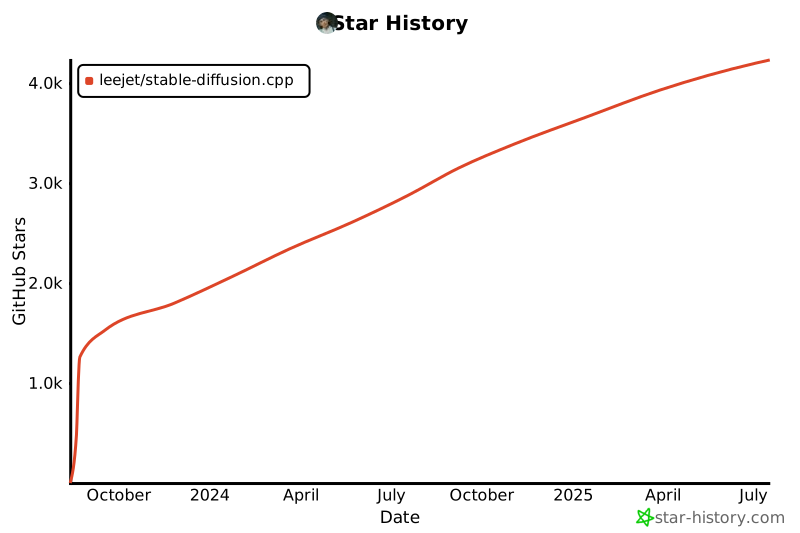](https://star-history.com/#leejet/stable-diffusion.cpp&Date)
|
||||
|
||||
## References
|
||||
|
||||
- [ggml](https://github.com/ggerganov/ggml)
|
||||
- [stable-diffusion](https://github.com/CompVis/stable-diffusion)
|
||||
- [sd3-ref](https://github.com/Stability-AI/sd3-ref)
|
||||
- [stable-diffusion-stability-ai](https://github.com/Stability-AI/stablediffusion)
|
||||
- [stable-diffusion-webui](https://github.com/AUTOMATIC1111/stable-diffusion-webui)
|
||||
- [ComfyUI](https://github.com/comfyanonymous/ComfyUI)
|
||||
- [k-diffusion](https://github.com/crowsonkb/k-diffusion)
|
||||
- [latent-consistency-model](https://github.com/luosiallen/latent-consistency-model)
|
||||
- [generative-models](https://github.com/Stability-AI/generative-models/)
|
||||
- [PhotoMaker](https://github.com/TencentARC/PhotoMaker)
|
||||
- [Wan2.1](https://github.com/Wan-Video/Wan2.1)
|
||||
- [Wan2.2](https://github.com/Wan-Video/Wan2.2)
|
||||

|
Before Width: | Height: | Size: 230 KiB |

|
Before Width: | Height: | Size: 477 KiB |

|
Before Width: | Height: | Size: 489 KiB |

|
Before Width: | Height: | Size: 595 KiB |

|
Before Width: | Height: | Size: 562 KiB |

|
Before Width: | Height: | Size: 477 KiB |

|
Before Width: | Height: | Size: 556 KiB |

|
Before Width: | Height: | Size: 510 KiB |

|
Before Width: | Height: | Size: 455 KiB |

|
Before Width: | Height: | Size: 511 KiB |

|
Before Width: | Height: | Size: 491 KiB |

|
Before Width: | Height: | Size: 464 KiB |

|
Before Width: | Height: | Size: 552 KiB |

|
Before Width: | Height: | Size: 2.2 MiB |

|
Before Width: | Height: | Size: 2.5 MiB |

|
Before Width: | Height: | Size: 289 KiB |

|
Before Width: | Height: | Size: 630 KiB |

|
Before Width: | Height: | Size: 555 KiB |

|
Before Width: | Height: | Size: 1.0 MiB |

|
Before Width: | Height: | Size: 423 KiB |

|
Before Width: | Height: | Size: 401 KiB |

|
Before Width: | Height: | Size: 9.0 MiB |

|
Before Width: | Height: | Size: 1.4 MiB |

|
Before Width: | Height: | Size: 457 KiB |

|
Before Width: | Height: | Size: 415 KiB |

|
Before Width: | Height: | Size: 450 KiB |

|
Before Width: | Height: | Size: 1.7 MiB |

|
Before Width: | Height: | Size: 870 KiB |

|
Before Width: | Height: | Size: 1.0 MiB |

|
Before Width: | Height: | Size: 1.1 MiB |

|
Before Width: | Height: | Size: 1.1 MiB |

|
Before Width: | Height: | Size: 1.0 MiB |

|
Before Width: | Height: | Size: 1.0 MiB |

|
Before Width: | Height: | Size: 1.0 MiB |

|
Before Width: | Height: | Size: 1.0 MiB |

|
Before Width: | Height: | Size: 1.0 MiB |
@@ -0,0 +1,969 @@
|
||||
#ifndef __CLIP_HPP__
|
||||
#define __CLIP_HPP__
|
||||
|
||||
#include "ggml_extend.hpp"
|
||||
#include "model.h"
|
||||
|
||||
/*================================================== CLIPTokenizer ===================================================*/
|
||||
|
||||
std::pair<std::unordered_map<std::string, float>, std::string> extract_and_remove_lora(std::string text) {
|
||||
std::regex re("<lora:([^:]+):([^>]+)>");
|
||||
std::smatch matches;
|
||||
std::unordered_map<std::string, float> filename2multiplier;
|
||||
|
||||
while (std::regex_search(text, matches, re)) {
|
||||
std::string filename = matches[1].str();
|
||||
float multiplier = std::stof(matches[2].str());
|
||||
|
||||
text = std::regex_replace(text, re, "", std::regex_constants::format_first_only);
|
||||
|
||||
if (multiplier == 0.f) {
|
||||
continue;
|
||||
}
|
||||
|
||||
if (filename2multiplier.find(filename) == filename2multiplier.end()) {
|
||||
filename2multiplier[filename] = multiplier;
|
||||
} else {
|
||||
filename2multiplier[filename] += multiplier;
|
||||
}
|
||||
}
|
||||
|
||||
return std::make_pair(filename2multiplier, text);
|
||||
}
|
||||
|
||||
std::vector<std::pair<int, std::u32string>> bytes_to_unicode() {
|
||||
std::vector<std::pair<int, std::u32string>> byte_unicode_pairs;
|
||||
std::set<int> byte_set;
|
||||
for (int b = static_cast<int>('!'); b <= static_cast<int>('~'); ++b) {
|
||||
byte_set.insert(b);
|
||||
byte_unicode_pairs.push_back(std::pair<int, std::u32string>(b, unicode_value_to_utf32(b)));
|
||||
}
|
||||
for (int b = 161; b <= 172; ++b) {
|
||||
byte_set.insert(b);
|
||||
byte_unicode_pairs.push_back(std::pair<int, std::u32string>(b, unicode_value_to_utf32(b)));
|
||||
}
|
||||
for (int b = 174; b <= 255; ++b) {
|
||||
byte_set.insert(b);
|
||||
byte_unicode_pairs.push_back(std::pair<int, std::u32string>(b, unicode_value_to_utf32(b)));
|
||||
}
|
||||
int n = 0;
|
||||
for (int b = 0; b < 256; ++b) {
|
||||
if (byte_set.find(b) == byte_set.end()) {
|
||||
byte_unicode_pairs.push_back(std::pair<int, std::u32string>(b, unicode_value_to_utf32(n + 256)));
|
||||
++n;
|
||||
}
|
||||
}
|
||||
// LOG_DEBUG("byte_unicode_pairs %d", byte_unicode_pairs.size());
|
||||
return byte_unicode_pairs;
|
||||
}
|
||||
|
||||
// Ref: https://github.com/openai/CLIP/blob/main/clip/simple_tokenizer.py
|
||||
|
||||
typedef std::function<bool(std::string&, std::vector<int32_t>&)> on_new_token_cb_t;
|
||||
|
||||
class CLIPTokenizer {
|
||||
private:
|
||||
std::map<int, std::u32string> byte_encoder;
|
||||
std::map<std::u32string, int> byte_decoder;
|
||||
std::map<std::u32string, int> encoder;
|
||||
std::map<int, std::u32string> decoder;
|
||||
std::map<std::pair<std::u32string, std::u32string>, int> bpe_ranks;
|
||||
std::regex pat;
|
||||
int encoder_len;
|
||||
int bpe_len;
|
||||
|
||||
public:
|
||||
const std::string UNK_TOKEN = "<|endoftext|>";
|
||||
const std::string BOS_TOKEN = "<|startoftext|>";
|
||||
const std::string EOS_TOKEN = "<|endoftext|>";
|
||||
const std::string PAD_TOKEN = "<|endoftext|>";
|
||||
|
||||
const int UNK_TOKEN_ID = 49407;
|
||||
const int BOS_TOKEN_ID = 49406;
|
||||
const int EOS_TOKEN_ID = 49407;
|
||||
const int PAD_TOKEN_ID = 49407;
|
||||
|
||||
private:
|
||||
static std::string strip(const std::string& str) {
|
||||
std::string::size_type start = str.find_first_not_of(" \t\n\r\v\f");
|
||||
std::string::size_type end = str.find_last_not_of(" \t\n\r\v\f");
|
||||
|
||||
if (start == std::string::npos) {
|
||||
// String contains only whitespace characters
|
||||
return "";
|
||||
}
|
||||
|
||||
return str.substr(start, end - start + 1);
|
||||
}
|
||||
|
||||
static std::string whitespace_clean(std::string text) {
|
||||
text = std::regex_replace(text, std::regex(R"(\s+)"), " ");
|
||||
text = strip(text);
|
||||
return text;
|
||||
}
|
||||
|
||||
static std::set<std::pair<std::u32string, std::u32string>> get_pairs(const std::vector<std::u32string>& subwords) {
|
||||
std::set<std::pair<std::u32string, std::u32string>> pairs;
|
||||
if (subwords.size() == 0) {
|
||||
return pairs;
|
||||
}
|
||||
std::u32string prev_subword = subwords[0];
|
||||
for (int i = 1; i < subwords.size(); i++) {
|
||||
std::u32string subword = subwords[i];
|
||||
std::pair<std::u32string, std::u32string> pair(prev_subword, subword);
|
||||
pairs.insert(pair);
|
||||
prev_subword = subword;
|
||||
}
|
||||
return pairs;
|
||||
}
|
||||
|
||||
public:
|
||||
CLIPTokenizer(int pad_token_id = 49407, const std::string& merges_utf8_str = "")
|
||||
: PAD_TOKEN_ID(pad_token_id) {
|
||||
if (merges_utf8_str.size() > 0) {
|
||||
load_from_merges(merges_utf8_str);
|
||||
} else {
|
||||
load_from_merges(ModelLoader::load_merges());
|
||||
}
|
||||
}
|
||||
|
||||
void load_from_merges(const std::string& merges_utf8_str) {
|
||||
auto byte_unicode_pairs = bytes_to_unicode();
|
||||
// printf("byte_unicode_pairs have %lu pairs \n", byte_unicode_pairs.size());
|
||||
byte_encoder = std::map<int, std::u32string>(byte_unicode_pairs.begin(), byte_unicode_pairs.end());
|
||||
for (auto& pair : byte_unicode_pairs) {
|
||||
byte_decoder[pair.second] = pair.first;
|
||||
}
|
||||
// for (auto & pair: byte_unicode_pairs) {
|
||||
// std::cout << pair.first << ": " << pair.second << std::endl;
|
||||
// }
|
||||
std::vector<std::u32string> merges;
|
||||
size_t start = 0;
|
||||
size_t pos;
|
||||
std::u32string merges_utf32_str = utf8_to_utf32(merges_utf8_str);
|
||||
while ((pos = merges_utf32_str.find('\n', start)) != std::string::npos) {
|
||||
merges.push_back(merges_utf32_str.substr(start, pos - start));
|
||||
start = pos + 1;
|
||||
}
|
||||
// LOG_DEBUG("merges size %llu", merges.size());
|
||||
GGML_ASSERT(merges.size() == 48895);
|
||||
merges = std::vector<std::u32string>(merges.begin() + 1, merges.end());
|
||||
std::vector<std::pair<std::u32string, std::u32string>> merge_pairs;
|
||||
for (const auto& merge : merges) {
|
||||
size_t space_pos = merge.find(' ');
|
||||
merge_pairs.emplace_back(merge.substr(0, space_pos), merge.substr(space_pos + 1));
|
||||
// LOG_DEBUG("%s", utf32_to_utf8(merge.substr(space_pos + 1)).c_str());
|
||||
// printf("%s :: %s | %s \n", utf32_to_utf8(merge).c_str(), utf32_to_utf8(merge.substr(0, space_pos)).c_str(),
|
||||
// utf32_to_utf8(merge.substr(space_pos + 1)).c_str());
|
||||
}
|
||||
std::vector<std::u32string> vocab;
|
||||
for (const auto& pair : byte_unicode_pairs) {
|
||||
vocab.push_back(pair.second);
|
||||
}
|
||||
for (const auto& pair : byte_unicode_pairs) {
|
||||
vocab.push_back(pair.second + utf8_to_utf32("</w>"));
|
||||
}
|
||||
for (const auto& merge : merge_pairs) {
|
||||
vocab.push_back(merge.first + merge.second);
|
||||
}
|
||||
vocab.push_back(utf8_to_utf32("<|startoftext|>"));
|
||||
vocab.push_back(utf8_to_utf32("<|endoftext|>"));
|
||||
LOG_DEBUG("vocab size: %llu", vocab.size());
|
||||
int i = 0;
|
||||
for (const auto& token : vocab) {
|
||||
encoder[token] = i;
|
||||
decoder[i] = token;
|
||||
i++;
|
||||
}
|
||||
encoder_len = i;
|
||||
|
||||
auto it = encoder.find(utf8_to_utf32("img</w>"));
|
||||
if (it != encoder.end()) {
|
||||
LOG_DEBUG("trigger word img already in vocab");
|
||||
} else {
|
||||
LOG_DEBUG("trigger word img not in vocab yet");
|
||||
}
|
||||
|
||||
int rank = 0;
|
||||
for (const auto& merge : merge_pairs) {
|
||||
bpe_ranks[merge] = rank++;
|
||||
}
|
||||
bpe_len = rank;
|
||||
};
|
||||
|
||||
void add_token(const std::string& text) {
|
||||
std::u32string token = utf8_to_utf32(text);
|
||||
auto it = encoder.find(token);
|
||||
if (it != encoder.end()) {
|
||||
encoder[token] = encoder_len;
|
||||
decoder[encoder_len] = token;
|
||||
encoder_len++;
|
||||
}
|
||||
}
|
||||
|
||||
std::u32string bpe(const std::u32string& token) {
|
||||
std::vector<std::u32string> word;
|
||||
|
||||
for (int i = 0; i < token.size() - 1; i++) {
|
||||
word.emplace_back(1, token[i]);
|
||||
}
|
||||
word.push_back(token.substr(token.size() - 1) + utf8_to_utf32("</w>"));
|
||||
|
||||
std::set<std::pair<std::u32string, std::u32string>> pairs = get_pairs(word);
|
||||
|
||||
if (pairs.empty()) {
|
||||
return token + utf8_to_utf32("</w>");
|
||||
}
|
||||
|
||||
while (true) {
|
||||
auto min_pair_iter = std::min_element(pairs.begin(),
|
||||
pairs.end(),
|
||||
[&](const std::pair<std::u32string, std::u32string>& a,
|
||||
const std::pair<std::u32string, std::u32string>& b) {
|
||||
if (bpe_ranks.find(a) == bpe_ranks.end()) {
|
||||
return false;
|
||||
} else if (bpe_ranks.find(b) == bpe_ranks.end()) {
|
||||
return true;
|
||||
}
|
||||
return bpe_ranks.at(a) < bpe_ranks.at(b);
|
||||
});
|
||||
|
||||
const std::pair<std::u32string, std::u32string>& bigram = *min_pair_iter;
|
||||
|
||||
if (bpe_ranks.find(bigram) == bpe_ranks.end()) {
|
||||
break;
|
||||
}
|
||||
|
||||
std::u32string first = bigram.first;
|
||||
std::u32string second = bigram.second;
|
||||
std::vector<std::u32string> new_word;
|
||||
int32_t i = 0;
|
||||
|
||||
while (i < word.size()) {
|
||||
auto it = std::find(word.begin() + i, word.end(), first);
|
||||
if (it == word.end()) {
|
||||
new_word.insert(new_word.end(), word.begin() + i, word.end());
|
||||
break;
|
||||
}
|
||||
new_word.insert(new_word.end(), word.begin() + i, it);
|
||||
i = static_cast<int32_t>(std::distance(word.begin(), it));
|
||||
|
||||
if (word[i] == first && i < static_cast<int32_t>(word.size()) - 1 && word[i + 1] == second) {
|
||||
new_word.push_back(first + second);
|
||||
i += 2;
|
||||
} else {
|
||||
new_word.push_back(word[i]);
|
||||
i += 1;
|
||||
}
|
||||
}
|
||||
|
||||
word = new_word;
|
||||
|
||||
if (word.size() == 1) {
|
||||
break;
|
||||
}
|
||||
pairs = get_pairs(word);
|
||||
}
|
||||
|
||||
std::u32string result;
|
||||
for (int i = 0; i < word.size(); i++) {
|
||||
result += word[i];
|
||||
if (i != word.size() - 1) {
|
||||
result += utf8_to_utf32(" ");
|
||||
}
|
||||
}
|
||||
|
||||
return result;
|
||||
}
|
||||
|
||||
std::vector<int> tokenize(std::string text,
|
||||
on_new_token_cb_t on_new_token_cb,
|
||||
size_t max_length = 0,
|
||||
bool padding = false) {
|
||||
std::vector<int32_t> tokens = encode(text, on_new_token_cb);
|
||||
|
||||
tokens.insert(tokens.begin(), BOS_TOKEN_ID);
|
||||
if (max_length > 0) {
|
||||
if (tokens.size() > max_length - 1) {
|
||||
tokens.resize(max_length - 1);
|
||||
tokens.push_back(EOS_TOKEN_ID);
|
||||
} else {
|
||||
tokens.push_back(EOS_TOKEN_ID);
|
||||
if (padding) {
|
||||
tokens.insert(tokens.end(), max_length - tokens.size(), PAD_TOKEN_ID);
|
||||
}
|
||||
}
|
||||
}
|
||||
|
||||
return tokens;
|
||||
}
|
||||
|
||||
void pad_tokens(std::vector<int>& tokens,
|
||||
std::vector<float>& weights,
|
||||
size_t max_length = 0,
|
||||
bool padding = false) {
|
||||
if (max_length > 0 && padding) {
|
||||
size_t n = std::ceil(tokens.size() * 1.0 / (max_length - 2));
|
||||
if (n == 0) {
|
||||
n = 1;
|
||||
}
|
||||
size_t length = max_length * n;
|
||||
LOG_DEBUG("token length: %llu", length);
|
||||
std::vector<int> new_tokens;
|
||||
std::vector<float> new_weights;
|
||||
new_tokens.push_back(BOS_TOKEN_ID);
|
||||
new_weights.push_back(1.0);
|
||||
int token_idx = 0;
|
||||
for (int i = 1; i < length; i++) {
|
||||
if (token_idx >= tokens.size()) {
|
||||
break;
|
||||
}
|
||||
if (i % max_length == 0) {
|
||||
new_tokens.push_back(BOS_TOKEN_ID);
|
||||
new_weights.push_back(1.0);
|
||||
} else if (i % max_length == max_length - 1) {
|
||||
new_tokens.push_back(EOS_TOKEN_ID);
|
||||
new_weights.push_back(1.0);
|
||||
} else {
|
||||
new_tokens.push_back(tokens[token_idx]);
|
||||
new_weights.push_back(weights[token_idx]);
|
||||
token_idx++;
|
||||
}
|
||||
}
|
||||
|
||||
new_tokens.push_back(EOS_TOKEN_ID);
|
||||
new_weights.push_back(1.0);
|
||||
tokens = new_tokens;
|
||||
weights = new_weights;
|
||||
|
||||
if (padding) {
|
||||
tokens.insert(tokens.end(), length - tokens.size(), PAD_TOKEN_ID);
|
||||
weights.insert(weights.end(), length - weights.size(), 1.0);
|
||||
}
|
||||
}
|
||||
}
|
||||
|
||||
std::string clean_up_tokenization(std::string& text) {
|
||||
std::regex pattern(R"( ,)");
|
||||
// Replace " ," with ","
|
||||
std::string result = std::regex_replace(text, pattern, ",");
|
||||
return result;
|
||||
}
|
||||
|
||||
std::string decode(const std::vector<int>& tokens) {
|
||||
std::string text = "";
|
||||
for (int t : tokens) {
|
||||
if (t == 49406 || t == 49407)
|
||||
continue;
|
||||
std::u32string ts = decoder[t];
|
||||
// printf("%d, %s \n", t, utf32_to_utf8(ts).c_str());
|
||||
std::string s = utf32_to_utf8(ts);
|
||||
if (s.length() >= 4) {
|
||||
if (ends_with(s, "</w>")) {
|
||||
text += s.replace(s.length() - 4, s.length() - 1, "") + " ";
|
||||
} else {
|
||||
text += s;
|
||||
}
|
||||
} else {
|
||||
text += " " + s;
|
||||
}
|
||||
}
|
||||
// std::vector<unsigned char> bytes;
|
||||
// for (auto c : text){
|
||||
// bytes.push_back(byte_decoder[c]);
|
||||
// }
|
||||
|
||||
// std::string s((char *)bytes.data());
|
||||
// std::string s = "";
|
||||
text = clean_up_tokenization(text);
|
||||
return trim(text);
|
||||
}
|
||||
|
||||
std::vector<int> encode(std::string text, on_new_token_cb_t on_new_token_cb) {
|
||||
std::string original_text = text;
|
||||
std::vector<int32_t> bpe_tokens;
|
||||
text = whitespace_clean(text);
|
||||
std::transform(text.begin(), text.end(), text.begin(), [](unsigned char c) { return std::tolower(c); });
|
||||
|
||||
std::regex pat(R"(<\|startoftext\|>|<\|endoftext\|>|'s|'t|'re|'ve|'m|'ll|'d|[[:alpha:]]+|[[:digit:]]|[^[:space:][:alpha:][:digit:]]+)",
|
||||
std::regex::icase);
|
||||
|
||||
std::smatch matches;
|
||||
std::string str = text;
|
||||
std::vector<std::string> token_strs;
|
||||
while (std::regex_search(str, matches, pat)) {
|
||||
bool skip = on_new_token_cb(str, bpe_tokens);
|
||||
if (skip) {
|
||||
continue;
|
||||
}
|
||||
for (auto& token : matches) {
|
||||
std::string token_str = token.str();
|
||||
std::u32string utf32_token;
|
||||
for (int i = 0; i < token_str.length(); i++) {
|
||||
unsigned char b = token_str[i];
|
||||
utf32_token += byte_encoder[b];
|
||||
}
|
||||
auto bpe_strs = bpe(utf32_token);
|
||||
size_t start = 0;
|
||||
size_t pos;
|
||||
while ((pos = bpe_strs.find(' ', start)) != std::u32string::npos) {
|
||||
auto bpe_str = bpe_strs.substr(start, pos - start);
|
||||
bpe_tokens.push_back(encoder[bpe_str]);
|
||||
token_strs.push_back(utf32_to_utf8(bpe_str));
|
||||
|
||||
start = pos + 1;
|
||||
}
|
||||
auto bpe_str = bpe_strs.substr(start, bpe_strs.size() - start);
|
||||
bpe_tokens.push_back(encoder[bpe_str]);
|
||||
token_strs.push_back(utf32_to_utf8(bpe_str));
|
||||
}
|
||||
str = matches.suffix();
|
||||
}
|
||||
std::stringstream ss;
|
||||
ss << "[";
|
||||
for (auto token : token_strs) {
|
||||
ss << "\"" << token << "\", ";
|
||||
}
|
||||
ss << "]";
|
||||
// LOG_DEBUG("split prompt \"%s\" to tokens %s", original_text.c_str(), ss.str().c_str());
|
||||
// printf("split prompt \"%s\" to tokens %s \n", original_text.c_str(), ss.str().c_str());
|
||||
return bpe_tokens;
|
||||
}
|
||||
};
|
||||
|
||||
/*================================================ FrozenCLIPEmbedder ================================================*/
|
||||
|
||||
// Ref: https://github.com/huggingface/transformers/blob/main/src/transformers/models/clip/modeling_clip.py
|
||||
|
||||
struct CLIPMLP : public GGMLBlock {
|
||||
protected:
|
||||
bool use_gelu;
|
||||
|
||||
public:
|
||||
CLIPMLP(int64_t d_model, int64_t intermediate_size) {
|
||||
blocks["fc1"] = std::shared_ptr<GGMLBlock>(new Linear(d_model, intermediate_size));
|
||||
blocks["fc2"] = std::shared_ptr<GGMLBlock>(new Linear(intermediate_size, d_model));
|
||||
|
||||
if (d_model == 1024 || d_model == 1280) { // SD 2.x
|
||||
use_gelu = true;
|
||||
} else { // SD 1.x
|
||||
use_gelu = false;
|
||||
}
|
||||
}
|
||||
|
||||
struct ggml_tensor* forward(struct ggml_context* ctx, struct ggml_tensor* x) {
|
||||
// x: [N, n_token, d_model]
|
||||
auto fc1 = std::dynamic_pointer_cast<Linear>(blocks["fc1"]);
|
||||
auto fc2 = std::dynamic_pointer_cast<Linear>(blocks["fc2"]);
|
||||
|
||||
x = fc1->forward(ctx, x);
|
||||
if (use_gelu) {
|
||||
x = ggml_gelu_inplace(ctx, x);
|
||||
} else {
|
||||
x = ggml_gelu_quick_inplace(ctx, x);
|
||||
}
|
||||
x = fc2->forward(ctx, x);
|
||||
return x;
|
||||
}
|
||||
};
|
||||
|
||||
struct CLIPLayer : public GGMLBlock {
|
||||
protected:
|
||||
int64_t d_model; // hidden_size/embed_dim
|
||||
int64_t n_head;
|
||||
int64_t intermediate_size;
|
||||
|
||||
public:
|
||||
CLIPLayer(int64_t d_model,
|
||||
int64_t n_head,
|
||||
int64_t intermediate_size)
|
||||
: d_model(d_model),
|
||||
n_head(n_head),
|
||||
intermediate_size(intermediate_size) {
|
||||
blocks["self_attn"] = std::shared_ptr<GGMLBlock>(new MultiheadAttention(d_model, n_head, true, true));
|
||||
|
||||
blocks["layer_norm1"] = std::shared_ptr<GGMLBlock>(new LayerNorm(d_model));
|
||||
blocks["layer_norm2"] = std::shared_ptr<GGMLBlock>(new LayerNorm(d_model));
|
||||
|
||||
blocks["mlp"] = std::shared_ptr<GGMLBlock>(new CLIPMLP(d_model, intermediate_size));
|
||||
}
|
||||
|
||||
struct ggml_tensor* forward(struct ggml_context* ctx, ggml_backend_t backend, struct ggml_tensor* x, bool mask = true) {
|
||||
// x: [N, n_token, d_model]
|
||||
auto self_attn = std::dynamic_pointer_cast<MultiheadAttention>(blocks["self_attn"]);
|
||||
auto layer_norm1 = std::dynamic_pointer_cast<LayerNorm>(blocks["layer_norm1"]);
|
||||
auto layer_norm2 = std::dynamic_pointer_cast<LayerNorm>(blocks["layer_norm2"]);
|
||||
auto mlp = std::dynamic_pointer_cast<CLIPMLP>(blocks["mlp"]);
|
||||
|
||||
x = ggml_add(ctx, x, self_attn->forward(ctx, backend, layer_norm1->forward(ctx, x), mask));
|
||||
x = ggml_add(ctx, x, mlp->forward(ctx, layer_norm2->forward(ctx, x)));
|
||||
return x;
|
||||
}
|
||||
};
|
||||
|
||||
struct CLIPEncoder : public GGMLBlock {
|
||||
protected:
|
||||
int64_t n_layer;
|
||||
|
||||
public:
|
||||
CLIPEncoder(int64_t n_layer,
|
||||
int64_t d_model,
|
||||
int64_t n_head,
|
||||
int64_t intermediate_size)
|
||||
: n_layer(n_layer) {
|
||||
for (int i = 0; i < n_layer; i++) {
|
||||
std::string name = "layers." + std::to_string(i);
|
||||
blocks[name] = std::shared_ptr<GGMLBlock>(new CLIPLayer(d_model, n_head, intermediate_size));
|
||||
}
|
||||
}
|
||||
|
||||
struct ggml_tensor* forward(struct ggml_context* ctx,
|
||||
ggml_backend_t backend,
|
||||
struct ggml_tensor* x,
|
||||
int clip_skip = -1,
|
||||
bool mask = true) {
|
||||
// x: [N, n_token, d_model]
|
||||
int layer_idx = n_layer - 1;
|
||||
// LOG_DEBUG("clip_skip %d", clip_skip);
|
||||
if (clip_skip > 0) {
|
||||
layer_idx = n_layer - clip_skip;
|
||||
}
|
||||
|
||||
for (int i = 0; i < n_layer; i++) {
|
||||
// LOG_DEBUG("layer %d", i);
|
||||
if (i == layer_idx + 1) {
|
||||
break;
|
||||
}
|
||||
std::string name = "layers." + std::to_string(i);
|
||||
auto layer = std::dynamic_pointer_cast<CLIPLayer>(blocks[name]);
|
||||
x = layer->forward(ctx, backend, x, mask); // [N, n_token, d_model]
|
||||
// LOG_DEBUG("layer %d", i);
|
||||
}
|
||||
return x;
|
||||
}
|
||||
};
|
||||
|
||||
class CLIPEmbeddings : public GGMLBlock {
|
||||
protected:
|
||||
int64_t embed_dim;
|
||||
int64_t vocab_size;
|
||||
int64_t num_positions;
|
||||
bool force_clip_f32;
|
||||
|
||||
void init_params(struct ggml_context* ctx, const String2GGMLType& tensor_types = {}, const std::string prefix = "") {
|
||||
enum ggml_type token_wtype = GGML_TYPE_F32;
|
||||
if (!force_clip_f32) {
|
||||
auto tensor_type = tensor_types.find(prefix + "token_embedding.weight");
|
||||
if (tensor_type != tensor_types.end())
|
||||
token_wtype = tensor_type->second;
|
||||
}
|
||||
enum ggml_type position_wtype = GGML_TYPE_F32;
|
||||
|
||||
params["token_embedding.weight"] = ggml_new_tensor_2d(ctx, token_wtype, embed_dim, vocab_size);
|
||||
params["position_embedding.weight"] = ggml_new_tensor_2d(ctx, position_wtype, embed_dim, num_positions);
|
||||
}
|
||||
|
||||
public:
|
||||
CLIPEmbeddings(int64_t embed_dim,
|
||||
int64_t vocab_size = 49408,
|
||||
int64_t num_positions = 77,
|
||||
bool force_clip_f32 = false)
|
||||
: embed_dim(embed_dim),
|
||||
vocab_size(vocab_size),
|
||||
num_positions(num_positions),
|
||||
force_clip_f32(force_clip_f32) {
|
||||
}
|
||||
|
||||
struct ggml_tensor* get_token_embed_weight() {
|
||||
return params["token_embedding.weight"];
|
||||
}
|
||||
|
||||
struct ggml_tensor* forward(struct ggml_context* ctx,
|
||||
struct ggml_tensor* input_ids,
|
||||
struct ggml_tensor* custom_embed_weight) {
|
||||
// input_ids: [N, n_token]
|
||||
auto token_embed_weight = params["token_embedding.weight"];
|
||||
auto position_embed_weight = params["position_embedding.weight"];
|
||||
|
||||
GGML_ASSERT(input_ids->ne[0] == position_embed_weight->ne[1]);
|
||||
input_ids = ggml_reshape_3d(ctx, input_ids, input_ids->ne[0], 1, input_ids->ne[1]);
|
||||
auto token_embedding = ggml_get_rows(ctx, custom_embed_weight != NULL ? custom_embed_weight : token_embed_weight, input_ids);
|
||||
token_embedding = ggml_reshape_3d(ctx, token_embedding, token_embedding->ne[0], token_embedding->ne[1], token_embedding->ne[3]);
|
||||
|
||||
// token_embedding + position_embedding
|
||||
auto x = ggml_add(ctx,
|
||||
token_embedding,
|
||||
position_embed_weight); // [N, n_token, embed_dim]
|
||||
return x;
|
||||
}
|
||||
};
|
||||
|
||||
class CLIPVisionEmbeddings : public GGMLBlock {
|
||||
protected:
|
||||
int64_t embed_dim;
|
||||
int64_t num_channels;
|
||||
int64_t patch_size;
|
||||
int64_t image_size;
|
||||
int64_t num_patches;
|
||||
int64_t num_positions;
|
||||
void init_params(struct ggml_context* ctx, const String2GGMLType& tensor_types = {}, const std::string prefix = "") {
|
||||
enum ggml_type patch_wtype = GGML_TYPE_F16;
|
||||
enum ggml_type class_wtype = GGML_TYPE_F32;
|
||||
enum ggml_type position_wtype = GGML_TYPE_F32;
|
||||
|
||||
params["patch_embedding.weight"] = ggml_new_tensor_4d(ctx, patch_wtype, patch_size, patch_size, num_channels, embed_dim);
|
||||
params["class_embedding"] = ggml_new_tensor_1d(ctx, class_wtype, embed_dim);
|
||||
params["position_embedding.weight"] = ggml_new_tensor_2d(ctx, position_wtype, embed_dim, num_positions);
|
||||
}
|
||||
|
||||
public:
|
||||
CLIPVisionEmbeddings(int64_t embed_dim,
|
||||
int64_t num_channels = 3,
|
||||
int64_t patch_size = 14,
|
||||
int64_t image_size = 224)
|
||||
: embed_dim(embed_dim),
|
||||
num_channels(num_channels),
|
||||
patch_size(patch_size),
|
||||
image_size(image_size) {
|
||||
num_patches = (image_size / patch_size) * (image_size / patch_size);
|
||||
num_positions = num_patches + 1;
|
||||
}
|
||||
|
||||
struct ggml_tensor* forward(struct ggml_context* ctx, struct ggml_tensor* pixel_values) {
|
||||
// pixel_values: [N, num_channels, image_size, image_size]
|
||||
// return: [N, num_positions, embed_dim]
|
||||
GGML_ASSERT(pixel_values->ne[0] == image_size && pixel_values->ne[1] == image_size && pixel_values->ne[2] == num_channels);
|
||||
|
||||
auto patch_embed_weight = params["patch_embedding.weight"];
|
||||
auto class_embed_weight = params["class_embedding"];
|
||||
auto position_embed_weight = params["position_embedding.weight"];
|
||||
|
||||
// concat(patch_embedding, class_embedding) + position_embedding
|
||||
struct ggml_tensor* patch_embedding;
|
||||
int64_t N = pixel_values->ne[3];
|
||||
patch_embedding = ggml_nn_conv_2d(ctx, pixel_values, patch_embed_weight, NULL, patch_size, patch_size); // [N, embed_dim, image_size // pacht_size, image_size // pacht_size]
|
||||
patch_embedding = ggml_reshape_3d(ctx, patch_embedding, num_patches, embed_dim, N); // [N, embed_dim, num_patches]
|
||||
patch_embedding = ggml_cont(ctx, ggml_permute(ctx, patch_embedding, 1, 0, 2, 3)); // [N, num_patches, embed_dim]
|
||||
patch_embedding = ggml_reshape_4d(ctx, patch_embedding, 1, embed_dim, num_patches, N); // [N, num_patches, embed_dim, 1]
|
||||
|
||||
struct ggml_tensor* class_embedding = ggml_new_tensor_2d(ctx, GGML_TYPE_F32, embed_dim, N);
|
||||
class_embedding = ggml_repeat(ctx, class_embed_weight, class_embedding); // [N, embed_dim]
|
||||
class_embedding = ggml_reshape_4d(ctx, class_embedding, 1, embed_dim, 1, N); // [N, 1, embed_dim, 1]
|
||||
|
||||
struct ggml_tensor* x = ggml_concat(ctx, class_embedding, patch_embedding, 2); // [N, num_positions, embed_dim, 1]
|
||||
x = ggml_reshape_3d(ctx, x, embed_dim, num_positions, N); // [N, num_positions, embed_dim]
|
||||
x = ggml_add(ctx, x, position_embed_weight);
|
||||
return x; // [N, num_positions, embed_dim]
|
||||
}
|
||||
};
|
||||
|
||||
// OPENAI_CLIP_VIT_L_14: https://huggingface.co/openai/clip-vit-large-patch14/blob/main/config.json
|
||||
// OPEN_CLIP_VIT_H_14: https://huggingface.co/laion/CLIP-ViT-H-14-laion2B-s32B-b79K/blob/main/config.json
|
||||
// OPEN_CLIP_VIT_BIGG_14: https://huggingface.co/laion/CLIP-ViT-bigG-14-laion2B-39B-b160k/blob/main/config.json (CLIPTextModelWithProjection)
|
||||
|
||||
enum CLIPVersion {
|
||||
OPENAI_CLIP_VIT_L_14, // SD 1.x and SDXL
|
||||
OPEN_CLIP_VIT_H_14, // SD 2.x
|
||||
OPEN_CLIP_VIT_BIGG_14, // SDXL
|
||||
};
|
||||
|
||||
class CLIPTextModel : public GGMLBlock {
|
||||
protected:
|
||||
void init_params(struct ggml_context* ctx, const String2GGMLType& tensor_types = {}, const std::string prefix = "") {
|
||||
if (version == OPEN_CLIP_VIT_BIGG_14) {
|
||||
enum ggml_type wtype = GGML_TYPE_F32;
|
||||
params["text_projection"] = ggml_new_tensor_2d(ctx, wtype, projection_dim, hidden_size);
|
||||
}
|
||||
}
|
||||
|
||||
public:
|
||||
CLIPVersion version = OPENAI_CLIP_VIT_L_14;
|
||||
// network hparams
|
||||
int32_t vocab_size = 49408;
|
||||
int32_t n_token = 77; // max_position_embeddings
|
||||
int32_t hidden_size = 768;
|
||||
int32_t intermediate_size = 3072;
|
||||
int32_t n_head = 12;
|
||||
int32_t n_layer = 12; // num_hidden_layers
|
||||
int32_t projection_dim = 1280; // only for OPEN_CLIP_VIT_BIGG_14
|
||||
bool with_final_ln = true;
|
||||
|
||||
CLIPTextModel(CLIPVersion version = OPENAI_CLIP_VIT_L_14,
|
||||
bool with_final_ln = true,
|
||||
bool force_clip_f32 = false)
|
||||
: version(version), with_final_ln(with_final_ln) {
|
||||
if (version == OPEN_CLIP_VIT_H_14) {
|
||||
hidden_size = 1024;
|
||||
intermediate_size = 4096;
|
||||
n_head = 16;
|
||||
n_layer = 24;
|
||||
} else if (version == OPEN_CLIP_VIT_BIGG_14) { // CLIPTextModelWithProjection
|
||||
hidden_size = 1280;
|
||||
intermediate_size = 5120;
|
||||
n_head = 20;
|
||||
n_layer = 32;
|
||||
}
|
||||
|
||||
blocks["embeddings"] = std::shared_ptr<GGMLBlock>(new CLIPEmbeddings(hidden_size, vocab_size, n_token, force_clip_f32));
|
||||
blocks["encoder"] = std::shared_ptr<GGMLBlock>(new CLIPEncoder(n_layer, hidden_size, n_head, intermediate_size));
|
||||
blocks["final_layer_norm"] = std::shared_ptr<GGMLBlock>(new LayerNorm(hidden_size));
|
||||
}
|
||||
|
||||
struct ggml_tensor* get_token_embed_weight() {
|
||||
auto embeddings = std::dynamic_pointer_cast<CLIPEmbeddings>(blocks["embeddings"]);
|
||||
return embeddings->get_token_embed_weight();
|
||||
}
|
||||
|
||||
struct ggml_tensor* forward(struct ggml_context* ctx,
|
||||
ggml_backend_t backend,
|
||||
struct ggml_tensor* input_ids,
|
||||
struct ggml_tensor* tkn_embeddings,
|
||||
size_t max_token_idx = 0,
|
||||
bool return_pooled = false,
|
||||
int clip_skip = -1) {
|
||||
// input_ids: [N, n_token]
|
||||
auto embeddings = std::dynamic_pointer_cast<CLIPEmbeddings>(blocks["embeddings"]);
|
||||
auto encoder = std::dynamic_pointer_cast<CLIPEncoder>(blocks["encoder"]);
|
||||
auto final_layer_norm = std::dynamic_pointer_cast<LayerNorm>(blocks["final_layer_norm"]);
|
||||
|
||||
auto x = embeddings->forward(ctx, input_ids, tkn_embeddings); // [N, n_token, hidden_size]
|
||||
x = encoder->forward(ctx, backend, x, return_pooled ? -1 : clip_skip, true);
|
||||
if (return_pooled || with_final_ln) {
|
||||
x = final_layer_norm->forward(ctx, x);
|
||||
}
|
||||
|
||||
if (return_pooled) {
|
||||
auto text_projection = params["text_projection"];
|
||||
ggml_tensor* pooled = ggml_view_1d(ctx, x, hidden_size, x->nb[1] * max_token_idx);
|
||||
if (text_projection != NULL) {
|
||||
pooled = ggml_nn_linear(ctx, pooled, text_projection, NULL);
|
||||
} else {
|
||||
LOG_DEBUG("identity projection");
|
||||
}
|
||||
return pooled; // [hidden_size, 1, 1]
|
||||
}
|
||||
|
||||
return x; // [N, n_token, hidden_size]
|
||||
}
|
||||
};
|
||||
|
||||
class CLIPVisionModel : public GGMLBlock {
|
||||
public:
|
||||
// network hparams
|
||||
int32_t num_channels = 3;
|
||||
int32_t patch_size = 14;
|
||||
int32_t image_size = 224;
|
||||
int32_t num_positions = 257; // (image_size / patch_size)^2 + 1
|
||||
int32_t hidden_size = 1024;
|
||||
int32_t intermediate_size = 4096;
|
||||
int32_t n_head = 16;
|
||||
int32_t n_layer = 24;
|
||||
|
||||
public:
|
||||
CLIPVisionModel(CLIPVersion version = OPENAI_CLIP_VIT_L_14) {
|
||||
if (version == OPEN_CLIP_VIT_H_14) {
|
||||
hidden_size = 1280;
|
||||
intermediate_size = 5120;
|
||||
n_head = 16;
|
||||
n_layer = 32;
|
||||
} else if (version == OPEN_CLIP_VIT_BIGG_14) {
|
||||
hidden_size = 1664;
|
||||
intermediate_size = 8192;
|
||||
n_head = 16;
|
||||
n_layer = 48;
|
||||
}
|
||||
|
||||
blocks["embeddings"] = std::shared_ptr<GGMLBlock>(new CLIPVisionEmbeddings(hidden_size, num_channels, patch_size, image_size));
|
||||
blocks["pre_layernorm"] = std::shared_ptr<GGMLBlock>(new LayerNorm(hidden_size));
|
||||
blocks["encoder"] = std::shared_ptr<GGMLBlock>(new CLIPEncoder(n_layer, hidden_size, n_head, intermediate_size));
|
||||
blocks["post_layernorm"] = std::shared_ptr<GGMLBlock>(new LayerNorm(hidden_size));
|
||||
}
|
||||
|
||||
struct ggml_tensor* forward(struct ggml_context* ctx,
|
||||
ggml_backend_t backend,
|
||||
struct ggml_tensor* pixel_values,
|
||||
bool return_pooled = true,
|
||||
int clip_skip = -1) {
|
||||
// pixel_values: [N, num_channels, image_size, image_size]
|
||||
auto embeddings = std::dynamic_pointer_cast<CLIPVisionEmbeddings>(blocks["embeddings"]);
|
||||
auto pre_layernorm = std::dynamic_pointer_cast<LayerNorm>(blocks["pre_layernorm"]);
|
||||
auto encoder = std::dynamic_pointer_cast<CLIPEncoder>(blocks["encoder"]);
|
||||
auto post_layernorm = std::dynamic_pointer_cast<LayerNorm>(blocks["post_layernorm"]);
|
||||
|
||||
auto x = embeddings->forward(ctx, pixel_values); // [N, num_positions, embed_dim]
|
||||
x = pre_layernorm->forward(ctx, x);
|
||||
x = encoder->forward(ctx, backend, x, clip_skip, false);
|
||||
// print_ggml_tensor(x, true, "ClipVisionModel x: ");
|
||||
auto last_hidden_state = x;
|
||||
x = post_layernorm->forward(ctx, x); // [N, n_token, hidden_size]
|
||||
|
||||
GGML_ASSERT(x->ne[3] == 1);
|
||||
if (return_pooled) {
|
||||
ggml_tensor* pooled = ggml_cont(ctx, ggml_view_2d(ctx, x, x->ne[0], x->ne[2], x->nb[2], 0));
|
||||
return pooled; // [N, hidden_size]
|
||||
} else {
|
||||
// return x; // [N, n_token, hidden_size]
|
||||
return last_hidden_state; // [N, n_token, hidden_size]
|
||||
}
|
||||
}
|
||||
};
|
||||
|
||||
class CLIPProjection : public UnaryBlock {
|
||||
protected:
|
||||
int64_t in_features;
|
||||
int64_t out_features;
|
||||
bool transpose_weight;
|
||||
|
||||
void init_params(struct ggml_context* ctx, const String2GGMLType& tensor_types = {}, const std::string prefix = "") {
|
||||
enum ggml_type wtype = get_type(prefix + "weight", tensor_types, GGML_TYPE_F32);
|
||||
if (transpose_weight) {
|
||||
params["weight"] = ggml_new_tensor_2d(ctx, wtype, out_features, in_features);
|
||||
} else {
|
||||
params["weight"] = ggml_new_tensor_2d(ctx, wtype, in_features, out_features);
|
||||
}
|
||||
}
|
||||
|
||||
public:
|
||||
CLIPProjection(int64_t in_features,
|
||||
int64_t out_features,
|
||||
bool transpose_weight = false)
|
||||
: in_features(in_features),
|
||||
out_features(out_features),
|
||||
transpose_weight(transpose_weight) {}
|
||||
|
||||
struct ggml_tensor* forward(struct ggml_context* ctx, struct ggml_tensor* x) {
|
||||
struct ggml_tensor* w = params["weight"];
|
||||
if (transpose_weight) {
|
||||
w = ggml_cont(ctx, ggml_transpose(ctx, w));
|
||||
}
|
||||
return ggml_nn_linear(ctx, x, w, NULL);
|
||||
}
|
||||
};
|
||||
|
||||
class CLIPVisionModelProjection : public GGMLBlock {
|
||||
public:
|
||||
int32_t hidden_size = 1024;
|
||||
int32_t projection_dim = 768;
|
||||
int32_t image_size = 224;
|
||||
|
||||
public:
|
||||
CLIPVisionModelProjection(CLIPVersion version = OPENAI_CLIP_VIT_L_14,
|
||||
bool transpose_proj_w = false) {
|
||||
if (version == OPEN_CLIP_VIT_H_14) {
|
||||
hidden_size = 1280;
|
||||
projection_dim = 1024;
|
||||
} else if (version == OPEN_CLIP_VIT_BIGG_14) {
|
||||
hidden_size = 1664;
|
||||
}
|
||||
|
||||
blocks["vision_model"] = std::shared_ptr<GGMLBlock>(new CLIPVisionModel(version));
|
||||
blocks["visual_projection"] = std::shared_ptr<GGMLBlock>(new CLIPProjection(hidden_size, projection_dim, transpose_proj_w));
|
||||
}
|
||||
|
||||
struct ggml_tensor* forward(struct ggml_context* ctx,
|
||||
ggml_backend_t backend,
|
||||
struct ggml_tensor* pixel_values,
|
||||
bool return_pooled = true,
|
||||
int clip_skip = -1) {
|
||||
// pixel_values: [N, num_channels, image_size, image_size]
|
||||
// return: [N, projection_dim] if return_pooled else [N, n_token, hidden_size]
|
||||
auto vision_model = std::dynamic_pointer_cast<CLIPVisionModel>(blocks["vision_model"]);
|
||||
auto visual_projection = std::dynamic_pointer_cast<CLIPProjection>(blocks["visual_projection"]);
|
||||
|
||||
auto x = vision_model->forward(ctx, backend, pixel_values, return_pooled, clip_skip); // [N, hidden_size] or [N, n_token, hidden_size]
|
||||
|
||||
if (return_pooled) {
|
||||
x = visual_projection->forward(ctx, x); // [N, projection_dim]
|
||||
}
|
||||
|
||||
return x;
|
||||
}
|
||||
};
|
||||
|
||||
struct CLIPTextModelRunner : public GGMLRunner {
|
||||
CLIPTextModel model;
|
||||
|
||||
CLIPTextModelRunner(ggml_backend_t backend,
|
||||
bool offload_params_to_cpu,
|
||||
const String2GGMLType& tensor_types,
|
||||
const std::string prefix,
|
||||
CLIPVersion version = OPENAI_CLIP_VIT_L_14,
|
||||
bool with_final_ln = true,
|
||||
bool force_clip_f32 = false)
|
||||
: GGMLRunner(backend, offload_params_to_cpu), model(version, with_final_ln, force_clip_f32) {
|
||||
model.init(params_ctx, tensor_types, prefix);
|
||||
}
|
||||
|
||||
std::string get_desc() {
|
||||
return "clip";
|
||||
}
|
||||
|
||||
void get_param_tensors(std::map<std::string, struct ggml_tensor*>& tensors, const std::string prefix) {
|
||||
model.get_param_tensors(tensors, prefix);
|
||||
}
|
||||
|
||||
struct ggml_tensor* forward(struct ggml_context* ctx,
|
||||
ggml_backend_t backend,
|
||||
struct ggml_tensor* input_ids,
|
||||
struct ggml_tensor* embeddings,
|
||||
size_t max_token_idx = 0,
|
||||
bool return_pooled = false,
|
||||
int clip_skip = -1) {
|
||||
size_t N = input_ids->ne[1];
|
||||
size_t n_token = input_ids->ne[0];
|
||||
if (input_ids->ne[0] > model.n_token) {
|
||||
GGML_ASSERT(input_ids->ne[0] % model.n_token == 0);
|
||||
input_ids = ggml_reshape_2d(ctx, input_ids, model.n_token, input_ids->ne[0] / model.n_token);
|
||||
}
|
||||
|
||||
return model.forward(ctx, backend, input_ids, embeddings, max_token_idx, return_pooled, clip_skip);
|
||||
}
|
||||
|
||||
struct ggml_cgraph* build_graph(struct ggml_tensor* input_ids,
|
||||
int num_custom_embeddings = 0,
|
||||
void* custom_embeddings_data = NULL,
|
||||
size_t max_token_idx = 0,
|
||||
bool return_pooled = false,
|
||||
int clip_skip = -1) {
|
||||
struct ggml_cgraph* gf = ggml_new_graph(compute_ctx);
|
||||
|
||||
input_ids = to_backend(input_ids);
|
||||
|
||||
struct ggml_tensor* embeddings = NULL;
|
||||
|
||||
if (num_custom_embeddings > 0 && custom_embeddings_data != NULL) {
|
||||
auto token_embed_weight = model.get_token_embed_weight();
|
||||
auto custom_embeddings = ggml_new_tensor_2d(compute_ctx,
|
||||
token_embed_weight->type,
|
||||
model.hidden_size,
|
||||
num_custom_embeddings);
|
||||
set_backend_tensor_data(custom_embeddings, custom_embeddings_data);
|
||||
|
||||
// concatenate custom embeddings
|
||||
embeddings = ggml_concat(compute_ctx, token_embed_weight, custom_embeddings, 1);
|
||||
}
|
||||
|
||||
struct ggml_tensor* hidden_states = forward(compute_ctx, runtime_backend, input_ids, embeddings, max_token_idx, return_pooled, clip_skip);
|
||||
|
||||
ggml_build_forward_expand(gf, hidden_states);
|
||||
|
||||
return gf;
|
||||
}
|
||||
|
||||
void compute(const int n_threads,
|
||||
struct ggml_tensor* input_ids,
|
||||
int num_custom_embeddings,
|
||||
void* custom_embeddings_data,
|
||||
size_t max_token_idx,
|
||||
bool return_pooled,
|
||||
int clip_skip,
|
||||
ggml_tensor** output,
|
||||
ggml_context* output_ctx = NULL) {
|
||||
auto get_graph = [&]() -> struct ggml_cgraph* {
|
||||
return build_graph(input_ids, num_custom_embeddings, custom_embeddings_data, max_token_idx, return_pooled, clip_skip);
|
||||
};
|
||||
GGMLRunner::compute(get_graph, n_threads, true, output, output_ctx);
|
||||
}
|
||||
};
|
||||
|
||||
#endif // __CLIP_HPP__
|
||||
@@ -1,37 +0,0 @@
|
||||
set(SD_VERSION "@SD_INSTALL_VERSION@")
|
||||
set(SD_BUILD_COMMIT "@SD_INSTALL_COMMIT@")
|
||||
set(SD_SHARED_LIB @SD_SHARED_LIB@)
|
||||
|
||||
@PACKAGE_INIT@
|
||||
|
||||
set_and_check(SD_INCLUDE_DIR "@PACKAGE_SD_INCLUDE_INSTALL_DIR@")
|
||||
set_and_check(SD_LIB_DIR "@PACKAGE_SD_LIB_INSTALL_DIR@")
|
||||
set(SD_BIN_DIR "@PACKAGE_SD_BIN_INSTALL_DIR@")
|
||||
|
||||
include(CMakeFindDependencyMacro)
|
||||
find_dependency(ggml REQUIRED HINTS "${SD_LIB_DIR}/cmake")
|
||||
|
||||
if(NOT TARGET stable-diffusion)
|
||||
find_library(stable-diffusion_LIBRARY stable-diffusion
|
||||
REQUIRED
|
||||
HINTS "${SD_LIB_DIR}"
|
||||
NO_CMAKE_FIND_ROOT_PATH
|
||||
)
|
||||
|
||||
add_library(stable-diffusion UNKNOWN IMPORTED)
|
||||
set_target_properties(stable-diffusion
|
||||
PROPERTIES
|
||||
INTERFACE_INCLUDE_DIRECTORIES "${SD_INCLUDE_DIR}"
|
||||
INTERFACE_LINK_LIBRARIES "ggml::ggml"
|
||||
IMPORTED_LINK_INTERFACE_LANGUAGES "CXX"
|
||||
IMPORTED_LOCATION "${stable-diffusion_LIBRARY}"
|
||||
INTERFACE_COMPILE_FEATURES "c_std_11;cxx_std_17"
|
||||
POSITION_INDEPENDENT_CODE ON)
|
||||
|
||||
if(SD_SHARED_LIB)
|
||||
target_compile_definitions(stable-diffusion
|
||||
INTERFACE SD_BUILD_SHARED_LIB)
|
||||
endif()
|
||||
endif()
|
||||
|
||||
check_required_components(stable-diffusion)
|
||||
@@ -1,11 +0,0 @@
|
||||
prefix=@CMAKE_INSTALL_PREFIX@
|
||||
exec_prefix=${prefix}
|
||||
libdir=@CMAKE_INSTALL_FULL_LIBDIR@
|
||||
includedir=@CMAKE_INSTALL_FULL_INCLUDEDIR@
|
||||
|
||||
Name: stable-diffusion
|
||||
Description: Diffusion model(SD,Flux,Wan,Qwen Image,Z-Image,...) inference in pure C/C++
|
||||
Version: @SDCPP_BUILD_VERSION@
|
||||
Libs: -L${libdir} -lstable-diffusion
|
||||
Libs.private: -lggml -lggml-base
|
||||
Cflags: -I${includedir}
|
||||
@@ -1,9 +1,7 @@
|
||||
#ifndef __SD_MODEL_COMMON_BLOCK_HPP__
|
||||
#define __SD_MODEL_COMMON_BLOCK_HPP__
|
||||
#ifndef __COMMON_HPP__
|
||||
#define __COMMON_HPP__
|
||||
|
||||
#include "core/ggml_extend.hpp"
|
||||
#include "core/util.h"
|
||||
#include "ggml-backend.h"
|
||||
#include "ggml_extend.hpp"
|
||||
|
||||
class DownSampleBlock : public GGMLBlock {
|
||||
protected:
|
||||
@@ -25,12 +23,12 @@ public:
|
||||
}
|
||||
}
|
||||
|
||||
ggml_tensor* forward(GGMLRunnerContext* ctx, ggml_tensor* x) {
|
||||
struct ggml_tensor* forward(struct ggml_context* ctx, struct ggml_tensor* x) {
|
||||
// x: [N, channels, h, w]
|
||||
if (vae_downsample) {
|
||||
auto conv = std::dynamic_pointer_cast<Conv2d>(blocks["conv"]);
|
||||
|
||||
x = ggml_ext_pad(ctx->ggml_ctx, x, 1, 1, 0, 0, ctx->circular_x_enabled, ctx->circular_y_enabled);
|
||||
x = ggml_pad(ctx, x, 1, 1, 0, 0);
|
||||
x = conv->forward(ctx, x);
|
||||
} else {
|
||||
auto conv = std::dynamic_pointer_cast<Conv2d>(blocks["op"]);
|
||||
@@ -54,12 +52,12 @@ public:
|
||||
blocks["conv"] = std::shared_ptr<GGMLBlock>(new Conv2d(channels, out_channels, {3, 3}, {1, 1}, {1, 1}));
|
||||
}
|
||||
|
||||
ggml_tensor* forward(GGMLRunnerContext* ctx, ggml_tensor* x) {
|
||||
struct ggml_tensor* forward(struct ggml_context* ctx, struct ggml_tensor* x) {
|
||||
// x: [N, channels, h, w]
|
||||
auto conv = std::dynamic_pointer_cast<Conv2d>(blocks["conv"]);
|
||||
|
||||
x = ggml_upscale(ctx->ggml_ctx, x, 2, GGML_SCALE_MODE_NEAREST); // [N, channels, h*2, w*2]
|
||||
x = conv->forward(ctx, x); // [N, out_channels, h*2, w*2]
|
||||
x = ggml_upscale(ctx, x, 2, GGML_SCALE_MODE_NEAREST); // [N, channels, h*2, w*2]
|
||||
x = conv->forward(ctx, x); // [N, out_channels, h*2, w*2]
|
||||
return x;
|
||||
}
|
||||
};
|
||||
@@ -82,7 +80,7 @@ protected:
|
||||
std::pair<int, int> padding) {
|
||||
GGML_ASSERT(dims == 2 || dims == 3);
|
||||
if (dims == 3) {
|
||||
return std::shared_ptr<GGMLBlock>(new Conv3d(in_channels, out_channels, {kernel_size.first, 1, 1}, {1, 1, 1}, {padding.first, 0, 0}));
|
||||
return std::shared_ptr<GGMLBlock>(new Conv3dnx1x1(in_channels, out_channels, kernel_size.first, 1, padding.first));
|
||||
} else {
|
||||
return std::shared_ptr<GGMLBlock>(new Conv2d(in_channels, out_channels, kernel_size, {1, 1}, padding));
|
||||
}
|
||||
@@ -123,7 +121,7 @@ public:
|
||||
}
|
||||
}
|
||||
|
||||
virtual ggml_tensor* forward(GGMLRunnerContext* ctx, ggml_tensor* x, ggml_tensor* emb = nullptr) {
|
||||
virtual struct ggml_tensor* forward(struct ggml_context* ctx, struct ggml_tensor* x, struct ggml_tensor* emb = NULL) {
|
||||
// For dims==3, we reduce dimension from 5d to 4d by merging h and w, in order not to change ggml
|
||||
// [N, c, t, h, w] => [N, c, t, h * w]
|
||||
// x: [N, channels, h, w] if dims == 2 else [N, channels, t, h, w]
|
||||
@@ -133,38 +131,38 @@ public:
|
||||
auto out_layers_0 = std::dynamic_pointer_cast<GroupNorm32>(blocks["out_layers.0"]);
|
||||
auto out_layers_3 = std::dynamic_pointer_cast<UnaryBlock>(blocks["out_layers.3"]);
|
||||
|
||||
if (emb == nullptr) {
|
||||
if (emb == NULL) {
|
||||
GGML_ASSERT(skip_t_emb);
|
||||
}
|
||||
|
||||
// in_layers
|
||||
auto h = in_layers_0->forward(ctx, x);
|
||||
h = ggml_silu_inplace(ctx->ggml_ctx, h);
|
||||
h = ggml_silu_inplace(ctx, h);
|
||||
h = in_layers_2->forward(ctx, h); // [N, out_channels, h, w] if dims == 2 else [N, out_channels, t, h, w]
|
||||
|
||||
// emb_layers
|
||||
if (!skip_t_emb) {
|
||||
auto emb_layer_1 = std::dynamic_pointer_cast<Linear>(blocks["emb_layers.1"]);
|
||||
|
||||
auto emb_out = ggml_silu(ctx->ggml_ctx, emb);
|
||||
auto emb_out = ggml_silu(ctx, emb);
|
||||
emb_out = emb_layer_1->forward(ctx, emb_out); // [N, out_channels] if dims == 2 else [N, t, out_channels]
|
||||
|
||||
if (dims == 2) {
|
||||
emb_out = ggml_reshape_4d(ctx->ggml_ctx, emb_out, 1, 1, emb_out->ne[0], emb_out->ne[1]); // [N, out_channels, 1, 1]
|
||||
emb_out = ggml_reshape_4d(ctx, emb_out, 1, 1, emb_out->ne[0], emb_out->ne[1]); // [N, out_channels, 1, 1]
|
||||
} else {
|
||||
emb_out = ggml_reshape_4d(ctx->ggml_ctx, emb_out, 1, emb_out->ne[0], emb_out->ne[1], emb_out->ne[2]); // [N, t, out_channels, 1]
|
||||
emb_out = ggml_reshape_4d(ctx, emb_out, 1, emb_out->ne[0], emb_out->ne[1], emb_out->ne[2]); // [N, t, out_channels, 1]
|
||||
if (exchange_temb_dims) {
|
||||
// emb_out = rearrange(emb_out, "b t c ... -> b c t ...")
|
||||
emb_out = ggml_cont(ctx->ggml_ctx, ggml_permute(ctx->ggml_ctx, emb_out, 0, 2, 1, 3)); // [N, out_channels, t, 1]
|
||||
emb_out = ggml_cont(ctx, ggml_permute(ctx, emb_out, 0, 2, 1, 3)); // [N, out_channels, t, 1]
|
||||
}
|
||||
}
|
||||
|
||||
h = ggml_add(ctx->ggml_ctx, h, emb_out); // [N, out_channels, h, w] if dims == 2 else [N, out_channels, t, h, w]
|
||||
h = ggml_add(ctx, h, emb_out); // [N, out_channels, h, w] if dims == 2 else [N, out_channels, t, h, w]
|
||||
}
|
||||
|
||||
// out_layers
|
||||
h = out_layers_0->forward(ctx, h);
|
||||
h = ggml_silu_inplace(ctx->ggml_ctx, h);
|
||||
h = ggml_silu_inplace(ctx, h);
|
||||
// dropout, skip for inference
|
||||
h = out_layers_3->forward(ctx, h);
|
||||
|
||||
@@ -174,129 +172,68 @@ public:
|
||||
x = skip_connection->forward(ctx, x); // [N, out_channels, h, w] if dims == 2 else [N, out_channels, t, h, w]
|
||||
}
|
||||
|
||||
h = ggml_add(ctx->ggml_ctx, h, x);
|
||||
h = ggml_add(ctx, h, x);
|
||||
return h; // [N, out_channels, h, w] if dims == 2 else [N, out_channels, t, h, w]
|
||||
}
|
||||
};
|
||||
|
||||
class GEGLU : public UnaryBlock {
|
||||
class GEGLU : public GGMLBlock {
|
||||
protected:
|
||||
int64_t dim_in;
|
||||
int64_t dim_out;
|
||||
|
||||
void init_params(struct ggml_context* ctx, const String2GGMLType& tensor_types = {}, std::string prefix = "") {
|
||||
enum ggml_type wtype = get_type(prefix + "proj.weight", tensor_types, GGML_TYPE_F32);
|
||||
enum ggml_type bias_wtype = GGML_TYPE_F32;
|
||||
params["proj.weight"] = ggml_new_tensor_2d(ctx, wtype, dim_in, dim_out * 2);
|
||||
params["proj.bias"] = ggml_new_tensor_1d(ctx, bias_wtype, dim_out * 2);
|
||||
}
|
||||
|
||||
public:
|
||||
GEGLU(int64_t dim_in, int64_t dim_out)
|
||||
: dim_in(dim_in), dim_out(dim_out) {
|
||||
blocks["proj"] = std::shared_ptr<GGMLBlock>(new Linear(dim_in, dim_out * 2));
|
||||
}
|
||||
: dim_in(dim_in), dim_out(dim_out) {}
|
||||
|
||||
ggml_tensor* forward(GGMLRunnerContext* ctx, ggml_tensor* x) override {
|
||||
struct ggml_tensor* forward(struct ggml_context* ctx, struct ggml_tensor* x) {
|
||||
// x: [ne3, ne2, ne1, dim_in]
|
||||
// return: [ne3, ne2, ne1, dim_out]
|
||||
auto proj = std::dynamic_pointer_cast<Linear>(blocks["proj"]);
|
||||
struct ggml_tensor* w = params["proj.weight"];
|
||||
struct ggml_tensor* b = params["proj.bias"];
|
||||
|
||||
x = proj->forward(ctx, x); // [ne3, ne2, ne1, dim_out*2]
|
||||
auto x_vec = ggml_ext_chunk(ctx->ggml_ctx, x, 2, 0, false);
|
||||
x = x_vec[0]; // [ne3, ne2, ne1, dim_out]
|
||||
auto gate = x_vec[1]; // [ne3, ne2, ne1, dim_out]
|
||||
auto x_w = ggml_view_2d(ctx, w, w->ne[0], w->ne[1] / 2, w->nb[1], 0); // [dim_out, dim_in]
|
||||
auto x_b = ggml_view_1d(ctx, b, b->ne[0] / 2, 0); // [dim_out, dim_in]
|
||||
auto gate_w = ggml_view_2d(ctx, w, w->ne[0], w->ne[1] / 2, w->nb[1], w->nb[1] * w->ne[1] / 2); // [dim_out, ]
|
||||
auto gate_b = ggml_view_1d(ctx, b, b->ne[0] / 2, b->nb[0] * b->ne[0] / 2); // [dim_out, ]
|
||||
|
||||
gate = ggml_cont(ctx->ggml_ctx, gate);
|
||||
auto x_in = x;
|
||||
x = ggml_nn_linear(ctx, x_in, x_w, x_b); // [ne3, ne2, ne1, dim_out]
|
||||
auto gate = ggml_nn_linear(ctx, x_in, gate_w, gate_b); // [ne3, ne2, ne1, dim_out]
|
||||
|
||||
gate = ggml_ext_gelu(ctx->ggml_ctx, gate, true);
|
||||
gate = ggml_gelu_inplace(ctx, gate);
|
||||
|
||||
x = ggml_mul(ctx->ggml_ctx, x, gate); // [ne3, ne2, ne1, dim_out]
|
||||
x = ggml_mul(ctx, x, gate); // [ne3, ne2, ne1, dim_out]
|
||||
|
||||
return x;
|
||||
}
|
||||
};
|
||||
|
||||
class GELU : public UnaryBlock {
|
||||
public:
|
||||
GELU(int64_t dim_in, int64_t dim_out, bool bias = true) {
|
||||
blocks["proj"] = std::shared_ptr<GGMLBlock>(new Linear(dim_in, dim_out, bias));
|
||||
}
|
||||
|
||||
ggml_tensor* forward(GGMLRunnerContext* ctx, ggml_tensor* x) override {
|
||||
// x: [ne3, ne2, ne1, dim_in]
|
||||
// return: [ne3, ne2, ne1, dim_out]
|
||||
auto proj = std::dynamic_pointer_cast<Linear>(blocks["proj"]);
|
||||
|
||||
x = proj->forward(ctx, x);
|
||||
x = ggml_ext_gelu(ctx->ggml_ctx, x, true);
|
||||
return x;
|
||||
}
|
||||
};
|
||||
|
||||
struct Mlp : public GGMLBlock {
|
||||
public:
|
||||
Mlp(int64_t in_features,
|
||||
int64_t hidden_features = -1,
|
||||
int64_t out_features = -1,
|
||||
bool bias = true) {
|
||||
// act_layer is always lambda: nn.GELU(approximate="tanh")
|
||||
// norm_layer is always None
|
||||
// use_conv is always False
|
||||
if (hidden_features == -1) {
|
||||
hidden_features = in_features;
|
||||
}
|
||||
if (out_features == -1) {
|
||||
out_features = in_features;
|
||||
}
|
||||
blocks["fc1"] = std::shared_ptr<GGMLBlock>(new Linear(in_features, hidden_features, bias));
|
||||
blocks["fc2"] = std::shared_ptr<GGMLBlock>(new Linear(hidden_features, out_features, bias));
|
||||
}
|
||||
|
||||
ggml_tensor* forward(GGMLRunnerContext* ctx, ggml_tensor* x) {
|
||||
// x: [N, n_token, in_features]
|
||||
auto fc1 = std::dynamic_pointer_cast<Linear>(blocks["fc1"]);
|
||||
auto fc2 = std::dynamic_pointer_cast<Linear>(blocks["fc2"]);
|
||||
|
||||
x = fc1->forward(ctx, x);
|
||||
x = ggml_ext_gelu(ctx->ggml_ctx, x, true);
|
||||
x = fc2->forward(ctx, x);
|
||||
return x;
|
||||
}
|
||||
};
|
||||
|
||||
class FeedForward : public GGMLBlock {
|
||||
public:
|
||||
enum class Activation {
|
||||
GEGLU,
|
||||
GELU
|
||||
};
|
||||
FeedForward(int64_t dim,
|
||||
int64_t dim_out,
|
||||
int64_t mult = 4,
|
||||
Activation activation = Activation::GEGLU,
|
||||
bool precision_fix = false) {
|
||||
int64_t mult = 4) {
|
||||
int64_t inner_dim = dim * mult;
|
||||
if (activation == Activation::GELU) {
|
||||
blocks["net.0"] = std::shared_ptr<GGMLBlock>(new GELU(dim, inner_dim));
|
||||
} else {
|
||||
blocks["net.0"] = std::shared_ptr<GGMLBlock>(new GEGLU(dim, inner_dim));
|
||||
}
|
||||
|
||||
blocks["net.0"] = std::shared_ptr<GGMLBlock>(new GEGLU(dim, inner_dim));
|
||||
// net_1 is nn.Dropout(), skip for inference
|
||||
bool force_prec_f32 = false;
|
||||
float scale = 1.f;
|
||||
if (precision_fix) {
|
||||
scale = 1.f / 128.f;
|
||||
}
|
||||
// The purpose of the scale here is to prevent NaN issues in certain situations.
|
||||
// For example, when using Vulkan without enabling force_prec_f32,
|
||||
// or when using CUDA but the weights are k-quants.
|
||||
blocks["net.2"] = std::shared_ptr<GGMLBlock>(new Linear(inner_dim, dim_out, true, false, force_prec_f32, scale));
|
||||
blocks["net.2"] = std::shared_ptr<GGMLBlock>(new Linear(inner_dim, dim_out));
|
||||
}
|
||||
|
||||
ggml_tensor* forward(GGMLRunnerContext* ctx, ggml_tensor* x) {
|
||||
struct ggml_tensor* forward(struct ggml_context* ctx, struct ggml_tensor* x) {
|
||||
// x: [ne3, ne2, ne1, dim]
|
||||
// return: [ne3, ne2, ne1, dim_out]
|
||||
|
||||
auto net_0 = std::dynamic_pointer_cast<UnaryBlock>(blocks["net.0"]);
|
||||
auto net_0 = std::dynamic_pointer_cast<GEGLU>(blocks["net.0"]);
|
||||
auto net_2 = std::dynamic_pointer_cast<Linear>(blocks["net.2"]);
|
||||
if (sd_backend_is(ctx->backend, "Vulkan")) {
|
||||
net_2->set_force_prec_f32(true);
|
||||
}
|
||||
|
||||
x = net_0->forward(ctx, x); // [ne3, ne2, ne1, inner_dim]
|
||||
x = net_2->forward(ctx, x); // [ne3, ne2, ne1, dim_out]
|
||||
@@ -310,23 +247,21 @@ protected:
|
||||
int64_t context_dim;
|
||||
int64_t n_head;
|
||||
int64_t d_head;
|
||||
bool xtra_dim = false;
|
||||
bool flash_attn;
|
||||
|
||||
public:
|
||||
CrossAttention(int64_t query_dim,
|
||||
int64_t context_dim,
|
||||
int64_t n_head,
|
||||
int64_t d_head)
|
||||
int64_t d_head,
|
||||
bool flash_attn = false)
|
||||
: n_head(n_head),
|
||||
d_head(d_head),
|
||||
query_dim(query_dim),
|
||||
context_dim(context_dim) {
|
||||
context_dim(context_dim),
|
||||
flash_attn(flash_attn) {
|
||||
int64_t inner_dim = d_head * n_head;
|
||||
if (context_dim == 320 && d_head == 320) {
|
||||
// LOG_DEBUG("CrossAttention: temp set dim to 1024 for sdxs_09");
|
||||
xtra_dim = true;
|
||||
context_dim = 1024;
|
||||
}
|
||||
|
||||
blocks["to_q"] = std::shared_ptr<GGMLBlock>(new Linear(query_dim, inner_dim, false));
|
||||
blocks["to_k"] = std::shared_ptr<GGMLBlock>(new Linear(context_dim, inner_dim, false));
|
||||
blocks["to_v"] = std::shared_ptr<GGMLBlock>(new Linear(context_dim, inner_dim, false));
|
||||
@@ -335,9 +270,10 @@ public:
|
||||
// to_out_1 is nn.Dropout(), skip for inference
|
||||
}
|
||||
|
||||
ggml_tensor* forward(GGMLRunnerContext* ctx,
|
||||
ggml_tensor* x,
|
||||
ggml_tensor* context) {
|
||||
struct ggml_tensor* forward(struct ggml_context* ctx,
|
||||
ggml_backend_t backend,
|
||||
struct ggml_tensor* x,
|
||||
struct ggml_tensor* context) {
|
||||
// x: [N, n_token, query_dim]
|
||||
// context: [N, n_context, context_dim]
|
||||
// return: [N, n_token, query_dim]
|
||||
@@ -351,17 +287,11 @@ public:
|
||||
int64_t n_context = context->ne[1];
|
||||
int64_t inner_dim = d_head * n_head;
|
||||
|
||||
auto q = to_q->forward(ctx, x); // [N, n_token, inner_dim]
|
||||
if (xtra_dim) {
|
||||
// LOG_DEBUG("CrossAttention: temp set dim to 1024 for sdxs_09");
|
||||
context->ne[0] = 1024; // patch dim
|
||||
}
|
||||
auto q = to_q->forward(ctx, x); // [N, n_token, inner_dim]
|
||||
auto k = to_k->forward(ctx, context); // [N, n_context, inner_dim]
|
||||
auto v = to_v->forward(ctx, context); // [N, n_context, inner_dim]
|
||||
if (xtra_dim) {
|
||||
context->ne[0] = 320; // reset dim to orig
|
||||
}
|
||||
x = ggml_ext_attention_ext(ctx->ggml_ctx, ctx->backend, q, k, v, n_head, nullptr, false, ctx->flash_attn_enabled); // [N, n_token, inner_dim]
|
||||
|
||||
x = ggml_nn_attention_ext(ctx, backend, q, k, v, n_head, NULL, false, false, flash_attn); // [N, n_token, inner_dim]
|
||||
|
||||
x = to_out_0->forward(ctx, x); // [N, n_token, query_dim]
|
||||
return x;
|
||||
@@ -379,15 +309,16 @@ public:
|
||||
int64_t n_head,
|
||||
int64_t d_head,
|
||||
int64_t context_dim,
|
||||
bool ff_in = false)
|
||||
bool ff_in = false,
|
||||
bool flash_attn = false)
|
||||
: n_head(n_head), d_head(d_head), ff_in(ff_in) {
|
||||
// disable_self_attn is always False
|
||||
// disable_temporal_crossattention is always False
|
||||
// switch_temporal_ca_to_sa is always False
|
||||
// inner_dim is always None or equal to dim
|
||||
// gated_ff is always True
|
||||
blocks["attn1"] = std::shared_ptr<GGMLBlock>(new CrossAttention(dim, dim, n_head, d_head));
|
||||
blocks["attn2"] = std::shared_ptr<GGMLBlock>(new CrossAttention(dim, context_dim, n_head, d_head));
|
||||
blocks["attn1"] = std::shared_ptr<GGMLBlock>(new CrossAttention(dim, dim, n_head, d_head, flash_attn));
|
||||
blocks["attn2"] = std::shared_ptr<GGMLBlock>(new CrossAttention(dim, context_dim, n_head, d_head, flash_attn));
|
||||
blocks["ff"] = std::shared_ptr<GGMLBlock>(new FeedForward(dim, dim));
|
||||
blocks["norm1"] = std::shared_ptr<GGMLBlock>(new LayerNorm(dim));
|
||||
blocks["norm2"] = std::shared_ptr<GGMLBlock>(new LayerNorm(dim));
|
||||
@@ -399,9 +330,10 @@ public:
|
||||
}
|
||||
}
|
||||
|
||||
ggml_tensor* forward(GGMLRunnerContext* ctx,
|
||||
ggml_tensor* x,
|
||||
ggml_tensor* context) {
|
||||
struct ggml_tensor* forward(struct ggml_context* ctx,
|
||||
ggml_backend_t backend,
|
||||
struct ggml_tensor* x,
|
||||
struct ggml_tensor* context) {
|
||||
// x: [N, n_token, query_dim]
|
||||
// context: [N, n_context, context_dim]
|
||||
// return: [N, n_token, query_dim]
|
||||
@@ -421,21 +353,21 @@ public:
|
||||
x = norm_in->forward(ctx, x);
|
||||
x = ff_in->forward(ctx, x);
|
||||
// self.is_res is always True
|
||||
x = ggml_add(ctx->ggml_ctx, x, x_skip);
|
||||
x = ggml_add(ctx, x, x_skip);
|
||||
}
|
||||
|
||||
auto r = x;
|
||||
x = norm1->forward(ctx, x);
|
||||
x = attn1->forward(ctx, x, x); // self-attention
|
||||
x = ggml_add(ctx->ggml_ctx, x, r);
|
||||
x = attn1->forward(ctx, backend, x, x); // self-attention
|
||||
x = ggml_add(ctx, x, r);
|
||||
r = x;
|
||||
x = norm2->forward(ctx, x);
|
||||
x = attn2->forward(ctx, x, context); // cross-attention
|
||||
x = ggml_add(ctx->ggml_ctx, x, r);
|
||||
x = attn2->forward(ctx, backend, x, context); // cross-attention
|
||||
x = ggml_add(ctx, x, r);
|
||||
r = x;
|
||||
x = norm3->forward(ctx, x);
|
||||
x = ff->forward(ctx, x);
|
||||
x = ggml_add(ctx->ggml_ctx, x, r);
|
||||
x = ggml_add(ctx, x, r);
|
||||
|
||||
return x;
|
||||
}
|
||||
@@ -448,23 +380,6 @@ protected:
|
||||
int64_t d_head;
|
||||
int64_t depth = 1; // 1
|
||||
int64_t context_dim = 768; // hidden_size, 1024 for VERSION_SD2
|
||||
bool use_linear = false;
|
||||
|
||||
void init_params(ggml_context* ctx, const String2TensorStorage& tensor_storage_map = {}, const std::string prefix = "") {
|
||||
auto iter = tensor_storage_map.find(prefix + "proj_out.weight");
|
||||
if (iter != tensor_storage_map.end()) {
|
||||
int64_t inner_dim = n_head * d_head;
|
||||
if (iter->second.n_dims == 4 && use_linear) {
|
||||
use_linear = false;
|
||||
blocks["proj_in"] = std::make_shared<Conv2d>(in_channels, inner_dim, std::pair{1, 1});
|
||||
blocks["proj_out"] = std::make_shared<Conv2d>(inner_dim, in_channels, std::pair{1, 1});
|
||||
} else if (iter->second.n_dims == 2 && !use_linear) {
|
||||
use_linear = true;
|
||||
blocks["proj_in"] = std::make_shared<Linear>(in_channels, inner_dim);
|
||||
blocks["proj_out"] = std::make_shared<Linear>(inner_dim, in_channels);
|
||||
}
|
||||
}
|
||||
}
|
||||
|
||||
public:
|
||||
SpatialTransformer(int64_t in_channels,
|
||||
@@ -472,42 +387,35 @@ public:
|
||||
int64_t d_head,
|
||||
int64_t depth,
|
||||
int64_t context_dim,
|
||||
bool use_linear)
|
||||
bool flash_attn = false)
|
||||
: in_channels(in_channels),
|
||||
n_head(n_head),
|
||||
d_head(d_head),
|
||||
depth(depth),
|
||||
context_dim(context_dim),
|
||||
use_linear(use_linear) {
|
||||
context_dim(context_dim) {
|
||||
// We will convert unet transformer linear to conv2d 1x1 when loading the weights, so use_linear is always False
|
||||
// disable_self_attn is always False
|
||||
int64_t inner_dim = n_head * d_head; // in_channels
|
||||
blocks["norm"] = std::shared_ptr<GGMLBlock>(new GroupNorm32(in_channels));
|
||||
if (use_linear) {
|
||||
blocks["proj_in"] = std::shared_ptr<GGMLBlock>(new Linear(in_channels, inner_dim));
|
||||
} else {
|
||||
blocks["proj_in"] = std::shared_ptr<GGMLBlock>(new Conv2d(in_channels, inner_dim, {1, 1}));
|
||||
}
|
||||
blocks["proj_in"] = std::shared_ptr<GGMLBlock>(new Conv2d(in_channels, inner_dim, {1, 1}));
|
||||
|
||||
for (int i = 0; i < depth; i++) {
|
||||
std::string name = "transformer_blocks." + std::to_string(i);
|
||||
blocks[name] = std::shared_ptr<GGMLBlock>(new BasicTransformerBlock(inner_dim, n_head, d_head, context_dim, false));
|
||||
blocks[name] = std::shared_ptr<GGMLBlock>(new BasicTransformerBlock(inner_dim, n_head, d_head, context_dim, false, flash_attn));
|
||||
}
|
||||
|
||||
if (use_linear) {
|
||||
blocks["proj_out"] = std::shared_ptr<GGMLBlock>(new Linear(inner_dim, in_channels));
|
||||
} else {
|
||||
blocks["proj_out"] = std::shared_ptr<GGMLBlock>(new Conv2d(inner_dim, in_channels, {1, 1}));
|
||||
}
|
||||
blocks["proj_out"] = std::shared_ptr<GGMLBlock>(new Conv2d(inner_dim, in_channels, {1, 1}));
|
||||
}
|
||||
|
||||
virtual ggml_tensor* forward(GGMLRunnerContext* ctx,
|
||||
ggml_tensor* x,
|
||||
ggml_tensor* context) {
|
||||
virtual struct ggml_tensor* forward(struct ggml_context* ctx,
|
||||
ggml_backend_t backend,
|
||||
struct ggml_tensor* x,
|
||||
struct ggml_tensor* context) {
|
||||
// x: [N, in_channels, h, w]
|
||||
// context: [N, max_position(aka n_token), hidden_size(aka context_dim)]
|
||||
auto norm = std::dynamic_pointer_cast<GroupNorm32>(blocks["norm"]);
|
||||
auto proj_in = std::dynamic_pointer_cast<UnaryBlock>(blocks["proj_in"]);
|
||||
auto proj_out = std::dynamic_pointer_cast<UnaryBlock>(blocks["proj_out"]);
|
||||
auto proj_in = std::dynamic_pointer_cast<Conv2d>(blocks["proj_in"]);
|
||||
auto proj_out = std::dynamic_pointer_cast<Conv2d>(blocks["proj_out"]);
|
||||
|
||||
auto x_in = x;
|
||||
int64_t n = x->ne[3];
|
||||
@@ -516,55 +424,42 @@ public:
|
||||
int64_t inner_dim = n_head * d_head;
|
||||
|
||||
x = norm->forward(ctx, x);
|
||||
if (use_linear) {
|
||||
x = ggml_cont(ctx->ggml_ctx, ggml_permute(ctx->ggml_ctx, x, 1, 2, 0, 3)); // [N, h, w, inner_dim]
|
||||
x = ggml_reshape_3d(ctx->ggml_ctx, x, inner_dim, w * h, n); // [N, h * w, inner_dim]
|
||||
x = proj_in->forward(ctx, x); // [N, inner_dim, h, w]
|
||||
} else {
|
||||
x = proj_in->forward(ctx, x); // [N, inner_dim, h, w]
|
||||
x = ggml_cont(ctx->ggml_ctx, ggml_permute(ctx->ggml_ctx, x, 1, 2, 0, 3)); // [N, h, w, inner_dim]
|
||||
x = ggml_reshape_3d(ctx->ggml_ctx, x, inner_dim, w * h, n); // [N, h * w, inner_dim]
|
||||
}
|
||||
x = proj_in->forward(ctx, x); // [N, inner_dim, h, w]
|
||||
|
||||
x = ggml_cont(ctx, ggml_permute(ctx, x, 1, 2, 0, 3)); // [N, h, w, inner_dim]
|
||||
x = ggml_reshape_3d(ctx, x, inner_dim, w * h, n); // [N, h * w, inner_dim]
|
||||
|
||||
for (int i = 0; i < depth; i++) {
|
||||
std::string name = "transformer_blocks." + std::to_string(i);
|
||||
auto transformer_block = std::dynamic_pointer_cast<BasicTransformerBlock>(blocks[name]);
|
||||
|
||||
x = transformer_block->forward(ctx, x, context);
|
||||
x = transformer_block->forward(ctx, backend, x, context);
|
||||
}
|
||||
|
||||
if (use_linear) {
|
||||
// proj_out
|
||||
x = proj_out->forward(ctx, x); // [N, in_channels, h, w]
|
||||
x = ggml_cont(ctx, ggml_permute(ctx, x, 1, 0, 2, 3)); // [N, inner_dim, h * w]
|
||||
x = ggml_reshape_4d(ctx, x, w, h, inner_dim, n); // [N, inner_dim, h, w]
|
||||
|
||||
x = ggml_cont(ctx->ggml_ctx, ggml_permute(ctx->ggml_ctx, x, 1, 0, 2, 3)); // [N, inner_dim, h * w]
|
||||
x = ggml_reshape_4d(ctx->ggml_ctx, x, w, h, inner_dim, n); // [N, inner_dim, h, w]
|
||||
} else {
|
||||
x = ggml_cont(ctx->ggml_ctx, ggml_permute(ctx->ggml_ctx, x, 1, 0, 2, 3)); // [N, inner_dim, h * w]
|
||||
x = ggml_reshape_4d(ctx->ggml_ctx, x, w, h, inner_dim, n); // [N, inner_dim, h, w]
|
||||
// proj_out
|
||||
x = proj_out->forward(ctx, x); // [N, in_channels, h, w]
|
||||
|
||||
// proj_out
|
||||
x = proj_out->forward(ctx, x); // [N, in_channels, h, w]
|
||||
}
|
||||
|
||||
x = ggml_add(ctx->ggml_ctx, x, x_in);
|
||||
x = ggml_add(ctx, x, x_in);
|
||||
return x;
|
||||
}
|
||||
};
|
||||
|
||||
class AlphaBlender : public GGMLBlock {
|
||||
protected:
|
||||
void init_params(ggml_context* ctx, const String2TensorStorage& tensor_storage_map = {}, std::string prefix = "") override {
|
||||
void init_params(struct ggml_context* ctx, const String2GGMLType& tensor_types = {}, std::string prefix = "") {
|
||||
// Get the type of the "mix_factor" tensor from the input tensors map with the specified prefix
|
||||
enum ggml_type wtype = GGML_TYPE_F32;
|
||||
params["mix_factor"] = ggml_new_tensor_1d(ctx, wtype, 1);
|
||||
}
|
||||
|
||||
ggml_tensor* get_alpha(GGMLRunnerContext* ctx) {
|
||||
float get_alpha() {
|
||||
// image_only_indicator is always tensor([0.]) and since mix_factor.shape is [1,]
|
||||
// so learned_with_images is same as learned
|
||||
auto mix_factor = ggml_ext_cast_f32(ctx->ggml_ctx, ctx->backend, params["mix_factor"]);
|
||||
return ggml_sigmoid(ctx->ggml_ctx, mix_factor);
|
||||
float alpha = ggml_backend_tensor_get_f32(params["mix_factor"]);
|
||||
return sigmoid(alpha);
|
||||
}
|
||||
|
||||
public:
|
||||
@@ -574,24 +469,23 @@ public:
|
||||
// since mix_factor.shape is [1,], we don't need rearrange using rearrange_pattern
|
||||
}
|
||||
|
||||
ggml_tensor* forward(GGMLRunnerContext* ctx,
|
||||
ggml_tensor* x_spatial,
|
||||
ggml_tensor* x_temporal) {
|
||||
struct ggml_tensor* forward(struct ggml_context* ctx,
|
||||
struct ggml_tensor* x_spatial,
|
||||
struct ggml_tensor* x_temporal) {
|
||||
// image_only_indicator is always tensor([0.])
|
||||
auto alpha = get_alpha(ctx);
|
||||
return ggml_add(ctx->ggml_ctx,
|
||||
x_temporal,
|
||||
ggml_mul(ctx->ggml_ctx,
|
||||
ggml_sub(ctx->ggml_ctx, x_spatial, x_temporal),
|
||||
alpha));
|
||||
float alpha = get_alpha();
|
||||
auto x = ggml_add(ctx,
|
||||
ggml_scale(ctx, x_spatial, alpha),
|
||||
ggml_scale(ctx, x_temporal, 1.0f - alpha));
|
||||
return x;
|
||||
}
|
||||
};
|
||||
|
||||
class VideoResBlock : public ResBlock {
|
||||
public:
|
||||
VideoResBlock(int64_t channels,
|
||||
int64_t emb_channels,
|
||||
int64_t out_channels,
|
||||
VideoResBlock(int channels,
|
||||
int emb_channels,
|
||||
int out_channels,
|
||||
std::pair<int, int> kernel_size = {3, 3},
|
||||
int64_t video_kernel_size = 3,
|
||||
int dims = 2) // always 2
|
||||
@@ -600,10 +494,10 @@ public:
|
||||
blocks["time_mixer"] = std::shared_ptr<GGMLBlock>(new AlphaBlender());
|
||||
}
|
||||
|
||||
ggml_tensor* forward(GGMLRunnerContext* ctx,
|
||||
ggml_tensor* x,
|
||||
ggml_tensor* emb,
|
||||
int num_video_frames) {
|
||||
struct ggml_tensor* forward(struct ggml_context* ctx,
|
||||
struct ggml_tensor* x,
|
||||
struct ggml_tensor* emb,
|
||||
int num_video_frames) {
|
||||
// x: [N, channels, h, w] aka [b*t, channels, h, w]
|
||||
// emb: [N, emb_channels] aka [b*t, emb_channels]
|
||||
// image_only_indicator is always tensor([0.])
|
||||
@@ -618,21 +512,21 @@ public:
|
||||
int64_t H = x->ne[1];
|
||||
int64_t W = x->ne[0];
|
||||
|
||||
x = ggml_reshape_4d(ctx->ggml_ctx, x, W * H, C, T, B); // (b t) c h w -> b t c (h w)
|
||||
x = ggml_cont(ctx->ggml_ctx, ggml_permute(ctx->ggml_ctx, x, 0, 2, 1, 3)); // b t c (h w) -> b c t (h w)
|
||||
x = ggml_reshape_4d(ctx, x, W * H, C, T, B); // (b t) c h w -> b t c (h w)
|
||||
x = ggml_cont(ctx, ggml_permute(ctx, x, 0, 2, 1, 3)); // b t c (h w) -> b c t (h w)
|
||||
auto x_mix = x;
|
||||
|
||||
emb = ggml_reshape_4d(ctx->ggml_ctx, emb, emb->ne[0], T, B, emb->ne[3]); // (b t) ... -> b t ...
|
||||
emb = ggml_reshape_4d(ctx, emb, emb->ne[0], T, B, emb->ne[3]); // (b t) ... -> b t ...
|
||||
|
||||
x = time_stack->forward(ctx, x, emb); // b t c (h w)
|
||||
|
||||
x = time_mixer->forward(ctx, x_mix, x); // b t c (h w)
|
||||
|
||||
x = ggml_cont(ctx->ggml_ctx, ggml_permute(ctx->ggml_ctx, x, 0, 2, 1, 3)); // b c t (h w) -> b t c (h w)
|
||||
x = ggml_reshape_4d(ctx->ggml_ctx, x, W, H, C, T * B); // b t c (h w) -> (b t) c h w
|
||||
x = ggml_cont(ctx, ggml_permute(ctx, x, 0, 2, 1, 3)); // b c t (h w) -> b t c (h w)
|
||||
x = ggml_reshape_4d(ctx, x, W, H, C, T * B); // b t c (h w) -> (b t) c h w
|
||||
|
||||
return x;
|
||||
}
|
||||
};
|
||||
|
||||
#endif // __SD_MODEL_COMMON_BLOCK_HPP__
|
||||
#endif // __COMMON_HPP__
|
||||
@@ -1,12 +1,11 @@
|
||||
#ifndef __SD_MODEL_DIFFUSION_CONTROL_HPP__
|
||||
#define __SD_MODEL_DIFFUSION_CONTROL_HPP__
|
||||
#ifndef __CONTROL_HPP__
|
||||
#define __CONTROL_HPP__
|
||||
|
||||
#include "model/common/block.hpp"
|
||||
#include "model_loader.h"
|
||||
#include "model_manager.h"
|
||||
#include "common.hpp"
|
||||
#include "ggml_extend.hpp"
|
||||
#include "model.h"
|
||||
|
||||
// Match main UNet's MAX_GRAPH_SIZE so SDXL ControlNet (transformer_depth={1,2,10}) fits.
|
||||
#define CONTROL_NET_GRAPH_SIZE MAX_GRAPH_SIZE
|
||||
#define CONTROL_NET_GRAPH_SIZE 1536
|
||||
|
||||
/*
|
||||
=================================== ControlNet ===================================
|
||||
@@ -28,7 +27,6 @@ protected:
|
||||
int num_heads = 8;
|
||||
int num_head_channels = -1; // channels // num_heads
|
||||
int context_dim = 768; // 1024 for VERSION_SD2, 2048 for VERSION_SDXL
|
||||
bool use_linear_projection = false;
|
||||
|
||||
public:
|
||||
int model_channels = 320;
|
||||
@@ -84,7 +82,7 @@ public:
|
||||
int64_t d_head,
|
||||
int64_t depth,
|
||||
int64_t context_dim) -> SpatialTransformer* {
|
||||
return new SpatialTransformer(in_channels, n_head, d_head, depth, context_dim, use_linear_projection);
|
||||
return new SpatialTransformer(in_channels, n_head, d_head, depth, context_dim);
|
||||
};
|
||||
|
||||
auto make_zero_conv = [&](int64_t channels) {
|
||||
@@ -166,26 +164,27 @@ public:
|
||||
blocks["middle_block_out.0"] = std::shared_ptr<GGMLBlock>(make_zero_conv(ch));
|
||||
}
|
||||
|
||||
ggml_tensor* resblock_forward(std::string name,
|
||||
GGMLRunnerContext* ctx,
|
||||
ggml_tensor* x,
|
||||
ggml_tensor* emb) {
|
||||
struct ggml_tensor* resblock_forward(std::string name,
|
||||
struct ggml_context* ctx,
|
||||
struct ggml_tensor* x,
|
||||
struct ggml_tensor* emb) {
|
||||
auto block = std::dynamic_pointer_cast<ResBlock>(blocks[name]);
|
||||
return block->forward(ctx, x, emb);
|
||||
}
|
||||
|
||||
ggml_tensor* attention_layer_forward(std::string name,
|
||||
GGMLRunnerContext* ctx,
|
||||
ggml_tensor* x,
|
||||
ggml_tensor* context) {
|
||||
struct ggml_tensor* attention_layer_forward(std::string name,
|
||||
struct ggml_context* ctx,
|
||||
ggml_backend_t backend,
|
||||
struct ggml_tensor* x,
|
||||
struct ggml_tensor* context) {
|
||||
auto block = std::dynamic_pointer_cast<SpatialTransformer>(blocks[name]);
|
||||
return block->forward(ctx, x, context);
|
||||
return block->forward(ctx, backend, x, context);
|
||||
}
|
||||
|
||||
ggml_tensor* input_hint_block_forward(GGMLRunnerContext* ctx,
|
||||
ggml_tensor* hint,
|
||||
ggml_tensor* emb,
|
||||
ggml_tensor* context) {
|
||||
struct ggml_tensor* input_hint_block_forward(struct ggml_context* ctx,
|
||||
struct ggml_tensor* hint,
|
||||
struct ggml_tensor* emb,
|
||||
struct ggml_tensor* context) {
|
||||
int num_input_blocks = 15;
|
||||
auto h = hint;
|
||||
for (int i = 0; i < num_input_blocks; i++) {
|
||||
@@ -194,32 +193,33 @@ public:
|
||||
|
||||
h = block->forward(ctx, h);
|
||||
} else {
|
||||
h = ggml_silu_inplace(ctx->ggml_ctx, h);
|
||||
h = ggml_silu_inplace(ctx, h);
|
||||
}
|
||||
}
|
||||
return h;
|
||||
}
|
||||
|
||||
std::vector<ggml_tensor*> forward(GGMLRunnerContext* ctx,
|
||||
ggml_tensor* x,
|
||||
ggml_tensor* hint,
|
||||
ggml_tensor* guided_hint,
|
||||
ggml_tensor* timesteps,
|
||||
ggml_tensor* context,
|
||||
ggml_tensor* y = nullptr) {
|
||||
std::vector<struct ggml_tensor*> forward(struct ggml_context* ctx,
|
||||
ggml_backend_t backend,
|
||||
struct ggml_tensor* x,
|
||||
struct ggml_tensor* hint,
|
||||
struct ggml_tensor* guided_hint,
|
||||
struct ggml_tensor* timesteps,
|
||||
struct ggml_tensor* context,
|
||||
struct ggml_tensor* y = NULL) {
|
||||
// x: [N, in_channels, h, w] or [N, in_channels/2, h, w]
|
||||
// timesteps: [N,]
|
||||
// context: [N, max_position, hidden_size] or [1, max_position, hidden_size]. for example, [N, 77, 768]
|
||||
// y: [N, adm_in_channels] or [1, adm_in_channels]
|
||||
if (context != nullptr) {
|
||||
if (context != NULL) {
|
||||
if (context->ne[2] != x->ne[3]) {
|
||||
context = ggml_repeat(ctx->ggml_ctx, context, ggml_new_tensor_3d(ctx->ggml_ctx, GGML_TYPE_F32, context->ne[0], context->ne[1], x->ne[3]));
|
||||
context = ggml_repeat(ctx, context, ggml_new_tensor_3d(ctx, GGML_TYPE_F32, context->ne[0], context->ne[1], x->ne[3]));
|
||||
}
|
||||
}
|
||||
|
||||
if (y != nullptr) {
|
||||
if (y != NULL) {
|
||||
if (y->ne[1] != x->ne[3]) {
|
||||
y = ggml_repeat(ctx->ggml_ctx, y, ggml_new_tensor_2d(ctx->ggml_ctx, GGML_TYPE_F32, y->ne[0], x->ne[3]));
|
||||
y = ggml_repeat(ctx, y, ggml_new_tensor_2d(ctx, GGML_TYPE_F32, y->ne[0], x->ne[3]));
|
||||
}
|
||||
}
|
||||
|
||||
@@ -230,27 +230,27 @@ public:
|
||||
|
||||
auto middle_block_out = std::dynamic_pointer_cast<Conv2d>(blocks["middle_block_out.0"]);
|
||||
|
||||
auto t_emb = ggml_ext_timestep_embedding(ctx->ggml_ctx, timesteps, model_channels); // [N, model_channels]
|
||||
auto t_emb = ggml_nn_timestep_embedding(ctx, timesteps, model_channels); // [N, model_channels]
|
||||
|
||||
auto emb = time_embed_0->forward(ctx, t_emb);
|
||||
emb = ggml_silu_inplace(ctx->ggml_ctx, emb);
|
||||
emb = ggml_silu_inplace(ctx, emb);
|
||||
emb = time_embed_2->forward(ctx, emb); // [N, time_embed_dim]
|
||||
|
||||
// SDXL/SVD
|
||||
if (y != nullptr) {
|
||||
if (y != NULL) {
|
||||
auto label_embed_0 = std::dynamic_pointer_cast<Linear>(blocks["label_emb.0.0"]);
|
||||
auto label_embed_2 = std::dynamic_pointer_cast<Linear>(blocks["label_emb.0.2"]);
|
||||
|
||||
auto label_emb = label_embed_0->forward(ctx, y);
|
||||
label_emb = ggml_silu_inplace(ctx->ggml_ctx, label_emb);
|
||||
label_emb = ggml_silu_inplace(ctx, label_emb);
|
||||
label_emb = label_embed_2->forward(ctx, label_emb); // [N, time_embed_dim]
|
||||
|
||||
emb = ggml_add(ctx->ggml_ctx, emb, label_emb); // [N, time_embed_dim]
|
||||
emb = ggml_add(ctx, emb, label_emb); // [N, time_embed_dim]
|
||||
}
|
||||
|
||||
std::vector<ggml_tensor*> outs;
|
||||
std::vector<struct ggml_tensor*> outs;
|
||||
|
||||
if (guided_hint == nullptr) {
|
||||
if (guided_hint == NULL) {
|
||||
guided_hint = input_hint_block_forward(ctx, hint, emb, context);
|
||||
}
|
||||
outs.push_back(guided_hint);
|
||||
@@ -259,7 +259,7 @@ public:
|
||||
|
||||
// input block 0
|
||||
auto h = input_blocks_0_0->forward(ctx, x);
|
||||
h = ggml_add(ctx->ggml_ctx, h, guided_hint);
|
||||
h = ggml_add(ctx, h, guided_hint);
|
||||
outs.push_back(zero_convs_0->forward(ctx, h));
|
||||
|
||||
// input block 1-11
|
||||
@@ -274,7 +274,7 @@ public:
|
||||
h = resblock_forward(name, ctx, h, emb); // [N, mult*model_channels, h, w]
|
||||
if (std::find(attention_resolutions.begin(), attention_resolutions.end(), ds) != attention_resolutions.end()) {
|
||||
std::string name = "input_blocks." + std::to_string(input_block_idx) + ".1";
|
||||
h = attention_layer_forward(name, ctx, h, context); // [N, mult*model_channels, h, w]
|
||||
h = attention_layer_forward(name, ctx, backend, h, context); // [N, mult*model_channels, h, w]
|
||||
}
|
||||
|
||||
auto zero_conv = std::dynamic_pointer_cast<Conv2d>(blocks["zero_convs." + std::to_string(input_block_idx) + ".0"]);
|
||||
@@ -298,9 +298,9 @@ public:
|
||||
// [N, 4*model_channels, h/8, w/8]
|
||||
|
||||
// middle_block
|
||||
h = resblock_forward("middle_block.0", ctx, h, emb); // [N, 4*model_channels, h/8, w/8]
|
||||
h = attention_layer_forward("middle_block.1", ctx, h, context); // [N, 4*model_channels, h/8, w/8]
|
||||
h = resblock_forward("middle_block.2", ctx, h, emb); // [N, 4*model_channels, h/8, w/8]
|
||||
h = resblock_forward("middle_block.0", ctx, h, emb); // [N, 4*model_channels, h/8, w/8]
|
||||
h = attention_layer_forward("middle_block.1", ctx, backend, h, context); // [N, 4*model_channels, h/8, w/8]
|
||||
h = resblock_forward("middle_block.2", ctx, h, emb); // [N, 4*model_channels, h/8, w/8]
|
||||
|
||||
// out
|
||||
outs.push_back(middle_block_out->forward(ctx, h));
|
||||
@@ -311,166 +311,163 @@ public:
|
||||
struct ControlNet : public GGMLRunner {
|
||||
SDVersion version = VERSION_SD1;
|
||||
ControlNetBlock control_net;
|
||||
std::string weight_prefix;
|
||||
|
||||
std::vector<ggml_tensor*> control_outputs_ggml;
|
||||
ggml_tensor* guided_hint_output_ggml = nullptr;
|
||||
std::vector<sd::Tensor<float>> controls;
|
||||
bool guided_hint_cached = false;
|
||||
std::shared_ptr<ModelManager> owned_model_manager;
|
||||
ggml_backend_t params_backend = nullptr;
|
||||
|
||||
static const char* guided_hint_cache_name() {
|
||||
return "controlnet.guided_hint";
|
||||
}
|
||||
ggml_backend_buffer_t control_buffer = NULL; // keep control output tensors in backend memory
|
||||
ggml_context* control_ctx = NULL;
|
||||
std::vector<struct ggml_tensor*> controls; // (12 input block outputs, 1 middle block output) SD 1.5
|
||||
struct ggml_tensor* guided_hint = NULL; // guided_hint cache, for faster inference
|
||||
bool guided_hint_cached = false;
|
||||
|
||||
ControlNet(ggml_backend_t backend,
|
||||
ggml_backend_t params_backend_,
|
||||
const String2TensorStorage& tensor_storage_map = {},
|
||||
SDVersion version = VERSION_SD1,
|
||||
const std::string& prefix = "",
|
||||
std::shared_ptr<RunnerWeightManager> weight_manager = nullptr)
|
||||
: GGMLRunner(backend, weight_manager), version(version), control_net(version), weight_prefix(prefix), params_backend(params_backend_) {
|
||||
control_net.init(params_ctx, tensor_storage_map, prefix);
|
||||
bool offload_params_to_cpu,
|
||||
const String2GGMLType& tensor_types = {},
|
||||
SDVersion version = VERSION_SD1)
|
||||
: GGMLRunner(backend, offload_params_to_cpu), control_net(version) {
|
||||
control_net.init(params_ctx, tensor_types, "");
|
||||
}
|
||||
|
||||
~ControlNet() override {
|
||||
void enable_conv2d_direct() {
|
||||
std::vector<GGMLBlock*> blocks;
|
||||
control_net.get_all_blocks(blocks);
|
||||
for (auto block : blocks) {
|
||||
if (block->get_desc() == "Conv2d") {
|
||||
auto conv_block = (Conv2d*)block;
|
||||
conv_block->enable_direct();
|
||||
}
|
||||
}
|
||||
}
|
||||
|
||||
~ControlNet() {
|
||||
free_control_ctx();
|
||||
}
|
||||
|
||||
void free_control_ctx() {
|
||||
guided_hint_output_ggml = nullptr;
|
||||
guided_hint_cached = false;
|
||||
control_outputs_ggml.clear();
|
||||
controls.clear();
|
||||
free_cache_ctx_and_buffer();
|
||||
void alloc_control_ctx(std::vector<struct ggml_tensor*> outs) {
|
||||
struct ggml_init_params params;
|
||||
params.mem_size = static_cast<size_t>(outs.size() * ggml_tensor_overhead()) + 1024 * 1024;
|
||||
params.mem_buffer = NULL;
|
||||
params.no_alloc = true;
|
||||
control_ctx = ggml_init(params);
|
||||
|
||||
controls.resize(outs.size() - 1);
|
||||
|
||||
size_t control_buffer_size = 0;
|
||||
|
||||
guided_hint = ggml_dup_tensor(control_ctx, outs[0]);
|
||||
control_buffer_size += ggml_nbytes(guided_hint);
|
||||
|
||||
for (int i = 0; i < outs.size() - 1; i++) {
|
||||
controls[i] = ggml_dup_tensor(control_ctx, outs[i + 1]);
|
||||
control_buffer_size += ggml_nbytes(controls[i]);
|
||||
}
|
||||
|
||||
control_buffer = ggml_backend_alloc_ctx_tensors(control_ctx, runtime_backend);
|
||||
|
||||
LOG_DEBUG("control buffer size %.2fMB", control_buffer_size * 1.f / 1024.f / 1024.f);
|
||||
}
|
||||
|
||||
std::string get_desc() override {
|
||||
void free_control_ctx() {
|
||||
if (control_buffer != NULL) {
|
||||
ggml_backend_buffer_free(control_buffer);
|
||||
control_buffer = NULL;
|
||||
}
|
||||
if (control_ctx != NULL) {
|
||||
ggml_free(control_ctx);
|
||||
control_ctx = NULL;
|
||||
}
|
||||
guided_hint = NULL;
|
||||
guided_hint_cached = false;
|
||||
controls.clear();
|
||||
}
|
||||
|
||||
std::string get_desc() {
|
||||
return "control_net";
|
||||
}
|
||||
|
||||
void get_param_tensors(std::map<std::string, ggml_tensor*>& tensors) {
|
||||
control_net.get_param_tensors(tensors, weight_prefix);
|
||||
void get_param_tensors(std::map<std::string, struct ggml_tensor*>& tensors, const std::string prefix) {
|
||||
control_net.get_param_tensors(tensors, prefix);
|
||||
}
|
||||
|
||||
ggml_cgraph* build_graph(const sd::Tensor<float>& x_tensor,
|
||||
const sd::Tensor<float>& hint_tensor,
|
||||
const sd::Tensor<float>& timesteps_tensor,
|
||||
const sd::Tensor<float>& context_tensor = {},
|
||||
const sd::Tensor<float>& y_tensor = {}) {
|
||||
ggml_cgraph* gf = new_graph_custom(CONTROL_NET_GRAPH_SIZE);
|
||||
struct ggml_cgraph* build_graph(struct ggml_tensor* x,
|
||||
struct ggml_tensor* hint,
|
||||
struct ggml_tensor* timesteps,
|
||||
struct ggml_tensor* context,
|
||||
struct ggml_tensor* y = NULL) {
|
||||
struct ggml_cgraph* gf = ggml_new_graph_custom(compute_ctx, CONTROL_NET_GRAPH_SIZE, false);
|
||||
|
||||
ggml_tensor* x = make_input(x_tensor);
|
||||
ggml_tensor* hint = nullptr;
|
||||
ggml_tensor* timesteps = make_input(timesteps_tensor);
|
||||
ggml_tensor* context = make_optional_input(context_tensor);
|
||||
ggml_tensor* y = make_optional_input(y_tensor);
|
||||
|
||||
guided_hint_output_ggml = nullptr;
|
||||
control_outputs_ggml.clear();
|
||||
|
||||
ggml_tensor* guided_hint_input = nullptr;
|
||||
x = to_backend(x);
|
||||
if (guided_hint_cached) {
|
||||
guided_hint_input = get_cache_tensor_by_name(guided_hint_cache_name());
|
||||
if (guided_hint_input == nullptr) {
|
||||
guided_hint_cached = false;
|
||||
}
|
||||
}
|
||||
if (guided_hint_input == nullptr) {
|
||||
hint = make_input(hint_tensor);
|
||||
hint = NULL;
|
||||
} else {
|
||||
hint = to_backend(hint);
|
||||
}
|
||||
context = to_backend(context);
|
||||
y = to_backend(y);
|
||||
timesteps = to_backend(timesteps);
|
||||
|
||||
auto runner_ctx = get_context();
|
||||
|
||||
auto outs = control_net.forward(&runner_ctx,
|
||||
auto outs = control_net.forward(compute_ctx,
|
||||
runtime_backend,
|
||||
x,
|
||||
hint,
|
||||
guided_hint_input,
|
||||
guided_hint_cached ? guided_hint : NULL,
|
||||
timesteps,
|
||||
context,
|
||||
y);
|
||||
|
||||
if (guided_hint_input == nullptr && !outs.empty()) {
|
||||
guided_hint_output_ggml = outs[0];
|
||||
ggml_set_output(guided_hint_output_ggml);
|
||||
cache(guided_hint_cache_name(), guided_hint_output_ggml);
|
||||
ggml_build_forward_expand(gf, guided_hint_output_ggml);
|
||||
if (control_ctx == NULL) {
|
||||
alloc_control_ctx(outs);
|
||||
}
|
||||
|
||||
control_outputs_ggml.reserve(outs.size() > 0 ? outs.size() - 1 : 0);
|
||||
for (size_t i = 1; i < outs.size(); i++) {
|
||||
ggml_tensor* control_output = outs[i];
|
||||
ggml_set_output(control_output);
|
||||
ggml_build_forward_expand(gf, control_output);
|
||||
control_outputs_ggml.push_back(control_output);
|
||||
ggml_build_forward_expand(gf, ggml_cpy(compute_ctx, outs[0], guided_hint));
|
||||
for (int i = 0; i < outs.size() - 1; i++) {
|
||||
ggml_build_forward_expand(gf, ggml_cpy(compute_ctx, outs[i + 1], controls[i]));
|
||||
}
|
||||
|
||||
return gf;
|
||||
}
|
||||
|
||||
std::optional<std::vector<sd::Tensor<float>>> compute(int n_threads,
|
||||
const sd::Tensor<float>& x,
|
||||
const sd::Tensor<float>& hint,
|
||||
const sd::Tensor<float>& timesteps,
|
||||
const sd::Tensor<float>& context = {},
|
||||
const sd::Tensor<float>& y = {}) {
|
||||
void compute(int n_threads,
|
||||
struct ggml_tensor* x,
|
||||
struct ggml_tensor* hint,
|
||||
struct ggml_tensor* timesteps,
|
||||
struct ggml_tensor* context,
|
||||
struct ggml_tensor* y,
|
||||
struct ggml_tensor** output = NULL,
|
||||
struct ggml_context* output_ctx = NULL) {
|
||||
// x: [N, in_channels, h, w]
|
||||
// timesteps: [N, ]
|
||||
// context: [N, max_position, hidden_size]([N, 77, 768]) or [1, max_position, hidden_size]
|
||||
// y: [N, adm_in_channels] or [1, adm_in_channels]
|
||||
auto get_graph = [&]() -> ggml_cgraph* {
|
||||
auto get_graph = [&]() -> struct ggml_cgraph* {
|
||||
return build_graph(x, hint, timesteps, context, y);
|
||||
};
|
||||
|
||||
auto compute_result = GGMLRunner::compute<float>(get_graph, n_threads, false, false, false, true);
|
||||
if (!compute_result.has_value()) {
|
||||
return std::nullopt;
|
||||
}
|
||||
|
||||
guided_hint_cached = get_cache_tensor_by_name(guided_hint_cache_name()) != nullptr;
|
||||
controls.clear();
|
||||
controls.reserve(control_outputs_ggml.size());
|
||||
for (ggml_tensor* control : control_outputs_ggml) {
|
||||
auto control_host = restore_trailing_singleton_dims(sd::make_sd_tensor_from_ggml<float>(control), 4);
|
||||
GGML_ASSERT(!control_host.empty());
|
||||
controls.push_back(std::move(control_host));
|
||||
}
|
||||
return controls;
|
||||
GGMLRunner::compute(get_graph, n_threads, false, output, output_ctx);
|
||||
guided_hint_cached = true;
|
||||
}
|
||||
|
||||
bool load_from_file(const std::string& file_path, int n_threads) {
|
||||
bool load_from_file(const std::string& file_path) {
|
||||
LOG_INFO("loading control net from '%s'", file_path.c_str());
|
||||
alloc_params_buffer();
|
||||
std::map<std::string, ggml_tensor*> tensors;
|
||||
control_net.get_param_tensors(tensors);
|
||||
std::set<std::string> ignore_tensors;
|
||||
|
||||
auto manager = std::dynamic_pointer_cast<ModelManager>(weight_manager.lock());
|
||||
if (manager == nullptr) {
|
||||
owned_model_manager = std::make_shared<ModelManager>();
|
||||
weight_manager = owned_model_manager;
|
||||
manager = owned_model_manager;
|
||||
}
|
||||
|
||||
ModelLoader& model_loader = manager->loader();
|
||||
if (!model_loader.init_from_file_and_convert_name(file_path)) {
|
||||
ModelLoader model_loader;
|
||||
if (!model_loader.init_from_file(file_path)) {
|
||||
LOG_ERROR("init control net model loader from file failed: '%s'", file_path.c_str());
|
||||
return false;
|
||||
}
|
||||
|
||||
manager->set_n_threads(n_threads);
|
||||
if (!manager->register_param_tensors("ControlNet",
|
||||
std::move(tensors),
|
||||
ModelManager::ResidencyMode::ParamBackend,
|
||||
runtime_backend,
|
||||
params_backend) ||
|
||||
!manager->validate_registered_tensors()) {
|
||||
LOG_ERROR("register control net tensors with model manager failed");
|
||||
bool success = model_loader.load_tensors(tensors, ignore_tensors);
|
||||
|
||||
if (!success) {
|
||||
LOG_ERROR("load control net tensors from model loader failed");
|
||||
return false;
|
||||
}
|
||||
|
||||
LOG_INFO("control net model loaded");
|
||||
return true;
|
||||
return success;
|
||||
}
|
||||
};
|
||||
|
||||
#endif // __SD_MODEL_DIFFUSION_CONTROL_HPP__
|
||||
#endif // __CONTROL_HPP__
|
||||
@@ -0,0 +1,266 @@
|
||||
#ifndef __DIFFUSION_MODEL_H__
|
||||
#define __DIFFUSION_MODEL_H__
|
||||
|
||||
#include "flux.hpp"
|
||||
#include "mmdit.hpp"
|
||||
#include "unet.hpp"
|
||||
#include "wan.hpp"
|
||||
|
||||
struct DiffusionParams {
|
||||
struct ggml_tensor* x = NULL;
|
||||
struct ggml_tensor* timesteps = NULL;
|
||||
struct ggml_tensor* context = NULL;
|
||||
struct ggml_tensor* c_concat = NULL;
|
||||
struct ggml_tensor* y = NULL;
|
||||
struct ggml_tensor* guidance = NULL;
|
||||
std::vector<ggml_tensor*> ref_latents = {};
|
||||
bool increase_ref_index = false;
|
||||
int num_video_frames = -1;
|
||||
std::vector<struct ggml_tensor*> controls = {};
|
||||
float control_strength = 0.f;
|
||||
struct ggml_tensor* vace_context = NULL;
|
||||
float vace_strength = 1.f;
|
||||
std::vector<int> skip_layers = {};
|
||||
};
|
||||
|
||||
struct DiffusionModel {
|
||||
virtual std::string get_desc() = 0;
|
||||
virtual void compute(int n_threads,
|
||||
DiffusionParams diffusion_params,
|
||||
struct ggml_tensor** output = NULL,
|
||||
struct ggml_context* output_ctx = NULL) = 0;
|
||||
virtual void alloc_params_buffer() = 0;
|
||||
virtual void free_params_buffer() = 0;
|
||||
virtual void free_compute_buffer() = 0;
|
||||
virtual void get_param_tensors(std::map<std::string, struct ggml_tensor*>& tensors) = 0;
|
||||
virtual size_t get_params_buffer_size() = 0;
|
||||
virtual int64_t get_adm_in_channels() = 0;
|
||||
};
|
||||
|
||||
struct UNetModel : public DiffusionModel {
|
||||
UNetModelRunner unet;
|
||||
|
||||
UNetModel(ggml_backend_t backend,
|
||||
bool offload_params_to_cpu,
|
||||
const String2GGMLType& tensor_types = {},
|
||||
SDVersion version = VERSION_SD1,
|
||||
bool flash_attn = false)
|
||||
: unet(backend, offload_params_to_cpu, tensor_types, "model.diffusion_model", version, flash_attn) {
|
||||
}
|
||||
|
||||
std::string get_desc() {
|
||||
return unet.get_desc();
|
||||
}
|
||||
|
||||
void alloc_params_buffer() {
|
||||
unet.alloc_params_buffer();
|
||||
}
|
||||
|
||||
void free_params_buffer() {
|
||||
unet.free_params_buffer();
|
||||
}
|
||||
|
||||
void free_compute_buffer() {
|
||||
unet.free_compute_buffer();
|
||||
}
|
||||
|
||||
void get_param_tensors(std::map<std::string, struct ggml_tensor*>& tensors) {
|
||||
unet.get_param_tensors(tensors, "model.diffusion_model");
|
||||
}
|
||||
|
||||
size_t get_params_buffer_size() {
|
||||
return unet.get_params_buffer_size();
|
||||
}
|
||||
|
||||
int64_t get_adm_in_channels() {
|
||||
return unet.unet.adm_in_channels;
|
||||
}
|
||||
|
||||
void compute(int n_threads,
|
||||
DiffusionParams diffusion_params,
|
||||
struct ggml_tensor** output = NULL,
|
||||
struct ggml_context* output_ctx = NULL) {
|
||||
return unet.compute(n_threads,
|
||||
diffusion_params.x,
|
||||
diffusion_params.timesteps,
|
||||
diffusion_params.context,
|
||||
diffusion_params.c_concat,
|
||||
diffusion_params.y,
|
||||
diffusion_params.num_video_frames,
|
||||
diffusion_params.controls,
|
||||
diffusion_params.control_strength, output, output_ctx);
|
||||
}
|
||||
};
|
||||
|
||||
struct MMDiTModel : public DiffusionModel {
|
||||
MMDiTRunner mmdit;
|
||||
|
||||
MMDiTModel(ggml_backend_t backend,
|
||||
bool offload_params_to_cpu,
|
||||
bool flash_attn = false,
|
||||
const String2GGMLType& tensor_types = {})
|
||||
: mmdit(backend, offload_params_to_cpu, flash_attn, tensor_types, "model.diffusion_model") {
|
||||
}
|
||||
|
||||
std::string get_desc() {
|
||||
return mmdit.get_desc();
|
||||
}
|
||||
|
||||
void alloc_params_buffer() {
|
||||
mmdit.alloc_params_buffer();
|
||||
}
|
||||
|
||||
void free_params_buffer() {
|
||||
mmdit.free_params_buffer();
|
||||
}
|
||||
|
||||
void free_compute_buffer() {
|
||||
mmdit.free_compute_buffer();
|
||||
}
|
||||
|
||||
void get_param_tensors(std::map<std::string, struct ggml_tensor*>& tensors) {
|
||||
mmdit.get_param_tensors(tensors, "model.diffusion_model");
|
||||
}
|
||||
|
||||
size_t get_params_buffer_size() {
|
||||
return mmdit.get_params_buffer_size();
|
||||
}
|
||||
|
||||
int64_t get_adm_in_channels() {
|
||||
return 768 + 1280;
|
||||
}
|
||||
|
||||
void compute(int n_threads,
|
||||
DiffusionParams diffusion_params,
|
||||
struct ggml_tensor** output = NULL,
|
||||
struct ggml_context* output_ctx = NULL) {
|
||||
return mmdit.compute(n_threads,
|
||||
diffusion_params.x,
|
||||
diffusion_params.timesteps,
|
||||
diffusion_params.context,
|
||||
diffusion_params.y,
|
||||
output,
|
||||
output_ctx,
|
||||
diffusion_params.skip_layers);
|
||||
}
|
||||
};
|
||||
|
||||
struct FluxModel : public DiffusionModel {
|
||||
Flux::FluxRunner flux;
|
||||
|
||||
FluxModel(ggml_backend_t backend,
|
||||
bool offload_params_to_cpu,
|
||||
const String2GGMLType& tensor_types = {},
|
||||
SDVersion version = VERSION_FLUX,
|
||||
bool flash_attn = false,
|
||||
bool use_mask = false)
|
||||
: flux(backend, offload_params_to_cpu, tensor_types, "model.diffusion_model", version, flash_attn, use_mask) {
|
||||
}
|
||||
|
||||
std::string get_desc() {
|
||||
return flux.get_desc();
|
||||
}
|
||||
|
||||
void alloc_params_buffer() {
|
||||
flux.alloc_params_buffer();
|
||||
}
|
||||
|
||||
void free_params_buffer() {
|
||||
flux.free_params_buffer();
|
||||
}
|
||||
|
||||
void free_compute_buffer() {
|
||||
flux.free_compute_buffer();
|
||||
}
|
||||
|
||||
void get_param_tensors(std::map<std::string, struct ggml_tensor*>& tensors) {
|
||||
flux.get_param_tensors(tensors, "model.diffusion_model");
|
||||
}
|
||||
|
||||
size_t get_params_buffer_size() {
|
||||
return flux.get_params_buffer_size();
|
||||
}
|
||||
|
||||
int64_t get_adm_in_channels() {
|
||||
return 768;
|
||||
}
|
||||
|
||||
void compute(int n_threads,
|
||||
DiffusionParams diffusion_params,
|
||||
struct ggml_tensor** output = NULL,
|
||||
struct ggml_context* output_ctx = NULL) {
|
||||
return flux.compute(n_threads,
|
||||
diffusion_params.x,
|
||||
diffusion_params.timesteps,
|
||||
diffusion_params.context,
|
||||
diffusion_params.c_concat,
|
||||
diffusion_params.y,
|
||||
diffusion_params.guidance,
|
||||
diffusion_params.ref_latents,
|
||||
diffusion_params.increase_ref_index,
|
||||
output,
|
||||
output_ctx,
|
||||
diffusion_params.skip_layers);
|
||||
}
|
||||
};
|
||||
|
||||
struct WanModel : public DiffusionModel {
|
||||
std::string prefix;
|
||||
WAN::WanRunner wan;
|
||||
|
||||
WanModel(ggml_backend_t backend,
|
||||
bool offload_params_to_cpu,
|
||||
const String2GGMLType& tensor_types = {},
|
||||
const std::string prefix = "model.diffusion_model",
|
||||
SDVersion version = VERSION_WAN2,
|
||||
bool flash_attn = false)
|
||||
: prefix(prefix), wan(backend, offload_params_to_cpu, tensor_types, prefix, version, flash_attn) {
|
||||
}
|
||||
|
||||
std::string get_desc() {
|
||||
return wan.get_desc();
|
||||
}
|
||||
|
||||
void alloc_params_buffer() {
|
||||
wan.alloc_params_buffer();
|
||||
}
|
||||
|
||||
void free_params_buffer() {
|
||||
wan.free_params_buffer();
|
||||
}
|
||||
|
||||
void free_compute_buffer() {
|
||||
wan.free_compute_buffer();
|
||||
}
|
||||
|
||||
void get_param_tensors(std::map<std::string, struct ggml_tensor*>& tensors) {
|
||||
wan.get_param_tensors(tensors, prefix);
|
||||
}
|
||||
|
||||
size_t get_params_buffer_size() {
|
||||
return wan.get_params_buffer_size();
|
||||
}
|
||||
|
||||
int64_t get_adm_in_channels() {
|
||||
return 768;
|
||||
}
|
||||
|
||||
void compute(int n_threads,
|
||||
DiffusionParams diffusion_params,
|
||||
struct ggml_tensor** output = NULL,
|
||||
struct ggml_context* output_ctx = NULL) {
|
||||
return wan.compute(n_threads,
|
||||
diffusion_params.x,
|
||||
diffusion_params.timesteps,
|
||||
diffusion_params.context,
|
||||
diffusion_params.y,
|
||||
diffusion_params.c_concat,
|
||||
NULL,
|
||||
diffusion_params.vace_context,
|
||||
diffusion_params.vace_strength,
|
||||
output,
|
||||
output_ctx);
|
||||
}
|
||||
};
|
||||
|
||||
#endif
|
||||
@@ -1,43 +0,0 @@
|
||||
ARG UBUNTU_VERSION=24.04
|
||||
|
||||
FROM ubuntu:$UBUNTU_VERSION AS build
|
||||
|
||||
# sd-server embeds the web UI at build time, so the build image needs Node/pnpm.
|
||||
RUN apt-get update && apt-get install -y --no-install-recommends build-essential git cmake ca-certificates curl gnupg && \
|
||||
mkdir -p /etc/apt/keyrings && \
|
||||
curl -fsSL https://deb.nodesource.com/gpgkey/nodesource-repo.gpg.key -o /tmp/nodesource-repo.gpg.key && \
|
||||
gpg --dearmor -o /etc/apt/keyrings/nodesource.gpg /tmp/nodesource-repo.gpg.key && \
|
||||
rm /tmp/nodesource-repo.gpg.key && \
|
||||
echo "deb [signed-by=/etc/apt/keyrings/nodesource.gpg] https://deb.nodesource.com/node_20.x nodistro main" > /etc/apt/sources.list.d/nodesource.list && \
|
||||
apt-get update && \
|
||||
apt-get install -y --no-install-recommends nodejs && \
|
||||
npm install -g pnpm@10.15.1 && \
|
||||
apt-get clean && \
|
||||
rm -rf /var/lib/apt/lists/*
|
||||
|
||||
WORKDIR /sd.cpp
|
||||
|
||||
COPY . .
|
||||
|
||||
RUN cmake . -B ./build \
|
||||
-DSD_BUILD_SHARED_LIBS=ON \
|
||||
-DGGML_NATIVE=OFF \
|
||||
-DSD_BUILD_SHARED_GGML_LIB=ON \
|
||||
-DGGML_BACKEND_DL=ON \
|
||||
-DGGML_CPU_ALL_VARIANTS=ON \
|
||||
-DCMAKE_BUILD_WITH_INSTALL_RPATH=ON \
|
||||
-DCMAKE_INSTALL_RPATH='$ORIGIN'
|
||||
RUN cmake --build ./build --config Release --parallel
|
||||
|
||||
FROM ubuntu:$UBUNTU_VERSION AS runtime
|
||||
|
||||
RUN apt-get update && \
|
||||
apt-get install --yes --no-install-recommends libgomp1 && \
|
||||
apt-get clean
|
||||
|
||||
COPY --from=build /sd.cpp/build/bin /sd.cpp/bin
|
||||
RUN printf '#!/bin/sh\nexec /sd.cpp/bin/sd-cli "$@"\n' > /sd-cli && \
|
||||
printf '#!/bin/sh\nexec /sd.cpp/bin/sd-server "$@"\n' > /sd-server && \
|
||||
chmod +x /sd-cli /sd-server
|
||||
|
||||
ENTRYPOINT [ "/sd-cli" ]
|
||||
@@ -1,60 +0,0 @@
|
||||
ARG CUDA_VERSION=12.6.3
|
||||
ARG UBUNTU_VERSION=24.04
|
||||
|
||||
FROM nvidia/cuda:${CUDA_VERSION}-cudnn-devel-ubuntu${UBUNTU_VERSION} AS build
|
||||
|
||||
# sd-server embeds the web UI at build time, so the build image needs Node/pnpm.
|
||||
RUN apt-get update && apt-get install -y --no-install-recommends build-essential git ccache cmake ca-certificates curl gnupg && \
|
||||
mkdir -p /etc/apt/keyrings && \
|
||||
curl -fsSL https://deb.nodesource.com/gpgkey/nodesource-repo.gpg.key -o /tmp/nodesource-repo.gpg.key && \
|
||||
gpg --dearmor -o /etc/apt/keyrings/nodesource.gpg /tmp/nodesource-repo.gpg.key && \
|
||||
rm /tmp/nodesource-repo.gpg.key && \
|
||||
echo "deb [signed-by=/etc/apt/keyrings/nodesource.gpg] https://deb.nodesource.com/node_20.x nodistro main" > /etc/apt/sources.list.d/nodesource.list && \
|
||||
apt-get update && \
|
||||
apt-get install -y --no-install-recommends nodejs && \
|
||||
npm install -g pnpm@10.15.1 && \
|
||||
apt-get clean && \
|
||||
rm -rf /var/lib/apt/lists/*
|
||||
|
||||
WORKDIR /sd.cpp
|
||||
|
||||
COPY . .
|
||||
|
||||
ARG CUDACXX=/usr/local/cuda/bin/nvcc
|
||||
ARG CUDA_ARCHITECTURES=""
|
||||
ARG GGML_CUDA_FA_ALL_QUANTS=""
|
||||
ARG GGML_CUDA_ENABLE_DYNAMIC_CPU_BACKENDS=ON
|
||||
|
||||
RUN set -- \
|
||||
-DSD_CUDA=ON; \
|
||||
if [ "${GGML_CUDA_ENABLE_DYNAMIC_CPU_BACKENDS}" = "ON" ]; then \
|
||||
set -- "$@" \
|
||||
-DSD_BUILD_SHARED_LIBS=ON \
|
||||
-DGGML_NATIVE=OFF \
|
||||
-DSD_BUILD_SHARED_GGML_LIB=ON \
|
||||
-DGGML_BACKEND_DL=ON \
|
||||
-DGGML_CPU_ALL_VARIANTS=ON \
|
||||
-DCMAKE_BUILD_WITH_INSTALL_RPATH=ON \
|
||||
"-DCMAKE_INSTALL_RPATH=\$ORIGIN"; \
|
||||
fi; \
|
||||
if [ -n "${CUDA_ARCHITECTURES}" ]; then \
|
||||
set -- "$@" "-DCMAKE_CUDA_ARCHITECTURES=${CUDA_ARCHITECTURES}"; \
|
||||
fi; \
|
||||
if [ -n "${GGML_CUDA_FA_ALL_QUANTS}" ]; then \
|
||||
set -- "$@" "-DGGML_CUDA_FA_ALL_QUANTS=${GGML_CUDA_FA_ALL_QUANTS}"; \
|
||||
fi; \
|
||||
cmake . -B ./build "$@"
|
||||
RUN cmake --build ./build --config Release -j$(nproc)
|
||||
|
||||
FROM nvidia/cuda:${CUDA_VERSION}-cudnn-runtime-ubuntu${UBUNTU_VERSION} AS runtime
|
||||
|
||||
RUN apt-get update && \
|
||||
apt-get install --yes --no-install-recommends libgomp1 && \
|
||||
apt-get clean
|
||||
|
||||
COPY --from=build /sd.cpp/build/bin /sd.cpp/bin
|
||||
RUN printf '#!/bin/sh\nexec /sd.cpp/bin/sd-cli "$@"\n' > /sd-cli && \
|
||||
printf '#!/bin/sh\nexec /sd.cpp/bin/sd-server "$@"\n' > /sd-server && \
|
||||
chmod +x /sd-cli /sd-server
|
||||
|
||||
ENTRYPOINT [ "/sd-cli" ]
|
||||
@@ -1,45 +0,0 @@
|
||||
ARG MUSA_VERSION=rc4.2.0
|
||||
ARG UBUNTU_VERSION=22.04
|
||||
|
||||
FROM mthreads/musa:${MUSA_VERSION}-devel-ubuntu${UBUNTU_VERSION}-amd64 as build
|
||||
|
||||
# sd-server embeds the web UI at build time, so the build image needs Node/pnpm.
|
||||
RUN apt-get update && apt-get install -y --no-install-recommends ccache cmake git ca-certificates curl gnupg && \
|
||||
mkdir -p /etc/apt/keyrings && \
|
||||
curl -fsSL https://deb.nodesource.com/gpgkey/nodesource-repo.gpg.key -o /tmp/nodesource-repo.gpg.key && \
|
||||
gpg --dearmor -o /etc/apt/keyrings/nodesource.gpg /tmp/nodesource-repo.gpg.key && \
|
||||
rm /tmp/nodesource-repo.gpg.key && \
|
||||
echo "deb [signed-by=/etc/apt/keyrings/nodesource.gpg] https://deb.nodesource.com/node_20.x nodistro main" > /etc/apt/sources.list.d/nodesource.list && \
|
||||
apt-get update && \
|
||||
apt-get install -y --no-install-recommends nodejs && \
|
||||
npm install -g pnpm@10.15.1 && \
|
||||
apt-get clean && \
|
||||
rm -rf /var/lib/apt/lists/*
|
||||
|
||||
WORKDIR /sd.cpp
|
||||
|
||||
COPY . .
|
||||
|
||||
RUN mkdir build && cd build && \
|
||||
cmake .. -DCMAKE_C_COMPILER=clang -DCMAKE_CXX_COMPILER=clang++ \
|
||||
-DCMAKE_C_FLAGS="${CMAKE_C_FLAGS} -fopenmp -I/usr/lib/llvm-14/lib/clang/14.0.0/include -L/usr/lib/llvm-14/lib" \
|
||||
-DCMAKE_CXX_FLAGS="${CMAKE_CXX_FLAGS} -fopenmp -I/usr/lib/llvm-14/lib/clang/14.0.0/include -L/usr/lib/llvm-14/lib" \
|
||||
-DSD_MUSA=ON \
|
||||
-DSD_BUILD_SHARED_LIBS=ON \
|
||||
-DGGML_NATIVE=OFF \
|
||||
-DSD_BUILD_SHARED_GGML_LIB=ON \
|
||||
-DGGML_BACKEND_DL=ON \
|
||||
-DGGML_CPU_ALL_VARIANTS=ON \
|
||||
-DCMAKE_BUILD_WITH_INSTALL_RPATH=ON \
|
||||
-DCMAKE_INSTALL_RPATH='$ORIGIN' \
|
||||
-DCMAKE_BUILD_TYPE=Release && \
|
||||
cmake --build . --config Release
|
||||
|
||||
FROM mthreads/musa:${MUSA_VERSION}-runtime-ubuntu${UBUNTU_VERSION}-amd64 as runtime
|
||||
|
||||
COPY --from=build /sd.cpp/build/bin /sd.cpp/bin
|
||||
RUN printf '#!/bin/sh\nexec /sd.cpp/bin/sd-cli "$@"\n' > /sd-cli && \
|
||||
printf '#!/bin/sh\nexec /sd.cpp/bin/sd-server "$@"\n' > /sd-server && \
|
||||
chmod +x /sd-cli /sd-server
|
||||
|
||||
ENTRYPOINT [ "/sd-cli" ]
|
||||
@@ -1,32 +0,0 @@
|
||||
# ggml SYCL hardware detection uses BMG G31/WCL architecture enums added in oneAPI 2025.3.
|
||||
ARG SYCL_VERSION=2025.3.2-0
|
||||
|
||||
FROM intel/oneapi-basekit:${SYCL_VERSION}-devel-ubuntu24.04 AS build
|
||||
|
||||
# sd-server embeds the web UI at build time, so the build image needs Node/pnpm.
|
||||
RUN apt-get update && apt-get install -y --no-install-recommends cmake ca-certificates curl gnupg && \
|
||||
mkdir -p /etc/apt/keyrings && \
|
||||
curl -fsSL https://deb.nodesource.com/gpgkey/nodesource-repo.gpg.key -o /tmp/nodesource-repo.gpg.key && \
|
||||
gpg --dearmor -o /etc/apt/keyrings/nodesource.gpg /tmp/nodesource-repo.gpg.key && \
|
||||
rm /tmp/nodesource-repo.gpg.key && \
|
||||
echo "deb [signed-by=/etc/apt/keyrings/nodesource.gpg] https://deb.nodesource.com/node_20.x nodistro main" > /etc/apt/sources.list.d/nodesource.list && \
|
||||
apt-get update && \
|
||||
apt-get install -y --no-install-recommends nodejs && \
|
||||
npm install -g pnpm@10.15.1 && \
|
||||
apt-get clean && \
|
||||
rm -rf /var/lib/apt/lists/*
|
||||
|
||||
WORKDIR /sd.cpp
|
||||
|
||||
COPY . .
|
||||
|
||||
RUN mkdir build && cd build && \
|
||||
cmake .. -DCMAKE_C_COMPILER=icx -DCMAKE_CXX_COMPILER=icpx -DSD_SYCL=ON -DCMAKE_BUILD_TYPE=Release && \
|
||||
cmake --build . --config Release -j$(nproc)
|
||||
|
||||
FROM intel/oneapi-basekit:${SYCL_VERSION}-devel-ubuntu24.04 AS runtime
|
||||
|
||||
COPY --from=build /sd.cpp/build/bin/sd-cli /sd-cli
|
||||
COPY --from=build /sd.cpp/build/bin/sd-server /sd-server
|
||||
|
||||
ENTRYPOINT [ "/sd-cli" ]
|
||||
@@ -1,44 +0,0 @@
|
||||
ARG UBUNTU_VERSION=24.04
|
||||
|
||||
FROM ubuntu:$UBUNTU_VERSION AS build
|
||||
|
||||
# sd-server embeds the web UI at build time, so the build image needs Node/pnpm.
|
||||
RUN apt-get update && apt-get install -y --no-install-recommends build-essential git cmake libvulkan-dev glslc spirv-headers ca-certificates curl gnupg && \
|
||||
mkdir -p /etc/apt/keyrings && \
|
||||
curl -fsSL https://deb.nodesource.com/gpgkey/nodesource-repo.gpg.key -o /tmp/nodesource-repo.gpg.key && \
|
||||
gpg --dearmor -o /etc/apt/keyrings/nodesource.gpg /tmp/nodesource-repo.gpg.key && \
|
||||
rm /tmp/nodesource-repo.gpg.key && \
|
||||
echo "deb [signed-by=/etc/apt/keyrings/nodesource.gpg] https://deb.nodesource.com/node_20.x nodistro main" > /etc/apt/sources.list.d/nodesource.list && \
|
||||
apt-get update && \
|
||||
apt-get install -y --no-install-recommends nodejs && \
|
||||
npm install -g pnpm@10.15.1 && \
|
||||
apt-get clean && \
|
||||
rm -rf /var/lib/apt/lists/*
|
||||
|
||||
WORKDIR /sd.cpp
|
||||
|
||||
COPY . .
|
||||
|
||||
RUN cmake . -B ./build \
|
||||
-DSD_VULKAN=ON \
|
||||
-DSD_BUILD_SHARED_LIBS=ON \
|
||||
-DGGML_NATIVE=OFF \
|
||||
-DSD_BUILD_SHARED_GGML_LIB=ON \
|
||||
-DGGML_BACKEND_DL=ON \
|
||||
-DGGML_CPU_ALL_VARIANTS=ON \
|
||||
-DCMAKE_BUILD_WITH_INSTALL_RPATH=ON \
|
||||
-DCMAKE_INSTALL_RPATH='$ORIGIN'
|
||||
RUN cmake --build ./build --config Release -j$(nproc)
|
||||
|
||||
FROM ubuntu:$UBUNTU_VERSION AS runtime
|
||||
|
||||
RUN apt-get update && \
|
||||
apt-get install --yes --no-install-recommends libgomp1 libvulkan1 mesa-vulkan-drivers && \
|
||||
apt-get clean
|
||||
|
||||
COPY --from=build /sd.cpp/build/bin /sd.cpp/bin
|
||||
RUN printf '#!/bin/sh\nexec /sd.cpp/bin/sd-cli "$@"\n' > /sd-cli && \
|
||||
printf '#!/bin/sh\nexec /sd.cpp/bin/sd-server "$@"\n' > /sd-server && \
|
||||
chmod +x /sd-cli /sd-server
|
||||
|
||||
ENTRYPOINT [ "/sd-cli" ]
|
||||
@@ -1,21 +0,0 @@
|
||||
# How to Use
|
||||
|
||||
## Download weights
|
||||
|
||||
- Download Anima
|
||||
- safetensors: https://huggingface.co/circlestone-labs/Anima/tree/main/split_files/diffusion_models
|
||||
- gguf: https://huggingface.co/Bedovyy/Anima-GGUF/tree/main
|
||||
- gguf Anima2: https://huggingface.co/JusteLeo/Anima2-GGUF/tree/main
|
||||
- Download vae
|
||||
- safetensors: https://huggingface.co/circlestone-labs/Anima/tree/main/split_files/vae
|
||||
- Download Qwen3-0.6B-Base
|
||||
- safetensors: https://huggingface.co/circlestone-labs/Anima/tree/main/split_files/text_encoders
|
||||
- gguf: https://huggingface.co/mradermacher/Qwen3-0.6B-Base-GGUF/tree/main
|
||||
|
||||
## Examples
|
||||
|
||||
```sh
|
||||
.\bin\Release\sd-cli.exe --diffusion-model ..\models\diffusion_models\anima-preview.safetensors --vae ..\models\vae\qwen_image_vae.safetensors --llm ..\models\text_encoders\qwen_3_06b_base.safetensors -p "a lovely cat holding a sign says 'anima.cpp'" --cfg-scale 6.0 --sampling-method euler -v --offload-to-cpu --diffusion-fa
|
||||
```
|
||||
|
||||
<img alt="anima image example" src="../assets/anima/example.png" />
|
||||
@@ -1,243 +0,0 @@
|
||||
# Backend selection
|
||||
|
||||
`stable-diffusion.cpp` has two backend assignments:
|
||||
|
||||
- `--backend` selects the runtime backend used to execute model graphs.
|
||||
- `--params-backend` selects where model parameters are kept.
|
||||
|
||||
If `--params-backend` is not set, parameters use the same backend as their module runtime backend.
|
||||
|
||||
## Syntax
|
||||
|
||||
A backend assignment can be a single backend name:
|
||||
|
||||
```shell
|
||||
sd-cli -m model.safetensors -p "a cat" --backend cpu
|
||||
```
|
||||
|
||||
This applies to every module that does not have a more specific assignment.
|
||||
|
||||
Assignments can also target individual modules:
|
||||
|
||||
```shell
|
||||
sd-cli -m model.safetensors -p "a cat" --backend te=cpu,vae=cuda0,diffusion=vulkan0
|
||||
```
|
||||
|
||||
The same syntax is used for parameter placement:
|
||||
|
||||
```shell
|
||||
sd-cli -m model.safetensors -p "a cat" --backend cuda0 --params-backend te=cpu,vae=cpu
|
||||
```
|
||||
|
||||
`--params-backend` also accepts the special value `disk`:
|
||||
|
||||
```shell
|
||||
sd-cli -m model.safetensors -p "a cat" --backend cuda0 --params-backend disk
|
||||
```
|
||||
|
||||
`--max-vram` can target resolved backend/device names:
|
||||
|
||||
```shell
|
||||
sd-cli -m model.safetensors -p "a cat" --backend diffusion=cuda0,vae=vulkan0 --max-vram cuda0=6,vulkan0=2
|
||||
```
|
||||
|
||||
The budget applies to every module running on that backend.
|
||||
|
||||
Module names are case-insensitive. Hyphens and underscores in module names are ignored, so `clip_vision`, `clip-vision`, and `clipvision` are equivalent.
|
||||
|
||||
`all=`, `default=`, and `*=` can be used to set the default backend inside a mixed assignment:
|
||||
|
||||
```shell
|
||||
sd-cli -m model.safetensors -p "a cat" --backend all=cuda0,te=cpu
|
||||
```
|
||||
|
||||
## Multiple devices per module (layer split)
|
||||
|
||||
A `--backend` module assignment can list several devices separated by `&`:
|
||||
|
||||
```shell
|
||||
sd-cli -m model.safetensors -p "a cat" --backend "diffusion=cuda0&cuda1"
|
||||
```
|
||||
|
||||
The module's transformer blocks are then distributed across the listed devices
|
||||
in contiguous ranges sized proportionally to each device's free memory (minus a
|
||||
compute-buffer headroom of about 2 GiB per device), and the
|
||||
module's graphs are executed with a `ggml_backend_sched` that runs each block
|
||||
on the device holding its weights, copying the residual stream at the range
|
||||
boundaries. The first device in the list is the module's main device: it also
|
||||
holds the non-block tensors (embeddings, final norms, small sub-runners such as
|
||||
CLIP models or projectors) and the graph inputs/outputs.
|
||||
|
||||
Layer split is supported for the `diffusion` and `te` modules. For `te` it
|
||||
applies to the dominant text encoder (`t5xxl` or the LLM); other modules accept
|
||||
only a single device. If the module has no recognizable transformer blocks, the
|
||||
assignment falls back to the first listed device.
|
||||
|
||||
`--params-backend` accepts no device lists. If the module has no explicit
|
||||
params assignment, each block range's parameters are loaded directly to (and,
|
||||
with `--params-backend diffusion=disk`, released directly from) its own device;
|
||||
an explicit assignment such as `te=cpu` keeps the parameters on that backend
|
||||
and stages each range to its device on demand.
|
||||
|
||||
Layer split cannot be combined with `--max-vram` graph-cut segmentation or
|
||||
`--stream-layers` for the split module; those are single-device mechanisms and
|
||||
are disabled for it.
|
||||
|
||||
Use `--list-devices` to see the device names available on the system.
|
||||
|
||||
### Row split (`--split-mode row`)
|
||||
|
||||
`--split-mode` selects how a multi-device module distributes its weights:
|
||||
`layer` (the default, described above) or `row`. It accepts a single mode or
|
||||
per-module assignments:
|
||||
|
||||
```shell
|
||||
sd-cli -m model.safetensors -p "a cat" --backend "diffusion=cuda0&cuda1" --split-mode row
|
||||
sd-cli -m model.safetensors -p "a cat" --backend "diffusion=cuda0&cuda1,te=cuda0&cuda1" --split-mode diffusion=row,te=layer
|
||||
```
|
||||
|
||||
In row mode the module keeps executing on its main (first listed) device, but
|
||||
its transformer-block matmul weights are allocated in the backend's row-split
|
||||
buffer type, which slices each weight's rows across the listed devices in
|
||||
proportion to free memory and runs those matmuls on all devices in parallel.
|
||||
Compared to a layer split this uses all GPUs within every layer (instead of
|
||||
sequentially device by device) at the cost of a cross-device reduction per
|
||||
matmul - usually the faster option when the devices have fast interconnect.
|
||||
|
||||
Row split requires backend support for split buffers and is currently
|
||||
available on CUDA only; on other backends (or when the listed devices belong
|
||||
to different backend registries) the module falls back to a layer split.
|
||||
Embeddings, normalization weights, biases and other non-block tensors stay in
|
||||
regular buffers on the main device.
|
||||
|
||||
Direct ("immediately") LoRA application cannot patch row-split tensors; with
|
||||
`--split-mode row` the automatic LoRA mode selects runtime application, and an
|
||||
explicit `--lora-apply-mode immediately` skips the split tensors with a
|
||||
warning.
|
||||
|
||||
## Automatic placement (`--auto-fit`)
|
||||
|
||||
`--auto-fit` derives the `diffusion` / `te` / `vae` placements from the model
|
||||
metadata and the per-device memory budgets, then feeds them into the same
|
||||
backend assignment mechanism described above (the chosen specs are printed).
|
||||
`--backend` and `--params-backend` are ignored while auto-fit is enabled.
|
||||
|
||||
```shell
|
||||
sd-cli -m model.safetensors -p "a cat" --auto-fit
|
||||
sd-cli -m model.safetensors -p "a cat" --auto-fit --max-vram cuda0=8,cuda1=14
|
||||
sd-cli -m model.safetensors -p "a cat" --auto-fit --split-mode row
|
||||
```
|
||||
|
||||
Budgets reuse `--max-vram`: a positive per-device value caps what auto-fit
|
||||
plans with on that device, a negative value means "free memory minus that many
|
||||
GiB", and with no budget set each device's free memory minus a 512 MiB margin
|
||||
is used. (The same values still drive graph-cut segmented execution for
|
||||
modules that end up on a single device.)
|
||||
|
||||
When everything fits resident, components are simply spread across the
|
||||
available GPUs. When it does not, auto-fit switches to time-share mode: the
|
||||
heavy components get `disk` params residency (loaded for their phase, freed
|
||||
after), and a component too large for any single device is split across all
|
||||
GPUs with the layer/row split mechanism (`--split-mode` selects which, layer
|
||||
by default). Components that fit nowhere fall back to the CPU. If a VAE decode
|
||||
still runs out of memory, tiling is enabled and the decode retried once.
|
||||
|
||||
## Modules
|
||||
|
||||
| Module | Purpose | Accepted names |
|
||||
| --- | --- | --- |
|
||||
| `diffusion` | UNet, DiT, MMDiT, Flux, Wan, Qwen Image, and other diffusion models | `diffusion`, `model`, `unet`, `dit` |
|
||||
| `te` | Text encoders and conditioners | `te`, `clip`, `text`, `textencoder`, `textencoders`, `conditioner`, `cond`, `llm`, `t5`, `t5xxl` |
|
||||
| `clip_vision` | CLIP vision encoder | `clip_vision`, `clipvision`, `clip-vision`, `vision` |
|
||||
| `vae` | VAE and TAE | `vae`, `firststage`, `autoencoder`, `tae` |
|
||||
| `controlnet` | ControlNet | `controlnet`, `control` |
|
||||
| `photomaker` | PhotoMaker ID encoder and PhotoMaker LoRA | `photomaker`, `photomakerid`, `pmid`, `photo` |
|
||||
| `upscaler` | ESRGAN upscaler | `upscaler`, `esrgan`, `hires` |
|
||||
|
||||
`te` is the preferred module name for text encoders. `clip` is kept as an accepted alias because many existing commands and model names use CLIP terminology.
|
||||
|
||||
## Backend names
|
||||
|
||||
Backend names are resolved against the GGML backend device list. Matching is case-insensitive and accepts exact names or unique prefixes, so common values include names such as:
|
||||
|
||||
- `cpu`
|
||||
- `cuda0`
|
||||
- `vulkan0`
|
||||
- `metal`
|
||||
|
||||
The special values `auto`, `default`, and an empty backend name select the default backend. The default preference is GPU, then integrated GPU, then CPU.
|
||||
|
||||
The special value `gpu` selects the first GPU backend, falling back to the first integrated GPU backend.
|
||||
|
||||
The special value `disk` is accepted only by `--params-backend`. `--backend disk` is invalid because `disk` is a parameter residency mode, not a runtime compute backend.
|
||||
|
||||
## Runtime backend vs. parameter backend
|
||||
|
||||
The runtime backend controls where graph execution runs. The parameter backend controls where model weights are allocated or whether they are reloaded from disk on demand.
|
||||
|
||||
For example:
|
||||
|
||||
```shell
|
||||
sd-cli -m model.safetensors -p "a cat" --backend cuda0 --params-backend cpu
|
||||
```
|
||||
|
||||
This runs all modules on `cuda0`, but stores parameters in CPU RAM. During execution, parameters are moved to the runtime backend as needed.
|
||||
|
||||
For example:
|
||||
|
||||
```shell
|
||||
sd-cli -m model.safetensors -p "a cat" --backend cuda0 --params-backend disk
|
||||
```
|
||||
|
||||
This runs all modules on `cuda0`, reloads parameters from the model file as needed, and releases those parameter buffers after use.
|
||||
|
||||
`disk` is never selected implicitly. If `--params-backend` is not set, parameters use the runtime backend.
|
||||
|
||||
Per-module assignments can be mixed:
|
||||
|
||||
```shell
|
||||
sd-cli -m model.safetensors -p "a cat" --backend diffusion=cuda0,te=cpu,vae=cpu --params-backend diffusion=cuda0,te=cpu,vae=cpu
|
||||
```
|
||||
|
||||
This keeps text encoding and VAE execution on CPU while the diffusion model runs on GPU.
|
||||
|
||||
## Backend sharing and lifetime
|
||||
|
||||
Backends are managed by `SDBackendManager`.
|
||||
|
||||
Within one manager, backend instances are cached by resolved backend device name. If multiple modules request the same backend, they share the same `ggml_backend_t`.
|
||||
|
||||
For example:
|
||||
|
||||
```shell
|
||||
--backend te=cpu,vae=cpu
|
||||
```
|
||||
|
||||
uses one shared CPU backend for both `te` and `vae` runtime execution.
|
||||
|
||||
Runtime and parameter assignments also share the same backend cache. If `--backend diffusion=cuda0` and `--params-backend diffusion=cuda0` resolve to the same device, both use the same backend instance.
|
||||
|
||||
`--params-backend disk` does not create a separate backend instance. Parameters are loaded lazily using the module runtime backend.
|
||||
|
||||
`SDBackendManager` owns the backend instances and frees them when the context or upscaler is destroyed. Model runners receive non-owning runtime and parameter backend pointers and do not free them.
|
||||
|
||||
## Compatibility flags
|
||||
|
||||
The example CLI/server still accepts these older CPU placement flags as compatibility aliases:
|
||||
|
||||
- `--clip-on-cpu`
|
||||
- `--vae-on-cpu`
|
||||
- `--control-net-cpu`
|
||||
- `--offload-to-cpu`
|
||||
|
||||
`--clip-on-cpu`, `--vae-on-cpu`, and `--control-net-cpu` are deprecated. The example argument layer prepends `te=cpu`, `vae=cpu`, and `controlnet=cpu` to `--backend` before creating the context.
|
||||
|
||||
`--offload-to-cpu` prepends a CPU default to the parameter assignment in the caller before creating the context:
|
||||
|
||||
```shell
|
||||
--params-backend '*=cpu'
|
||||
```
|
||||
|
||||
Because this default is inserted first, later explicit `--params-backend` entries can still override it, for example `--offload-to-cpu --params-backend te=disk` keeps non-TE parameters on CPU and reloads TE parameters from disk.
|
||||
|
||||
Library callers should set `backend` and `params_backend` directly. The old CPU/offload fields are no longer part of the C API. Explicit `--backend` and `--params-backend` assignments are preferred for new commands.
|
||||
@@ -1,31 +0,0 @@
|
||||
# How to Use
|
||||
|
||||
Boogu Image uses a Boogu diffusion transformer, the FLUX VAE, and Qwen3-VL as the LLM text and vision encoder.
|
||||
|
||||
## Download weights
|
||||
|
||||
- Download Boogu Image
|
||||
- safetensors: https://huggingface.co/Comfy-Org/Boogu-Image/tree/main/diffusion_models
|
||||
- Download vae
|
||||
- safetensors: https://huggingface.co/black-forest-labs/FLUX.1-dev/blob/main/ae.safetensors
|
||||
- Download Qwen3-VL 8B
|
||||
- gguf: https://huggingface.co/unsloth/Qwen3-VL-8B-Instruct-GGUF/tree/main
|
||||
- For image editing with GGUF text encoders, also download the matching mmproj file and pass it with `--llm_vision`.
|
||||
|
||||
## Examples
|
||||
|
||||
### Boogu Image Base
|
||||
|
||||
```
|
||||
.\bin\Release\sd-cli.exe --diffusion-model ..\models\diffusion_models\boogu_image_base_bf16.safetensors --llm ..\models\text_encoders\Qwen3VL-8B-Instruct-Q4_K_M.gguf --vae ..\models\vae\ae.sft -p "a lovely cat" --diffusion-fa -v --offload-to-cpu
|
||||
```
|
||||
|
||||
<img width="256" alt="Boogu Image Base example" src="../assets/boogu/example.png" />
|
||||
|
||||
### Boogu Image Edit
|
||||
|
||||
```
|
||||
.\bin\Release\sd-cli.exe --diffusion-model ..\models\diffusion_models\boogu_image_edit_bf16.safetensors --llm ..\models\text_encoders\Qwen3VL-8B-Instruct-Q4_K_M.gguf --llm_vision ..\models\text_encoders\mmproj-Qwen3VL-8B-Instruct-F16.gguf --vae ..\models\vae\ae.sft --diffusion-fa -v --offload-to-cpu -r ..\assets\flux\flux1-dev-q8_0.png -p "change 'flux.cpp' to 'boogu.cpp'"
|
||||
```
|
||||
|
||||
<img width="256" alt="Boogu Image Edit example" src="../assets/boogu/edit_example.png" />
|
||||
@@ -1,198 +0,0 @@
|
||||
# Build from scratch
|
||||
|
||||
## Get the Code
|
||||
|
||||
```
|
||||
git clone --recursive https://github.com/leejet/stable-diffusion.cpp
|
||||
cd stable-diffusion.cpp
|
||||
```
|
||||
|
||||
- If you have already cloned the repository, you can use the following command to update the repository to the latest code.
|
||||
|
||||
```
|
||||
cd stable-diffusion.cpp
|
||||
git pull origin master
|
||||
git submodule init
|
||||
git submodule update
|
||||
```
|
||||
|
||||
## WebP and WebM Support in Examples
|
||||
|
||||
The example applications (`examples/cli` and `examples/server`) use `libwebp` to support WebP image I/O, and `examples/cli` can also use `libwebm` for `.webm` video output. Both are enabled by default. WebM output currently reuses `libwebp` to encode each frame as VP8 before muxing with `libwebm`.
|
||||
|
||||
If you do not want WebP/WebM support, you can disable them at configure time:
|
||||
|
||||
```shell
|
||||
mkdir build && cd build
|
||||
cmake .. -DSD_WEBP=OFF -DSD_WEBM=OFF
|
||||
cmake --build . --config Release
|
||||
```
|
||||
|
||||
If the submodules are not available, you can also link against system packages instead:
|
||||
|
||||
```shell
|
||||
mkdir build && cd build
|
||||
cmake .. -DSD_USE_SYSTEM_WEBP=ON -DSD_USE_SYSTEM_WEBM=ON
|
||||
cmake --build . --config Release
|
||||
```
|
||||
|
||||
## Build (CPU only)
|
||||
|
||||
If you don't have a GPU or CUDA installed, you can build a CPU-only version.
|
||||
|
||||
```shell
|
||||
mkdir build && cd build
|
||||
cmake ..
|
||||
cmake --build . --config Release
|
||||
```
|
||||
|
||||
## Build with OpenBLAS
|
||||
|
||||
```shell
|
||||
mkdir build && cd build
|
||||
cmake .. -DGGML_OPENBLAS=ON
|
||||
cmake --build . --config Release
|
||||
```
|
||||
|
||||
## Build with CUDA
|
||||
|
||||
This provides GPU acceleration using NVIDIA GPU. Make sure to have the CUDA toolkit installed. You can download it from your Linux distro's package manager (e.g. `apt install nvidia-cuda-toolkit`) or from here: [CUDA Toolkit](https://developer.nvidia.com/cuda-downloads). Recommended to have at least 4 GB of VRAM.
|
||||
|
||||
```shell
|
||||
mkdir build && cd build
|
||||
cmake .. -DSD_CUDA=ON
|
||||
cmake --build . --config Release
|
||||
```
|
||||
|
||||
## Build with HipBLAS
|
||||
|
||||
This provides GPU acceleration using AMD GPU. Make sure to have the ROCm toolkit installed.
|
||||
To build for another GPU architecture than installed in your system, set `$GFX_NAME` manually to the desired architecture (replace first command). This is also necessary if your GPU is not officially supported by ROCm, for example you have to set `$GFX_NAME` manually to `gfx1030` for consumer RDNA2 cards.
|
||||
|
||||
Windows User Refer to [docs/hipBLAS_on_Windows.md](docs%2FhipBLAS_on_Windows.md) for a comprehensive guide.
|
||||
|
||||
```shell
|
||||
mkdir build && cd build
|
||||
if command -v rocminfo; then export GFX_NAME=$(rocminfo | awk '/ *Name: +gfx[1-9]/ {print $2; exit}'); else echo "rocminfo missing!"; fi
|
||||
if [ -z "${GFX_NAME}" ]; then echo "Error: Couldn't detect GPU!"; else echo "Building for GPU: ${GFX_NAME}"; fi
|
||||
cmake .. -G "Ninja" -DCMAKE_C_COMPILER=clang -DCMAKE_CXX_COMPILER=clang++ -DSD_HIPBLAS=ON -DCMAKE_BUILD_TYPE=Release -DGPU_TARGETS=$GFX_NAME -DAMDGPU_TARGETS=$GFX_NAME -DCMAKE_BUILD_WITH_INSTALL_RPATH=ON -DCMAKE_POSITION_INDEPENDENT_CODE=ON
|
||||
cmake --build . --config Release
|
||||
```
|
||||
|
||||
## Build with MUSA
|
||||
|
||||
This provides GPU acceleration using Moore Threads GPU. Make sure to have the MUSA toolkit installed.
|
||||
|
||||
```shell
|
||||
mkdir build && cd build
|
||||
cmake .. -DCMAKE_C_COMPILER=/usr/local/musa/bin/clang -DCMAKE_CXX_COMPILER=/usr/local/musa/bin/clang++ -DSD_MUSA=ON -DCMAKE_BUILD_TYPE=Release
|
||||
cmake --build . --config Release
|
||||
```
|
||||
|
||||
## Build with Metal
|
||||
|
||||
Using Metal makes the computation run on the GPU. Currently, there are some issues with Metal when performing operations on very large matrices, making it highly inefficient at the moment. Performance improvements are expected in the near future.
|
||||
|
||||
```shell
|
||||
mkdir build && cd build
|
||||
cmake .. -DSD_METAL=ON
|
||||
cmake --build . --config Release
|
||||
```
|
||||
|
||||
## Build with Vulkan
|
||||
|
||||
Install Vulkan SDK from https://www.lunarg.com/vulkan-sdk/.
|
||||
On Ubuntu, install the Vulkan development packages and SPIR-V headers:
|
||||
|
||||
```shell
|
||||
sudo apt-get install build-essential libvulkan-dev glslc spirv-headers
|
||||
```
|
||||
|
||||
```shell
|
||||
mkdir build && cd build
|
||||
cmake .. -DSD_VULKAN=ON
|
||||
cmake --build . --config Release
|
||||
```
|
||||
|
||||
## Build with OpenCL (for Adreno GPU)
|
||||
|
||||
Currently, it supports only Adreno GPUs and is primarily optimized for Q4_0 type
|
||||
|
||||
To build for Windows ARM please refers to [Windows 11 Arm64](https://github.com/ggml-org/llama.cpp/blob/master/docs/backend/OPENCL.md#windows-11-arm64)
|
||||
|
||||
Building for Android:
|
||||
|
||||
Android NDK:
|
||||
Download and install the Android NDK from the [official Android developer site](https://developer.android.com/ndk/downloads).
|
||||
|
||||
Setup OpenCL Dependencies for NDK:
|
||||
|
||||
You need to provide OpenCL headers and the ICD loader library to your NDK sysroot.
|
||||
|
||||
* OpenCL Headers:
|
||||
```bash
|
||||
# In a temporary working directory
|
||||
git clone https://github.com/KhronosGroup/OpenCL-Headers
|
||||
cd OpenCL-Headers
|
||||
# Replace <YOUR_NDK_PATH> with your actual NDK installation path
|
||||
# e.g., cp -r CL /path/to/android-ndk-r26c/toolchains/llvm/prebuilt/linux-x86_64/sysroot/usr/include
|
||||
sudo cp -r CL <YOUR_NDK_PATH>/toolchains/llvm/prebuilt/linux-x86_64/sysroot/usr/include
|
||||
cd ..
|
||||
```
|
||||
|
||||
* OpenCL ICD Loader:
|
||||
```shell
|
||||
# In the same temporary working directory
|
||||
git clone https://github.com/KhronosGroup/OpenCL-ICD-Loader
|
||||
cd OpenCL-ICD-Loader
|
||||
mkdir build_ndk && cd build_ndk
|
||||
|
||||
# Replace <YOUR_NDK_PATH> in the CMAKE_TOOLCHAIN_FILE and OPENCL_ICD_LOADER_HEADERS_DIR
|
||||
cmake .. -G Ninja -DCMAKE_BUILD_TYPE=Release \
|
||||
-DCMAKE_TOOLCHAIN_FILE=<YOUR_NDK_PATH>/build/cmake/android.toolchain.cmake \
|
||||
-DOPENCL_ICD_LOADER_HEADERS_DIR=<YOUR_NDK_PATH>/toolchains/llvm/prebuilt/linux-x86_64/sysroot/usr/include \
|
||||
-DANDROID_ABI=arm64-v8a \
|
||||
-DANDROID_PLATFORM=24 \
|
||||
-DANDROID_STL=c++_shared
|
||||
|
||||
ninja
|
||||
# Replace <YOUR_NDK_PATH>
|
||||
# e.g., cp libOpenCL.so /path/to/android-ndk-r26c/toolchains/llvm/prebuilt/linux-x86_64/sysroot/usr/lib/aarch64-linux-android
|
||||
sudo cp libOpenCL.so <YOUR_NDK_PATH>/toolchains/llvm/prebuilt/linux-x86_64/sysroot/usr/lib/aarch64-linux-android
|
||||
cd ../..
|
||||
```
|
||||
|
||||
Build `stable-diffusion.cpp` for Android with OpenCL:
|
||||
|
||||
```shell
|
||||
mkdir build-android && cd build-android
|
||||
|
||||
# Replace <YOUR_NDK_PATH> with your actual NDK installation path
|
||||
# e.g., -DCMAKE_TOOLCHAIN_FILE=/path/to/android-ndk-r26c/build/cmake/android.toolchain.cmake
|
||||
cmake .. -G Ninja \
|
||||
-DCMAKE_TOOLCHAIN_FILE=<YOUR_NDK_PATH>/build/cmake/android.toolchain.cmake \
|
||||
-DANDROID_ABI=arm64-v8a \
|
||||
-DANDROID_PLATFORM=android-28 \
|
||||
-DGGML_OPENMP=OFF \
|
||||
-DSD_OPENCL=ON
|
||||
|
||||
ninja
|
||||
```
|
||||
*(Note: Don't forget to include `LD_LIBRARY_PATH=/vendor/lib64` in your command line before running the binary)*
|
||||
|
||||
## Build with SYCL
|
||||
|
||||
Using SYCL makes the computation run on the Intel GPU. Please make sure you have installed the related driver and [Intel® oneAPI Base toolkit](https://www.intel.com/content/www/us/en/developer/tools/oneapi/base-toolkit.html) before start. More details and steps can refer to [llama.cpp SYCL backend](https://github.com/ggml-org/llama.cpp/blob/master/docs/backend/SYCL.md#linux).
|
||||
|
||||
```shell
|
||||
# Export relevant ENV variables
|
||||
source /opt/intel/oneapi/setvars.sh
|
||||
|
||||
# Option 1: Use FP32 (recommended for better performance in most cases)
|
||||
cmake .. -DSD_SYCL=ON -DCMAKE_C_COMPILER=icx -DCMAKE_CXX_COMPILER=icpx
|
||||
|
||||
# Option 2: Use FP16
|
||||
cmake .. -DSD_SYCL=ON -DCMAKE_C_COMPILER=icx -DCMAKE_CXX_COMPILER=icpx -DGGML_SYCL_F16=ON
|
||||
|
||||
cmake --build . --config Release
|
||||
```
|
||||
@@ -1,139 +0,0 @@
|
||||
## Caching
|
||||
|
||||
Caching methods accelerate diffusion inference by reusing intermediate computations when changes between steps are small.
|
||||
|
||||
### Cache Modes
|
||||
|
||||
| Mode | Target | Description |
|
||||
|------|--------|-------------|
|
||||
| `ucache` | UNET models | Condition-level caching with error tracking |
|
||||
| `easycache` | DiT models | Condition-level cache |
|
||||
| `dbcache` | DiT models | Block-level L1 residual threshold |
|
||||
| `taylorseer` | DiT models | Taylor series approximation |
|
||||
| `cache-dit` | DiT models | Combined DBCache + TaylorSeer |
|
||||
| `spectrum` | UNET and DiT models | Chebyshev + Taylor output forecasting |
|
||||
|
||||
### UCache (UNET Models)
|
||||
|
||||
UCache caches the residual difference (output - input) and reuses it when input changes are below threshold.
|
||||
|
||||
```bash
|
||||
sd-cli -m model.safetensors -p "a cat" --cache-mode ucache --cache-option "threshold=1.5"
|
||||
```
|
||||
|
||||
#### Parameters
|
||||
|
||||
| Parameter | Description | Default |
|
||||
|-----------|-------------|---------|
|
||||
| `threshold` | Error threshold for reuse decision | 1.0 |
|
||||
| `start` | Start caching at this percent of steps | 0.15 |
|
||||
| `end` | Stop caching at this percent of steps | 0.95 |
|
||||
| `decay` | Error decay rate (0-1) | 1.0 |
|
||||
| `relative` | Scale threshold by output norm (0/1) | 1 |
|
||||
| `reset` | Reset error after computing (0/1) | 1 |
|
||||
|
||||
#### Reset Parameter
|
||||
|
||||
The `reset` parameter controls error accumulation behavior:
|
||||
|
||||
- `reset=1` (default): Resets accumulated error after each computed step. More aggressive caching, works well with most samplers.
|
||||
- `reset=0`: Keeps error accumulated. More conservative, recommended for `euler_a` sampler.
|
||||
|
||||
### EasyCache (DiT Models)
|
||||
|
||||
Condition-level caching for DiT models. Caches and reuses outputs when input changes are below threshold.
|
||||
|
||||
```bash
|
||||
--cache-mode easycache --cache-option "threshold=0.3"
|
||||
```
|
||||
|
||||
#### Parameters
|
||||
|
||||
| Parameter | Description | Default |
|
||||
|-----------|-------------|---------|
|
||||
| `threshold` | Input change threshold for reuse | 0.2 |
|
||||
| `start` | Start caching at this percent of steps | 0.15 |
|
||||
| `end` | Stop caching at this percent of steps | 0.95 |
|
||||
|
||||
### Cache-DIT (DiT Models)
|
||||
|
||||
For DiT models like FLUX and QWEN, use block-level caching modes.
|
||||
|
||||
#### DBCache
|
||||
|
||||
Caches blocks based on L1 residual difference threshold:
|
||||
|
||||
```bash
|
||||
--cache-mode dbcache --cache-option "threshold=0.25,warmup=4"
|
||||
```
|
||||
|
||||
#### TaylorSeer
|
||||
|
||||
Uses Taylor series approximation to predict block outputs:
|
||||
|
||||
```bash
|
||||
--cache-mode taylorseer
|
||||
```
|
||||
|
||||
#### Cache-DIT (Combined)
|
||||
|
||||
Combines DBCache and TaylorSeer:
|
||||
|
||||
```bash
|
||||
--cache-mode cache-dit
|
||||
```
|
||||
|
||||
#### Parameters
|
||||
|
||||
| Parameter | Description | Default |
|
||||
|-----------|-------------|---------|
|
||||
| `Fn` | Front blocks to always compute | 8 |
|
||||
| `Bn` | Back blocks to always compute | 0 |
|
||||
| `threshold` | L1 residual difference threshold | 0.08 |
|
||||
| `warmup` | Steps before caching starts | 8 |
|
||||
|
||||
#### SCM Options
|
||||
|
||||
Steps Computation Mask controls which steps can be cached:
|
||||
|
||||
```bash
|
||||
--scm-mask "1,1,1,1,0,0,1,0,0,0,1,0,0,0,1,0,0,0,1,1"
|
||||
```
|
||||
|
||||
Mask values: `1` = compute, `0` = can cache.
|
||||
|
||||
| Policy | Description |
|
||||
|--------|-------------|
|
||||
| `dynamic` | Check threshold before caching |
|
||||
| `static` | Always cache on cacheable steps |
|
||||
|
||||
```bash
|
||||
--scm-policy dynamic
|
||||
```
|
||||
|
||||
### Spectrum (UNET and DiT Models)
|
||||
|
||||
Spectrum uses Chebyshev polynomial fitting blended with Taylor extrapolation to predict denoised outputs, skipping entire forward passes. Based on the paper [Spectrum: Adaptive Spectral Feature Forecasting for Efficient Diffusion Sampling](https://github.com/tingyu215/Spectrum).
|
||||
|
||||
```bash
|
||||
sd-cli -m model.safetensors -p "a cat" --cache-mode spectrum
|
||||
```
|
||||
|
||||
#### Parameters
|
||||
|
||||
| Parameter | Description | Default |
|
||||
|-----------|-------------|---------|
|
||||
| `w` | Chebyshev vs Taylor blend weight (0=Taylor, 1=Chebyshev) | 0.40 |
|
||||
| `m` | Chebyshev polynomial degree | 3 |
|
||||
| `lam` | Ridge regression regularization | 1.0 |
|
||||
| `window` | Initial window size (compute every N steps) | 2 |
|
||||
| `flex` | Window growth per computed step after warmup | 0.50 |
|
||||
| `warmup` | Steps to always compute before caching starts | 4 |
|
||||
| `stop` | Stop caching at this fraction of total steps | 0.9 |
|
||||
|
||||
### Performance Tips
|
||||
|
||||
- Start with default thresholds and adjust based on output quality
|
||||
- Lower threshold = better quality, less speedup
|
||||
- Higher threshold = more speedup, potential quality loss
|
||||
- More steps generally means more caching opportunities
|
||||
@@ -15,7 +15,7 @@ You can run Chroma using stable-diffusion.cpp with a GPU that has 6GB or even 4G
|
||||
You can download the preconverted gguf weights from [silveroxides/Chroma-GGUF](https://huggingface.co/silveroxides/Chroma-GGUF), this way you don't have to do the conversion yourself.
|
||||
|
||||
```
|
||||
.\bin\Release\sd-cli.exe -M convert -m ..\models\unet\chroma-unlocked-v40.safetensors -o ..\models\chroma-unlocked-v40-q8_0.gguf -v --type q8_0
|
||||
.\bin\Release\sd.exe -M convert -m ..\..\ComfyUI\models\unet\chroma-unlocked-v40.safetensors -o ..\models\chroma-unlocked-v40-q8_0.gguf -v --type q8_0
|
||||
```
|
||||
|
||||
## Run
|
||||
@@ -24,7 +24,7 @@ You can download the preconverted gguf weights from [silveroxides/Chroma-GGUF](h
|
||||
For example:
|
||||
|
||||
```
|
||||
.\bin\Release\sd-cli.exe --diffusion-model ..\models\chroma-unlocked-v40-q8_0.gguf --vae ..\models\ae.sft --t5xxl ..\models\t5xxl_fp16.safetensors -p "a lovely cat holding a sign says 'chroma.cpp'" --cfg-scale 4.0 --sampling-method euler -v --chroma-disable-dit-mask --clip-on-cpu
|
||||
.\bin\Release\sd.exe --diffusion-model ..\models\chroma-unlocked-v40-q8_0.gguf --vae ..\models\ae.sft --t5xxl ..\models\t5xxl_fp16.safetensors -p "a lovely cat holding a sign says 'chroma.cpp'" --cfg-scale 4.0 --sampling-method euler -v --chroma-disable-dit-mask --clip-on-cpu
|
||||
```
|
||||
|
||||

|
||||
|
||||
@@ -1,21 +0,0 @@
|
||||
# How to Use
|
||||
|
||||
## Download weights
|
||||
|
||||
- Download Chroma1-Radiance
|
||||
- safetensors: https://huggingface.co/lodestones/Chroma1-Radiance/tree/main
|
||||
- gguf: https://huggingface.co/silveroxides/Chroma1-Radiance-GGUF/tree/main
|
||||
|
||||
- Download t5xxl
|
||||
- safetensors: https://huggingface.co/comfyanonymous/flux_text_encoders/blob/main/t5xxl_fp16.safetensors
|
||||
|
||||
## Examples
|
||||
|
||||
```
|
||||
.\bin\Release\sd-cli.exe --diffusion-model ..\models\diffusion_models\Chroma1-Radiance-v0.4-Q8_0.gguf --t5xxl ..\models\clip\t5xxl_fp16.safetensors -p "a lovely cat holding a sign says 'chroma radiance cpp'" --cfg-scale 4.0 --sampling-method euler -v
|
||||
```
|
||||
|
||||
<img alt="Chroma1-Radiance" src="../assets/flux/chroma1-radiance.png" />
|
||||
|
||||
|
||||
|
||||
@@ -1,118 +0,0 @@
|
||||
# Running distilled models: SSD1B, Vega and SDx.x with tiny U-Nets
|
||||
|
||||
## Preface
|
||||
|
||||
These models feature a reduced U-Net architecture. Unlike standard SDXL models, the SSD-1B and Vega U-Net contains only one middle block and fewer attention layers in its up- and down-blocks, resulting in significantly smaller file sizes. Using these models can reduce inference time by more than 33%. For more details, refer to Segmind's paper: https://arxiv.org/abs/2401.02677v1.
|
||||
Similarly, SD1.x- and SD2.x-style models with a tiny U-Net consist of only 6 U-Net blocks, leading to very small files and time savings of up to 50%. For more information, see the paper: https://arxiv.org/pdf/2305.15798.pdf.
|
||||
|
||||
## SSD1B
|
||||
|
||||
Note that not all of these models follow the standard parameter naming conventions. However, several useful SSD-1B models are available online, such as:
|
||||
|
||||
* https://huggingface.co/segmind/SSD-1B/resolve/main/SSD-1B-A1111.safetensors
|
||||
* https://huggingface.co/hassenhamdi/SSD-1B-fp8_e4m3fn/resolve/main/SSD-1B_fp8_e4m3fn.safetensors
|
||||
|
||||
Useful LoRAs are also available:
|
||||
|
||||
* https://huggingface.co/seungminh/lora-swarovski-SSD-1B/resolve/main/pytorch_lora_weights.safetensors
|
||||
* https://huggingface.co/kylielee505/mylcmlorassd/resolve/main/pytorch_lora_weights.safetensors
|
||||
|
||||
## Vega
|
||||
|
||||
Segmind's Vega model is available online here:
|
||||
|
||||
* https://huggingface.co/segmind/Segmind-Vega/resolve/main/segmind-vega.safetensors
|
||||
|
||||
VegaRT is an example for an LCM-LoRA:
|
||||
|
||||
* https://huggingface.co/segmind/Segmind-VegaRT/resolve/main/pytorch_lora_weights.safetensors
|
||||
|
||||
Both files can be used out-of-the-box, unlike the models described in next sections.
|
||||
|
||||
|
||||
## SD1.x, SD2.x with tiny U-Nets
|
||||
|
||||
These models require conversion before use. You will need a Python script provided by the diffusers team, available on GitHub:
|
||||
|
||||
* https://raw.githubusercontent.com/huggingface/diffusers/refs/heads/main/scripts/convert_diffusers_to_original_stable_diffusion.py
|
||||
|
||||
### SD2.x
|
||||
|
||||
NotaAI provides the following model online:
|
||||
|
||||
* https://huggingface.co/nota-ai/bk-sdm-v2-tiny
|
||||
|
||||
Creating a .safetensors file involves two steps. First, run this short Python script to download the model from Hugging Face:
|
||||
|
||||
```python
|
||||
from diffusers import StableDiffusionPipeline
|
||||
pipe = StableDiffusionPipeline.from_pretrained("nota-ai/bk-sdm-v2-tiny",cache_dir="./")
|
||||
```
|
||||
|
||||
Second, create the .safetensors file by running:
|
||||
|
||||
```bash
|
||||
python convert_diffusers_to_original_stable_diffusion.py \
|
||||
--model_path models--nota-ai--bk-sdm-v2-tiny/snapshots/68277af553777858cd47e133f92e4db47321bc74 \
|
||||
--checkpoint_path bk-sdm-v2-tiny.safetensors --half --use_safetensors
|
||||
```
|
||||
|
||||
This will generate the **file bk-sdm-v2-tiny.safetensors**, which is now ready for use with sd.cpp.
|
||||
|
||||
### SD1.x
|
||||
|
||||
Several Tiny SD 1.x models are available online, such as:
|
||||
|
||||
* https://huggingface.co/segmind/tiny-sd
|
||||
* https://huggingface.co/segmind/portrait-finetuned
|
||||
* https://huggingface.co/nota-ai/bk-sdm-tiny
|
||||
|
||||
These models also require conversion, partly because some tensors are stored in a non-contiguous manner. To create a usable checkpoint file, follow these simple steps:
|
||||
Download and prepare the model using Python:
|
||||
|
||||
##### Download the model using Python on your computer, for example this way:
|
||||
|
||||
```python
|
||||
import torch
|
||||
from diffusers import StableDiffusionPipeline
|
||||
pipe = StableDiffusionPipeline.from_pretrained("segmind/tiny-sd")
|
||||
unet=pipe.unet
|
||||
for param in unet.parameters():
|
||||
param.data = param.data.contiguous() # <- important here
|
||||
pipe.save_pretrained("segmindtiny-sd", safe_serialization=True)
|
||||
```
|
||||
|
||||
##### Run the conversion script:
|
||||
|
||||
```bash
|
||||
python convert_diffusers_to_original_stable_diffusion.py \
|
||||
--model_path ./segmindtiny-sd \
|
||||
--checkpoint_path ./segmind_tiny-sd.safetensors --half --use_safetensors
|
||||
```
|
||||
|
||||
The file segmind_tiny-sd.safetensors will be generated and is now ready for use with sd.cpp. You can follow a similar process for the other models mentioned above.
|
||||
|
||||
|
||||
### SDXS-512-DreamShaper
|
||||
|
||||
Another very tiny and **incredibly fast** model is SDXS by IDKiro et al. The authors refer to it as *"Real-Time One-Step Latent Diffusion Models with Image Conditions"*. For details read the paper: https://arxiv.org/pdf/2403.16627 . Once again the authors removed some more blocks of U-Net part and unlike other SD1 models they use an adjusted _AutoEncoderTiny_ instead of default _AutoEncoderKL_ for the VAE part.
|
||||
##### Some ready-to-run SDXS-512 model files are available online, such as:
|
||||
|
||||
* https://huggingface.co/akleine/sdxs-512
|
||||
* https://huggingface.co/concedo/sdxs-512-tinySDdistilled-GGUF
|
||||
|
||||
##### Run the model as follows:
|
||||
```bash
|
||||
~/stable-diffusion.cpp/build/bin/sd-cli -m sdxs.safetensors -p "portrait of a lovely cat" \
|
||||
--cfg-scale 1 --steps 1
|
||||
```
|
||||
Both options: ``` --cfg-scale 1 ``` and ``` --steps 1 ``` are mandatory here.
|
||||
|
||||
### SDXS-512-0.9
|
||||
|
||||
Even though the name "SDXS-512-0.9" is similar to "SDXS-512-DreamShaper", it is *completely different* but also **incredibly fast**. Sometimes it is preferred, so try it yourself.
|
||||
##### Download a ready-to-run file from here:
|
||||
|
||||
* https://huggingface.co/akleine/sdxs-09
|
||||
|
||||
For the use of this model, both options ``` --cfg-scale 1 ``` and ``` --steps 1 ``` are again absolutely necessary.
|
||||
@@ -1,39 +1,15 @@
|
||||
# Docker
|
||||
## Docker
|
||||
|
||||
## Run CLI
|
||||
### Building using Docker
|
||||
|
||||
```shell
|
||||
docker run --rm -v /path/to/models:/models -v /path/to/output/:/output ghcr.io/leejet/stable-diffusion.cpp:master [args...]
|
||||
docker build -t sd .
|
||||
```
|
||||
|
||||
### Run
|
||||
|
||||
```shell
|
||||
docker run -v /path/to/models:/models -v /path/to/output/:/output sd [args...]
|
||||
# For example
|
||||
# docker run --rm -v ./models:/models -v ./build:/output ghcr.io/leejet/stable-diffusion.cpp:master -m /models/sd-v1-4.ckpt -p "a lovely cat" -v -o /output/output.png
|
||||
```
|
||||
|
||||
## Run server
|
||||
|
||||
```shell
|
||||
docker run --rm --init -v /path/to/models:/models -v /path/to/output/:/output -p "1234:1234" --entrypoint "/sd-server" ghcr.io/leejet/stable-diffusion.cpp:master [args...]
|
||||
# For example
|
||||
# docker run --rm --init -v ./models:/models -v ./build:/output -p "1234:1234" --entrypoint "/sd-server" ghcr.io/leejet/stable-diffusion.cpp:master -m /models/sd-v1-4.ckpt -p "a lovely cat" -v -o /output/output.png
|
||||
```
|
||||
|
||||
## Building using Docker
|
||||
|
||||
```shell
|
||||
docker build -f docker/Dockerfile -t sd .
|
||||
```
|
||||
|
||||
## Building variants using Docker
|
||||
|
||||
Vulkan:
|
||||
|
||||
```shell
|
||||
docker build -f docker/Dockerfile.vulkan -t sd .
|
||||
```
|
||||
|
||||
## Run locally built image's CLI
|
||||
|
||||
```shell
|
||||
docker run --rm -v /path/to/models:/models -v /path/to/output/:/output sd [args...]
|
||||
# For example
|
||||
# docker run --rm -v ./models:/models -v ./build:/output sd -m /models/sd-v1-4.ckpt -p "a lovely cat" -v -o /output/output.png
|
||||
```
|
||||
# docker run -v ./models:/models -v ./build:/output sd -m /models/sd-v1-4.ckpt -p "a lovely cat" -v -o /output/output.png
|
||||
```
|
||||
@@ -1,35 +0,0 @@
|
||||
# How to Use
|
||||
|
||||
You can run ERNIE-Image with stable-diffusion.cpp on GPUs with 4GB of VRAM — or even less.
|
||||
|
||||
## Download weights
|
||||
|
||||
- Download ERNIE-Image-Turbo
|
||||
- safetensors: https://huggingface.co/Comfy-Org/ERNIE-Image/tree/main/diffusion_models
|
||||
- gguf: https://huggingface.co/unsloth/ERNIE-Image-Turbo-GGUF/tree/main
|
||||
- Download ERNIE-Image
|
||||
- safetensors: https://huggingface.co/Comfy-Org/ERNIE-Image/tree/main/diffusion_models
|
||||
- gguf: https://huggingface.co/unsloth/ERNIE-Image-GGUF/tree/main
|
||||
- Download vae
|
||||
- safetensors: https://huggingface.co/Comfy-Org/ERNIE-Image/tree/main/vae
|
||||
- Download ministral 3b
|
||||
- safetensors: https://huggingface.co/Comfy-Org/ERNIE-Image/tree/main/text_encoders
|
||||
- gguf: https://huggingface.co/unsloth/Ministral-3-3B-Instruct-2512-GGUF/tree/main
|
||||
|
||||
## Examples
|
||||
|
||||
### ERNIE-Image-Turbo
|
||||
|
||||
```
|
||||
.\bin\Release\sd-cli.exe --diffusion-model ..\models\diffusion_models\ernie-image-turbo.safetensors --vae ..\models\vae\flux2_ae.safetensors --llm ..\models\text_encoders\ministral-3-3b.safetensors -p "a lovely cat" --cfg-scale 1.0 --steps 8 -v --offload-to-cpu --diffusion-fa
|
||||
```
|
||||
|
||||
<img width="256" alt="ERNIE-Image Turbo example" src="../assets/ernie_image/turbo_example.png" />
|
||||
|
||||
### ERNIE-Image
|
||||
|
||||
```
|
||||
.\bin\Release\sd-cli.exe --diffusion-model ..\models\diffusion_models\ernie-image-UD-Q4_K_M.gguf --vae ..\models\vae\flux2_ae.safetensors --llm ..\models\text_encoders\ministral-3-3b.safetensors -p "a lovely cat" --cfg-scale 5.0 -v --offload-to-cpu --diffusion-fa
|
||||
```
|
||||
|
||||
<img width="256" alt="ERNIE-Image example" src="../assets/ernie_image/example.png" />
|
||||
@@ -1,9 +1,9 @@
|
||||
## Using ESRGAN to upscale results
|
||||
|
||||
You can use ESRGAN—such as the model [RealESRGAN_x4plus_anime_6B.pth](https://github.com/xinntao/Real-ESRGAN/releases/download/v0.2.2.4/RealESRGAN_x4plus_anime_6B.pth)—to upscale the generated images and improve their overall resolution and clarity.
|
||||
You can use ESRGAN to upscale the generated images. At the moment, only the [RealESRGAN_x4plus_anime_6B.pth](https://github.com/xinntao/Real-ESRGAN/releases/download/v0.2.2.4/RealESRGAN_x4plus_anime_6B.pth) model is supported. Support for more models of this architecture will be added soon.
|
||||
|
||||
- Specify the model path using the `--upscale-model PATH` parameter. example:
|
||||
|
||||
```bash
|
||||
sd-cli -m ../models/v1-5-pruned-emaonly.safetensors -p "a lovely cat" --upscale-model ../models/RealESRGAN_x4plus_anime_6B.pth
|
||||
sd -m ../models/v1-5-pruned-emaonly.safetensors -p "a lovely cat" --upscale-model ../models/RealESRGAN_x4plus_anime_6B.pth
|
||||
```
|
||||
|
||||
@@ -15,9 +15,9 @@ You can run Flux using stable-diffusion.cpp with a GPU that has 6GB or even 4GB
|
||||
|
||||
You can download the preconverted gguf weights from [FLUX.1-dev-gguf](https://huggingface.co/leejet/FLUX.1-dev-gguf) or [FLUX.1-schnell](https://huggingface.co/leejet/FLUX.1-schnell-gguf), this way you don't have to do the conversion yourself.
|
||||
|
||||
For example:
|
||||
Using fp16 will lead to overflow, but ggml's support for bf16 is not yet fully developed. Therefore, we need to convert flux to gguf format here, which also saves VRAM. For example:
|
||||
```
|
||||
.\bin\Release\sd-cli.exe -M convert -m ..\models\unet\flux1-dev.sft -o ..\models\flux1-dev-q8_0.gguf -v --type q8_0
|
||||
.\bin\Release\sd.exe -M convert -m ..\..\ComfyUI\models\unet\flux1-dev.sft -o ..\models\flux1-dev-q8_0.gguf -v --type q8_0
|
||||
```
|
||||
|
||||
## Run
|
||||
@@ -28,7 +28,7 @@ For example:
|
||||
For example:
|
||||
|
||||
```
|
||||
.\bin\Release\sd-cli.exe --diffusion-model ..\models\flux1-dev-q8_0.gguf --vae ..\models\ae.sft --clip_l ..\models\clip_l.safetensors --t5xxl ..\models\t5xxl_fp16.safetensors -p "a lovely cat holding a sign says 'flux.cpp'" --cfg-scale 1.0 --sampling-method euler -v --clip-on-cpu
|
||||
.\bin\Release\sd.exe --diffusion-model ..\models\flux1-dev-q8_0.gguf --vae ..\models\ae.sft --clip_l ..\models\clip_l.safetensors --t5xxl ..\models\t5xxl_fp16.safetensors -p "a lovely cat holding a sign says 'flux.cpp'" --cfg-scale 1.0 --sampling-method euler -v --clip-on-cpu
|
||||
```
|
||||
|
||||
Using formats of different precisions will yield results of varying quality.
|
||||
@@ -44,7 +44,7 @@ Using formats of different precisions will yield results of varying quality.
|
||||
|
||||
|
||||
```
|
||||
.\bin\Release\sd-cli.exe --diffusion-model ..\models\flux1-schnell-q8_0.gguf --vae ..\models\ae.sft --clip_l ..\models\clip_l.safetensors --t5xxl ..\models\t5xxl_fp16.safetensors -p "a lovely cat holding a sign says 'flux.cpp'" --cfg-scale 1.0 --sampling-method euler -v --steps 4 --clip-on-cpu
|
||||
.\bin\Release\sd.exe --diffusion-model ..\models\flux1-schnell-q8_0.gguf --vae ..\models\ae.sft --clip_l ..\models\clip_l.safetensors --t5xxl ..\models\t5xxl_fp16.safetensors -p "a lovely cat holding a sign says 'flux.cpp'" --cfg-scale 1.0 --sampling-method euler -v --steps 4 --clip-on-cpu
|
||||
```
|
||||
|
||||
| q8_0 |
|
||||
@@ -60,7 +60,7 @@ Since many flux LoRA training libraries have used various LoRA naming formats, i
|
||||
- LoRA model from https://huggingface.co/XLabs-AI/flux-lora-collection/tree/main (using comfy converted version!!!)
|
||||
|
||||
```
|
||||
.\bin\Release\sd-cli.exe --diffusion-model ..\models\flux1-dev-q8_0.gguf --vae ...\models\ae.sft --clip_l ..\models\clip_l.safetensors --t5xxl ..\models\t5xxl_fp16.safetensors -p "a lovely cat holding a sign says 'flux.cpp'<lora:realism_lora_comfy_converted:1>" --cfg-scale 1.0 --sampling-method euler -v --lora-model-dir ../models --clip-on-cpu
|
||||
.\bin\Release\sd.exe --diffusion-model ..\models\flux1-dev-q8_0.gguf --vae ...\models\ae.sft --clip_l ..\models\clip_l.safetensors --t5xxl ..\models\t5xxl_fp16.safetensors -p "a lovely cat holding a sign says 'flux.cpp'<lora:realism_lora_comfy_converted:1>" --cfg-scale 1.0 --sampling-method euler -v --lora-model-dir ../models --clip-on-cpu
|
||||
```
|
||||
|
||||

|
||||
|
||||
@@ -1,96 +0,0 @@
|
||||
# How to Use
|
||||
|
||||
## Flux.2-dev
|
||||
|
||||
### Download weights
|
||||
|
||||
- Download FLUX.2-dev
|
||||
- gguf: https://huggingface.co/city96/FLUX.2-dev-gguf/tree/main
|
||||
- Download vae
|
||||
- safetensors: https://huggingface.co/black-forest-labs/FLUX.2-dev/tree/main
|
||||
- Download FLUX.2-small-decoder (full_encoder_small_decoder.safetensors) as an alternative VAE option
|
||||
- safetensors: https://huggingface.co/black-forest-labs/FLUX.2-small-decoder/tree/main
|
||||
- Download Mistral-Small-3.2-24B-Instruct-2506-GGUF
|
||||
- gguf: https://huggingface.co/unsloth/Mistral-Small-3.2-24B-Instruct-2506-GGUF/tree/main
|
||||
|
||||
### Examples
|
||||
|
||||
```
|
||||
.\bin\Release\sd-cli.exe --diffusion-model ..\models\diffusion_models\flux2-dev-Q4_K_S.gguf --vae ..\models\vae\flux2_ae.safetensors --llm ..\models\text_encoders\Mistral-Small-3.2-24B-Instruct-2506-Q4_K_M.gguf -r .\kontext_input.png -p "change 'flux.cpp' to 'flux2-dev.cpp'" --cfg-scale 1.0 --sampling-method euler -v --diffusion-fa --offload-to-cpu
|
||||
```
|
||||
|
||||
<img alt="flux2 example" src="../assets/flux2/example.png" />
|
||||
|
||||
## Flux.2 klein 4B / Flux.2 klein base 4B
|
||||
|
||||
### Download weights
|
||||
|
||||
- Download FLUX.2-klein-4B
|
||||
- safetensors: https://huggingface.co/black-forest-labs/FLUX.2-klein-4B
|
||||
- gguf: https://huggingface.co/leejet/FLUX.2-klein-4B-GGUF/tree/main
|
||||
- Download FLUX.2-klein-base-4B
|
||||
- safetensors: https://huggingface.co/black-forest-labs/FLUX.2-klein-base-4B
|
||||
- gguf: https://huggingface.co/leejet/FLUX.2-klein-base-4B-GGUF/tree/main
|
||||
- Download vae
|
||||
- safetensors: https://huggingface.co/black-forest-labs/FLUX.2-dev/tree/main
|
||||
- Download FLUX.2-small-decoder (full_encoder_small_decoder.safetensors) as an alternative VAE option
|
||||
- safetensors: https://huggingface.co/black-forest-labs/FLUX.2-small-decoder/tree/main
|
||||
- Download Qwen3 4b
|
||||
- safetensors: https://huggingface.co/Comfy-Org/flux2-klein-4B/tree/main/split_files/text_encoders
|
||||
- gguf: https://huggingface.co/unsloth/Qwen3-4B-GGUF/tree/main
|
||||
|
||||
### Examples
|
||||
|
||||
```
|
||||
.\bin\Release\sd-cli.exe --diffusion-model ..\models\diffusion_models\flux-2-klein-4b.safetensors --vae ..\models\vae\flux2_ae.safetensors --llm ..\models\text_encoders\qwen_3_4b.safetensors -p "a lovely cat" --cfg-scale 1.0 --steps 4 -v --offload-to-cpu --diffusion-fa
|
||||
```
|
||||
|
||||
<img alt="flux2-klein-4b" src="../assets/flux2/flux2-klein-4b.png" />
|
||||
|
||||
```
|
||||
.\bin\Release\sd-cli.exe --diffusion-model ..\models\diffusion_models\flux-2-klein-4b.safetensors --vae ..\models\vae\flux2_ae.safetensors --llm ..\models\text_encoders\qwen_3_4b.safetensors -r .\kontext_input.png -p "change 'flux.cpp' to 'klein.cpp'" --cfg-scale 1.0 --sampling-method euler -v --diffusion-fa --offload-to-cpu --steps 4
|
||||
```
|
||||
|
||||
<img alt="flux2-klein-4b-edit" src="../assets/flux2/flux2-klein-4b-edit.png" />
|
||||
|
||||
```
|
||||
.\bin\Release\sd-cli.exe --diffusion-model ..\models\diffusion_models\flux-2-klein-base-4b.safetensors --vae ..\models\vae\flux2_ae.safetensors --llm ..\models\text_encoders\qwen_3_4b.safetensors -p "a lovely cat" --cfg-scale 4.0 --steps 20 -v --offload-to-cpu --diffusion-fa
|
||||
```
|
||||
|
||||
<img alt="flux2-klein-base-4b" src="../assets/flux2/flux2-klein-base-4b.png" />
|
||||
|
||||
## Flux.2 klein 9B / Flux.2 klein base 9B
|
||||
|
||||
### Download weights
|
||||
|
||||
- Download FLUX.2-klein-9B
|
||||
- safetensors: https://huggingface.co/black-forest-labs/FLUX.2-klein-9B
|
||||
- gguf: https://huggingface.co/leejet/FLUX.2-klein-9B-GGUF/tree/main
|
||||
- Download FLUX.2-klein-base-9B
|
||||
- safetensors: https://huggingface.co/black-forest-labs/FLUX.2-klein-base-9B
|
||||
- gguf: https://huggingface.co/leejet/FLUX.2-klein-base-9B-GGUF/tree/main
|
||||
- Download vae
|
||||
- safetensors: https://huggingface.co/black-forest-labs/FLUX.2-dev/tree/main
|
||||
- Download Qwen3 8B
|
||||
- safetensors: https://huggingface.co/Comfy-Org/flux2-klein-9B/tree/main/split_files/text_encoders
|
||||
- gguf: https://huggingface.co/unsloth/Qwen3-8B-GGUF/tree/main
|
||||
|
||||
### Examples
|
||||
|
||||
```
|
||||
.\bin\Release\sd-cli.exe --diffusion-model ..\models\diffusion_models\flux-2-klein-9b.safetensors --vae ..\models\vae\flux2_ae.safetensors --llm ..\models\text_encoders\qwen_3_8b.safetensors -p "a lovely cat" --cfg-scale 1.0 --steps 4 -v --offload-to-cpu --diffusion-fa
|
||||
```
|
||||
|
||||
<img alt="flux2-klein-9b" src="../assets/flux2/flux2-klein-9b.png" />
|
||||
|
||||
```
|
||||
.\bin\Release\sd-cli.exe --diffusion-model ..\models\diffusion_models\flux-2-klein-9b.safetensors --vae ..\models\vae\flux2_ae.safetensors --llm ..\models\text_encoders\qwen_3_8b.safetensors -r .\kontext_input.png -p "change 'flux.cpp' to 'klein.cpp'" --cfg-scale 1.0 --sampling-method euler -v --diffusion-fa --offload-to-cpu --steps 4
|
||||
```
|
||||
|
||||
<img alt="flux2-klein-9b-edit" src="../assets/flux2/flux2-klein-9b-edit.png" />
|
||||
|
||||
```
|
||||
.\bin\Release\sd-cli.exe --diffusion-model ..\models\diffusion_models\flux-2-klein-base-9b.safetensors --vae ..\models\vae\flux2_ae.safetensors --llm ..\models\text_encoders\qwen_3_8b.safetensors -p "a lovely cat" --cfg-scale 4.0 --steps 20 -v --offload-to-cpu --diffusion-fa
|
||||
```
|
||||
|
||||
<img alt="flux2-klein-base-9b" src="../assets/flux2/flux2-klein-base-9b.png" />
|
||||
@@ -1,20 +0,0 @@
|
||||
# How to Use
|
||||
|
||||
## Download weights
|
||||
|
||||
- Download HiDream-O1-Image-Dev
|
||||
- safetensors: https://huggingface.co/Comfy-Org/HiDream-O1-Image/tree/main/checkpoints
|
||||
- Download HiDream-O1-Image
|
||||
- safetensors: https://huggingface.co/Comfy-Org/HiDream-O1-Image/tree/main/checkpoints
|
||||
|
||||
## Examples
|
||||
|
||||
### HiDream-O1-Image-Dev
|
||||
|
||||
```
|
||||
.\bin\Release\sd-cli.exe -m ..\models\diffusion_models\hidream_o1_image_dev_bf16.safetensors -p "a lovely cat holding a sign says
|
||||
'hidream o1 cpp'" --cfg-scale 1.0 -v -H 1024 -W 1024
|
||||
```
|
||||
|
||||
<img width="256" alt="HiDream-O1-Image-Dev example" src="../assets/hidream-o1/dev_example.png" />
|
||||
|
||||
@@ -26,12 +26,12 @@ Fortunately, `AMD` provides complete help documentation, you can use the help do
|
||||
|
||||
Then we must set `ROCM` as environment variables before running cmake.
|
||||
|
||||
Usually if you install according to the official tutorial and do not modify the ROCM path, then there is a high probability that it is here `C:\Program Files\AMD\ROCm\7.1.1\bin`
|
||||
Usually if you install according to the official tutorial and do not modify the ROCM path, then there is a high probability that it is here `C:\Program Files\AMD\ROCm\5.5\bin`
|
||||
|
||||
This is what I use to set the clang:
|
||||
```Commandline
|
||||
set CC=C:\Program Files\AMD\ROCm\7.1.1\bin\clang.exe
|
||||
set CXX=C:\Program Files\AMD\ROCm\7.1.1\bin\clang++.exe
|
||||
set CC=C:\Program Files\AMD\ROCm\5.5\bin\clang.exe
|
||||
set CXX=C:\Program Files\AMD\ROCm\5.5\bin\clang++.exe
|
||||
```
|
||||
|
||||
## Ninja
|
||||
@@ -46,7 +46,7 @@ set ninja=C:\Program Files\ninja\ninja.exe
|
||||
## Building stable-diffusion.cpp
|
||||
|
||||
The thing different from the regular CPU build is `-DSD_HIPBLAS=ON` ,
|
||||
`-G "Ninja"`, `-DCMAKE_C_COMPILER=clang`, `-DCMAKE_CXX_COMPILER=clang++`, `-DAMDGPU_TARGETS=gfx1150;gfx1151;gfx1200;gfx1201;gfx1100;gfx1101;gfx1102;gfx1030;gfx1031;gfx1032`
|
||||
`-G "Ninja"`, `-DCMAKE_C_COMPILER=clang`, `-DCMAKE_CXX_COMPILER=clang++`, `-DAMDGPU_TARGETS=gfx1100`
|
||||
|
||||
>**Notice**: check the `clang` and `clang++` information:
|
||||
```Commandline
|
||||
@@ -59,30 +59,27 @@ If you see like this, we can continue:
|
||||
clang version 17.0.0 (git@github.amd.com:Compute-Mirrors/llvm-project e3201662d21c48894f2156d302276eb1cf47c7be)
|
||||
Target: x86_64-pc-windows-msvc
|
||||
Thread model: posix
|
||||
InstalledDir: C:\Program Files\AMD\ROCm\7.1.1\bin
|
||||
InstalledDir: C:\Program Files\AMD\ROCm\5.5\bin
|
||||
```
|
||||
|
||||
```
|
||||
clang version 17.0.0 (git@github.amd.com:Compute-Mirrors/llvm-project e3201662d21c48894f2156d302276eb1cf47c7be)
|
||||
Target: x86_64-pc-windows-msvc
|
||||
Thread model: posix
|
||||
InstalledDir: C:\Program Files\AMD\ROCm\7.1.1\bin
|
||||
InstalledDir: C:\Program Files\AMD\ROCm\5.5\bin
|
||||
```
|
||||
|
||||
>**Notice** that the GPU targets are now compatible with multiple GPU architectures (ROCm 7.1.1 targets). You can change them to match your GPU architecture. Click here to see your architecture [LLVM Target](https://rocm.docs.amd.com/en/latest/release/windows_support.html#windows-supported-gpus)
|
||||
>**Notice** that the `gfx1100` is the GPU architecture of my GPU, you can change it to your GPU architecture. Click here to see your architecture [LLVM Target](https://rocm.docs.amd.com/en/latest/release/windows_support.html#windows-supported-gpus)
|
||||
|
||||
Examples:
|
||||
- AMD Radeon™ RX 7900 XTX Graphics: `gfx1100`
|
||||
- AMD Radeon™ RX 7900 XT Graphics: `gfx1101`
|
||||
- AMD Radeon™ RX 7900 GRE Graphics: `gfx1102`
|
||||
My GPU is AMD Radeon™ RX 7900 XTX Graphics, so I set it to `gfx1100`.
|
||||
|
||||
option:
|
||||
|
||||
```commandline
|
||||
mkdir build
|
||||
cd build
|
||||
cmake .. -G "Ninja" -DCMAKE_C_COMPILER=clang -DCMAKE_CXX_COMPILER=clang++ -DSD_HIPBLAS=ON -DCMAKE_BUILD_TYPE=Release -DAMDGPU_TARGETS="gfx1150;gfx1151;gfx1200;gfx1201;gfx1100;gfx1101;gfx1102;gfx1030;gfx1031;gfx1032"
|
||||
cmake .. -G "Ninja" -DCMAKE_C_COMPILER=clang -DCMAKE_CXX_COMPILER=clang++ -DSD_HIPBLAS=ON -DCMAKE_BUILD_TYPE=Release -DAMDGPU_TARGETS=gfx1100
|
||||
cmake --build . --config Release
|
||||
```
|
||||
|
||||
If everything went OK, `build\bin\sd-cli.exe` file should appear.
|
||||
If everything went OK, `build\bin\sd.exe` file should appear.
|
||||
|
||||
@@ -1,40 +0,0 @@
|
||||
# How to Use
|
||||
|
||||
## Download weights
|
||||
|
||||
- Download Ideogram4
|
||||
- safetensors: https://huggingface.co/ideogram-ai/ideogram-4-fp8/tree/main/transformer
|
||||
- Download Ideogram4 uncond
|
||||
- safetensors: https://huggingface.co/ideogram-ai/ideogram-4-fp8/tree/main/unconditional_transformer
|
||||
- Download vae
|
||||
- safetensors: https://huggingface.co/black-forest-labs/FLUX.2-dev/tree/main
|
||||
- Download Qwen3-VL-8B-Instruct
|
||||
- gguf: https://huggingface.co/unsloth/Qwen3-VL-8B-Instruct-GGUF/tree/main
|
||||
|
||||
## Convert weights
|
||||
|
||||
fp8 scale -> bf16
|
||||
|
||||
```
|
||||
python .\convert_fp8_scale_to_bf16.py --input .\ideogram4_fp8.safetensors --output ideogram4_bf16.safetensors
|
||||
python .\convert_fp8_scale_to_bf16.py --input .\ideogram4_uncond_fp8.safetensors --output ideogram4_uncond_bf16.safetensors
|
||||
```
|
||||
|
||||
bf16 -> q8
|
||||
|
||||
```
|
||||
.\bin\Release\sd-cli.exe -M convert -m ideogram4_bf16.safetensors -o ideogram4-Q8_0.gguf --tensor-type-rules "^layers.*adaln_modulation.*weight=q8_0,layers.*attention.o.*weight=q8_0,layers.*attention.qkv.*weight=q8_0,layers.*feed_forward.*weight=q8_0" -v
|
||||
|
||||
.\bin\Release\sd-cli.exe -M convert -m ideogram4_uncond_bf16.safetensors -o ideogram4_uncond-Q8_0.gguf --tensor-type-rules "^layers.*adaln_modulation.*weight=q8_0,layers.*attention.o.*weight=q8_0,layers.*attention.qkv.*weight=q8_0,layers.*feed_forward.*weight=q8_0" -v
|
||||
```
|
||||
|
||||
If you want lower VRAM usage, you can change the quantization from q8_0 to a lower-level quantization, such as q4_0.
|
||||
|
||||
|
||||
## Examples
|
||||
|
||||
```sh
|
||||
.\bin\Release\sd-cli.exe --diffusion-model ideogram4-Q8_0.gguf --uncond-diffusion-model ideogram4_uncond-Q8_0.gguf --llm ..\models\text_encoders\Qwen3VL-8B-Instruct-Q4_K_M.gguf --vae ..\models\vae\flux2_ae.safetensors -p '{"high_level_description":"A square 1024 x 1024 luxury fashion magazine cover featuring exactly one short chubby fluffy cat as the main model. The cat sits on a soft ivory studio floor, facing the viewer with a stylish calm expression, wearing tiny black sunglasses, a red silk scarf, and a small gold collar charm. In front of the cat on the floor is a wide horizontal luxury nameplate that clearly reads ideogram4.cpp. The whole design feels premium, fashionable, clean, and editorial.","style_description":{"aesthetics":"luxury fashion magazine cover, high-end pet couture campaign, minimalist editorial design, elegant studio photography, soft paper texture, refined typography, fashionable and polished","lighting":"Soft diffused studio lighting, gentle spotlight on the cat, subtle floor shadow, warm ivory highlights, clean separation between subject and background","photo":"high-resolution fashion editorial photography look, front-facing cat portrait, crisp fur details, glossy sunglasses, clear readable nameplate text, shallow depth of field","medium":"mixed media fashion photography and premium editorial graphic design","color_palette":["#F4EFE7","#111111","#D8B56D","#B73A3A","#FFFFFF","#8A7A6A"]},"compositional_deconstruction":{"canvas":"Square 1024 x 1024 canvas with a normal upright orientation. Do not rotate the poster or any text. Use a clean fashion magazine cover layout.","background":"Warm ivory studio backdrop with subtle paper grain, a soft spotlight gradient, faint floor shadow, and a few minimal gold editorial lines. The background is spacious, premium, and uncluttered.","layout":"Top center has a small elegant headline. Center area features one cat as the main fashion model. Lower foreground has a wide horizontal luxury nameplate placed on the floor in front of the cat. Bottom center has a small footer. All text is horizontal, upright, and readable left to right.","elements":[{"type":"text","desc":"Top center headline reading LOOK WHAT I FOUND in a refined high-fashion serif font. The headline is horizontal, centered, elegant, and secondary to the nameplate text."},{"type":"obj","desc":"Exactly one short chubby fluffy cat sitting in the center like a luxury fashion model. The cat has a large round head, compact body, short legs, soft detailed fur, expressive eyes, and a calm confident pose. The cat is cute and rounded, not tall, not stretched, not duplicated."},{"type":"obj","desc":"Tiny glossy black sunglasses worn naturally by the cat, slightly oversized but still showing the cat face clearly. The sunglasses add a chic fashion-editorial attitude."},{"type":"obj","desc":"A red silk scarf tied neatly around the cat neck, with soft folds and a couture feeling. The scarf must not cover the cat face or the nameplate."},{"type":"obj","desc":"A small gold collar charm or fashion accessory under the scarf, subtle and premium, adding a luxury campaign detail."},{"type":"obj","desc":"In the lower foreground, place a wide horizontal luxury nameplate on the floor in front of the cat. The nameplate is low, flat, landscape-oriented, much wider than tall, like a fashion show seat card or premium display plaque. It is centered, front-facing, level, and fully visible. It must not become vertical, tall, standing, rotated, or side-facing."},{"type":"text","desc":"Print the exact text ideogram4.cpp only on the wide horizontal nameplate. Use clean bold black lettering, perfectly spelled, lowercase, with the number 4 and .cpp extension. The text must fit completely inside the nameplate, stay horizontal, and be readable from left to right."},{"type":"obj","desc":"Add sparse premium editorial accents around the edges: thin gold lines, small code brackets, tiny cursor marks, subtle dots, and minimal geometric details. No extra cats, no stickers, no animal faces, no busy decorations."},{"type":"text","desc":"Bottom center footer reading tiny paws, big compile energy in a small refined monospace or editorial font. The footer is horizontal, centered, understated, and much smaller than the nameplate text."}]}}' --diffusion-fa -v --offload-to-cpu -H 1024 -W 1024
|
||||
```
|
||||
|
||||
<img alt="ideogram4 image example" src="../assets/ideogram4/example.png" />
|
||||
@@ -1,59 +0,0 @@
|
||||
# Importance Matrix (imatrix) Quantization
|
||||
|
||||
## What is an Importance Matrix?
|
||||
|
||||
Quantization reduces the precision of a model's weights, decreasing its size and computational requirements. However, this can lead to a loss of quality. An importance matrix helps mitigate this by identifying which weights are *most* important for the model's performance. During quantization, these important weights are preserved with higher precision, while less important weights are quantized more aggressively. This allows for better overall quality at a given quantization level.
|
||||
|
||||
This originates from work done with language models in [llama.cpp](https://github.com/ggml-org/llama.cpp/blob/master/tools/imatrix/README.md).
|
||||
|
||||
## Usage
|
||||
|
||||
The imatrix feature involves two main steps: *training* the matrix and *using* it during quantization.
|
||||
|
||||
### Training the Importance Matrix
|
||||
|
||||
To generate an imatrix, run stable-diffusion.cpp with the `--imat-out` flag, specifying the output filename. This process runs alongside normal image generation.
|
||||
|
||||
```bash
|
||||
sd.exe [same exact parameters as normal generation] --imat-out imatrix.dat
|
||||
```
|
||||
|
||||
* **`[same exact parameters as normal generation]`**: Use the same command-line arguments you would normally use for image generation (e.g., prompt, dimensions, sampling method, etc.).
|
||||
* **`--imat-out imatrix.dat`**: Specifies the output file for the generated imatrix.
|
||||
|
||||
You can generate multiple images at once using the `-b` flag to speed up the training process.
|
||||
|
||||
### Continuing Training an Existing Matrix
|
||||
|
||||
If you want to refine an existing imatrix, use the `--imat-in` flag *in addition* to `--imat-out`. This will load the existing matrix and continue training it.
|
||||
|
||||
```bash
|
||||
sd.exe [same exact parameters as normal generation] --imat-out imatrix.dat --imat-in imatrix.dat
|
||||
```
|
||||
With that, you can train and refine the imatrix while generating images like you'd normally do.
|
||||
|
||||
### Using Multiple Matrices
|
||||
|
||||
You can load and merge multiple imatrices together:
|
||||
|
||||
```bash
|
||||
sd.exe [same exact parameters as normal generation] --imat-out imatrix.dat --imat-in imatrix.dat --imat-in imatrix2.dat
|
||||
```
|
||||
|
||||
### Quantizing with an Importance Matrix
|
||||
|
||||
To quantize a model using a trained imatrix, use the `-M convert` option (or equivalent quantization command) and the `--imat-in` flag, specifying the imatrix file.
|
||||
|
||||
```bash
|
||||
sd.exe -M convert [same exact parameters as normal quantization] --imat-in imatrix.dat
|
||||
```
|
||||
|
||||
* **`[same exact parameters as normal quantization]`**: Use the same command-line arguments you would normally use for quantization (e.g., target quantization method, input/output filenames).
|
||||
* **`--imat-in imatrix.dat`**: Specifies the imatrix file to use during quantization. You can specify multiple `--imat-in` flags to combine multiple matrices.
|
||||
|
||||
## Important Considerations
|
||||
|
||||
* The quality of the imatrix depends on the prompts and settings used during training. Use prompts and settings representative of the types of images you intend to generate for the best results.
|
||||
* Experiment with different training parameters (e.g., number of images, prompt variations) to optimize the imatrix for your specific use case.
|
||||
* The performance impact of training an imatrix during image generation or using an imatrix for quantization is negligible.
|
||||
* Using already quantized models to train the imatrix seems to be working fine.
|
||||
@@ -16,7 +16,7 @@ You can run Kontext using stable-diffusion.cpp with a GPU that has 6GB or even 4
|
||||
You can download the preconverted gguf weights from [FLUX.1-Kontext-dev-GGUF](https://huggingface.co/QuantStack/FLUX.1-Kontext-dev-GGUF), this way you don't have to do the conversion yourself.
|
||||
|
||||
```
|
||||
.\bin\Release\sd-cli.exe -M convert -m ..\models\unet\flux1-kontext-dev.safetensors -o ..\models\flux1-kontext-dev-q8_0.gguf -v --type q8_0
|
||||
.\bin\Release\sd.exe -M convert -m ..\..\ComfyUI\models\unet\flux1-kontext-dev.safetensors -o ..\models\flux1-kontext-dev-q8_0.gguf -v --type q8_0
|
||||
```
|
||||
|
||||
## Run
|
||||
@@ -27,7 +27,7 @@ You can download the preconverted gguf weights from [FLUX.1-Kontext-dev-GGUF](ht
|
||||
For example:
|
||||
|
||||
```
|
||||
.\bin\Release\sd-cli.exe -r .\flux1-dev-q8_0.png --diffusion-model ..\models\flux1-kontext-dev-q8_0.gguf --vae ..\models\ae.sft --clip_l ..\models\clip_l.safetensors --t5xxl ..\models\t5xxl_fp16.safetensors -p "change 'flux.cpp' to 'kontext.cpp'" --cfg-scale 1.0 --sampling-method euler -v --clip-on-cpu
|
||||
.\bin\Release\sd.exe -r .\flux1-dev-q8_0.png --diffusion-model ..\models\flux1-kontext-dev-q8_0.gguf --vae ..\models\ae.sft --clip_l ..\models\clip_l.safetensors --t5xxl ..\models\t5xxl_fp16.safetensors -p "change 'flux.cpp' to 'kontext.cpp'" --cfg-scale 1.0 --sampling-method euler -v --clip-on-cpu
|
||||
```
|
||||
|
||||
|
||||
|
||||
@@ -1,27 +0,0 @@
|
||||
# How to Use
|
||||
|
||||
Krea2 uses a Krea2 diffusion transformer, the Wan2.1 VAE, and Qwen3-VL 4B as the LLM text encoder.
|
||||
|
||||
## Download weights
|
||||
|
||||
- Download Krea2 Raw
|
||||
- safetensors: https://huggingface.co/krea/Krea-2-Raw/tree/main
|
||||
- gguf: https://huggingface.co/realrebelai/KREA-2_GGUFs/tree/main/BASE
|
||||
- Download Krea2 Turbo
|
||||
- safetensors: https://huggingface.co/krea/Krea-2-Turbo/tree/main
|
||||
- gguf: https://huggingface.co/realrebelai/KREA-2_GGUFs/tree/main/TURBO
|
||||
- Download vae
|
||||
- safetensors: https://huggingface.co/Comfy-Org/Wan_2.1_ComfyUI_repackaged/blob/main/split_files/vae/wan_2.1_vae.safetensors
|
||||
- Download Qwen3-VL 4B
|
||||
- safetensors: https://huggingface.co/Comfy-Org/Krea-2/tree/main/text_encoders
|
||||
- gguf: https://huggingface.co/Qwen/Qwen3-VL-4B-Instruct-GGUF/tree/main
|
||||
|
||||
## Examples
|
||||
|
||||
### Krea2
|
||||
|
||||
```
|
||||
.\bin\Release\sd-cli.exe --diffusion-model ..\models\diffusion_models\Krea-2-Raw-Q8_0.gguf --llm ..\models\text_encoders\Qwen3-VL-4B-Instruct-Q4_K_M.gguf --vae ..\models\vae\wan_2.1_vae.safetensors -p "a lovely cat holding a sign says 'krea2.cpp'" --diffusion-fa -v --offload-to-cpu
|
||||
```
|
||||
|
||||
<img width="256" alt="Krea2 Raw example" src="../assets/krea2/example.png" />
|
||||
@@ -7,7 +7,7 @@
|
||||
Here's a simple example:
|
||||
|
||||
```
|
||||
./bin/sd-cli -m ../models/v1-5-pruned-emaonly.safetensors -p "a lovely cat<lora:lcm-lora-sdv1-5:1>" --steps 4 --lora-model-dir ../models -v --cfg-scale 1
|
||||
./bin/sd -m ../models/v1-5-pruned-emaonly.safetensors -p "a lovely cat<lora:lcm-lora-sdv1-5:1>" --steps 4 --lora-model-dir ../models -v --cfg-scale 1
|
||||
```
|
||||
|
||||
| without LCM-LoRA (--cfg-scale 7) | with LCM-LoRA (--cfg-scale 1) |
|
||||
|
||||
@@ -1,32 +0,0 @@
|
||||
# How to Use
|
||||
|
||||
Lens uses a Lens diffusion transformer, the FLUX.2 VAE, and GPT-OSS-20B as the LLM text encoder.
|
||||
|
||||
## Download weights
|
||||
|
||||
- Download Lens
|
||||
- safetensors: https://huggingface.co/Comfy-Org/Lens/tree/main/diffusion_models
|
||||
- Download Lens Turbo
|
||||
- safetensors: https://huggingface.co/Comfy-Org/Lens/tree/main/diffusion_models
|
||||
- Download vae
|
||||
- safetensors: https://huggingface.co/black-forest-labs/FLUX.2-dev/tree/main
|
||||
- Download GPT-OSS-20B
|
||||
- gguf: https://huggingface.co/unsloth/gpt-oss-20b-GGUF/tree/main
|
||||
|
||||
## Examples
|
||||
|
||||
### Lens
|
||||
|
||||
```
|
||||
.\bin\Release\sd-cli.exe --diffusion-model ..\models\diffusion_models\lens_bf16.safetensors --llm "..\models\text_encoders\gpt-oss-20b-UD-Q8_K_XL.gguf" --vae ..\models\vae\flux2_ae.safetensors --cfg-scale 5.0 -p "A crystal dragon soaring through an aurora borealis sky, its entire body made of transparent faceted crystal refracting the green and purple aurora light into rainbow spectra, ice particles trailing from its wings, high fantasy digital art" --diffusion-fa -v
|
||||
```
|
||||
|
||||
<img width="256" alt="Lens example" src="../assets/lens/example.png" />
|
||||
|
||||
### Lens Turbo
|
||||
|
||||
```
|
||||
.\bin\Release\sd-cli.exe --diffusion-model ..\models\diffusion_models\lens_turbo_bf16.safetensors --llm "..\models\text_encoders\gpt-oss-20b-UD-Q8_K_XL.gguf" --vae ..\models\vae\flux2_ae.safetensors --cfg-scale 1.0 -p "A crystal dragon soaring through an aurora borealis sky, its entire body made of transparent faceted crystal refracting the green and purple aurora light into rainbow spectra, ice particles trailing from its wings, high fantasy digital art" --diffusion-fa -v --steps 4
|
||||
```
|
||||
|
||||
<img width="256" alt="Lens Turbo example" src="../assets/lens/turbo_example.png" />
|
||||
@@ -1,30 +0,0 @@
|
||||
# How to Use
|
||||
|
||||
LongCat-Image uses a LongCat diffusion transformer, the FLUX VAE, and Qwen2.5-VL as the LLM text encoder.
|
||||
|
||||
## Download weights
|
||||
|
||||
- Download LongCat Image
|
||||
- safetensors: https://huggingface.co/Comfy-Org/LongCat-Image/tree/main/split_files/diffusion_models
|
||||
- gguf: https://huggingface.co/vantagewithai/LongCat-Image-GGUF/tree/main/comfy
|
||||
- Download LongCat Image Edit
|
||||
- LongCat Image Edit Turbo: https://huggingface.co/meituan-longcat/LongCat-Image-Edit-Turbo
|
||||
- gguf: https://huggingface.co/vantagewithai/LongCat-Image-Edit-GGUF/tree/main
|
||||
- Download vae
|
||||
- safetensors: https://huggingface.co/black-forest-labs/FLUX.1-dev/blob/main/ae.safetensors
|
||||
- Download qwen_2.5_vl 7b
|
||||
- safetensors: https://huggingface.co/Comfy-Org/Qwen-Image_ComfyUI/tree/main/split_files/text_encoders
|
||||
- gguf: https://huggingface.co/mradermacher/Qwen2.5-VL-7B-Instruct-GGUF/tree/main
|
||||
- For image editing with GGUF text encoders, also download the matching mmproj file and pass it with `--llm_vision`.
|
||||
|
||||
## Run
|
||||
|
||||
LongCat uses quoted text for character-level text rendering. Put target text inside single quotes, double quotes, or Chinese quotes.
|
||||
|
||||
### LongCat Image
|
||||
|
||||
```
|
||||
.\bin\Release\sd-cli.exe --diffusion-model ..\models\diffusion_models\LongCat-Image-Q4_K_M.gguf --vae ..\models\vae\ae.sft --llm ..\models\text_encoders\Qwen2.5-VL-7B-Instruct-Q8_0.gguf -p "a lovely cat holding a sign says 'longcat.cpp'" --cfg-scale 5.0 --sampling-method euler --flow-shift 3 -v --offload-to-cpu --diffusion-fa
|
||||
```
|
||||
|
||||
<img alt="longcat example" src="../assets/longcat/example.png" />
|
||||
@@ -7,20 +7,33 @@
|
||||
Here's a simple example:
|
||||
|
||||
```
|
||||
./bin/sd-cli -m ../models/v1-5-pruned-emaonly.safetensors -p "a lovely cat<lora:marblesh:1>" --lora-model-dir ../models
|
||||
./bin/sd -m ../models/v1-5-pruned-emaonly.safetensors -p "a lovely cat<lora:marblesh:1>" --lora-model-dir ../models
|
||||
```
|
||||
|
||||
`../models/marblesh.safetensors` or `../models/marblesh.ckpt` will be applied to the model
|
||||
|
||||
# Lora Apply Mode
|
||||
# Support matrix
|
||||
|
||||
There are two ways to apply LoRA: **immediately** and **at_runtime**. You can specify it using the `--lora-apply-mode` parameter.
|
||||
> ℹ️ CUDA `get_rows` support is defined here:
|
||||
> [ggml-org/ggml/src/ggml-cuda/getrows.cu#L156](https://github.com/ggml-org/ggml/blob/7dee1d6a1e7611f238d09be96738388da97c88ed/src/ggml-cuda/getrows.cu#L156)
|
||||
> Currently only the basic types + Q4/Q5/Q8 are implemented. K-quants are **not** supported.
|
||||
|
||||
By default, the mode is selected automatically:
|
||||
|
||||
* If the model weights contain any quantized parameters, the **at_runtime** mode is used;
|
||||
* Otherwise, the **immediately** mode is used.
|
||||
|
||||
The **immediately** mode may have precision and compatibility issues with quantized parameters, but it usually offers faster inference speed and, in some cases, lower memory usage.
|
||||
In contrast, the **at_runtime** mode provides better compatibility and higher precision, but inference may be slower and memory usage may be higher in some cases.
|
||||
NOTE: The other backends may have different support.
|
||||
|
||||
| Quant / Type | CUDA |
|
||||
|--------------|------|
|
||||
| F32 | ✔️ |
|
||||
| F16 | ✔️ |
|
||||
| BF16 | ✔️ |
|
||||
| I32 | ✔️ |
|
||||
| Q4_0 | ✔️ |
|
||||
| Q4_1 | ✔️ |
|
||||
| Q5_0 | ✔️ |
|
||||
| Q5_1 | ✔️ |
|
||||
| Q8_0 | ✔️ |
|
||||
| Q2_K | ❌ |
|
||||
| Q3_K | ❌ |
|
||||
| Q4_K | ❌ |
|
||||
| Q5_K | ❌ |
|
||||
| Q6_K | ❌ |
|
||||
| Q8_K | ❌ |
|
||||
|
||||
@@ -1,77 +0,0 @@
|
||||
# How to Use
|
||||
|
||||
## Download weights
|
||||
|
||||
- Download LTX-2.3
|
||||
- safetensors: https://huggingface.co/Kijai/LTX2.3_comfy/tree/main/diffusion_models
|
||||
- gguf: https://huggingface.co/unsloth/LTX-2.3-GGUF/tree/main
|
||||
- Download gemma-3-12b-it
|
||||
- gguf: https://huggingface.co/unsloth/gemma-3-12b-it-GGUF/tree/main
|
||||
- Download embeddings connectors
|
||||
- safetensors: https://huggingface.co/unsloth/LTX-2.3-GGUF/tree/main/text_encoders
|
||||
- Download vae
|
||||
- safetensors: https://huggingface.co/unsloth/LTX-2.3-GGUF/tree/main/vae
|
||||
- Download audio vae
|
||||
- safetensors: https://huggingface.co/unsloth/LTX-2.3-GGUF/tree/main/vae
|
||||
- Download LTX spatial latent upscaler
|
||||
- safetensors: https://huggingface.co/Lightricks/LTX-2.3/resolve/main/ltx-2.3-spatial-upscaler-x2-1.1.safetensors
|
||||
|
||||
## Examples
|
||||
|
||||
### LTX-2.3 dev T2V
|
||||
|
||||
```
|
||||
.\bin\Release\sd-cli.exe -M vid_gen --diffusion-model ..\models\diffusion_models\ltx-2.3-22b-dev-UD-Q4_K_M.gguf --vae ..\models\vae\ltx-2.3-22b-dev_video_vae.safetensors --audio-vae ..\models\vae\ltx-2.3-22b-dev_audio_vae.safetensors --llm ..\models\text_encoders\gemma-3-12b-it-qat-UD-Q4_K_XL.gguf --embeddings-connectors ..\models\text_encoders\ltx-2.3-22b-dev_embeddings_connectors.safetensors -p "a lovely cat" --cfg-scale 6.0 --sampling-method euler -v -n "worst quality, low quality, blurry, distorted, artifacts" -W 1280 -H 720 --diffusion-fa --offload-to-cpu --video-frames 33 --fps 24 -o t2v.webm
|
||||
```
|
||||
|
||||
<video
|
||||
src="../assets/ltx2/t2v.webm"
|
||||
controls
|
||||
muted
|
||||
style="max-width: 100%; height: auto;"></video>
|
||||
|
||||
### LTX-2.3 dev I2V
|
||||
|
||||
```
|
||||
.\bin\Release\sd-cli.exe -M vid_gen --diffusion-model ..\models\diffusion_models\ltx-2.3-22b-dev-UD-Q4_K_M.gguf --vae ..\models\vae\ltx-2.3-22b-dev_video_vae.safetensors --audio-vae ..\models\vae\ltx-2.3-22b-dev_audio_vae.safetensors --llm ..\models\text_encoders\gemma-3-12b-it-qat-UD-Q4_K_XL.gguf --embeddings-connectors ..\models\text_encoders\ltx-2.3-22b-dev_embeddings_connectors.safetensors -p "a lovely cat" --cfg-scale 6.0 --sampling-method euler -v -W 1280 -H 720 --diffusion-fa --offload-to-cpu --video-frames 33 -i ..\assets\ernie_image\turbo_example.png -o i2v.webm
|
||||
```
|
||||
|
||||
<video
|
||||
src="../assets/ltx2/i2v.webm"
|
||||
controls
|
||||
muted
|
||||
style="max-width: 100%; height: auto;"></video>
|
||||
|
||||
### LTX-2.3 dev FLF2V
|
||||
|
||||
```
|
||||
.\bin\Release\sd-cli.exe -M vid_gen --diffusion-model ..\models\diffusion_models\ltx-2.3-22b-dev-UD-Q4_K_M.gguf --vae ..\models\vae\ltx-2.3-22b-dev_video_vae.safetensors --audio-vae ..\models\vae\ltx-2.3-22b-dev_audio_vae.safetensors --llm ..\models\text_encoders\gemma-3-12b-it-qat-UD-Q4_K_XL.gguf --embeddings-connectors ..\models\text_encoders\ltx-2.3-22b-dev_embeddings_connectors.safetensors -p "glass flower blossom" --cfg-scale 6.0 --sampling-method euler -v -W 1280 -H 720 --diffusion-fa --offload-to-cpu --video-frames 33 --init-img ..\..\ComfyUI\input\start_image.png --end-img ..\..\ComfyUI\input\end_image.png -o flf2v.webm
|
||||
```
|
||||
|
||||
<video
|
||||
src="../assets/ltx2/flf2v.webm"
|
||||
controls
|
||||
muted
|
||||
style="max-width: 100%; height: auto;"></video>
|
||||
|
||||
### LTX-2.3 spatial latent upscale
|
||||
|
||||
LTX spatial latent upscale runs a model-backed x2 latent upsampler between the low-resolution video pass and the high-resolution refine pass. `-W` and `-H` are the pre-upscale generation size; the spatial upsampler produces x2 latent dimensions.
|
||||
|
||||
Put `ltx-2.3-spatial-upscaler-x2-1.1.safetensors` under the directory passed to `--hires-upscalers-dir`, then use the model name without path or extension in `--hires-upscaler`.
|
||||
|
||||
```
|
||||
.\bin\Release\sd-cli.exe -M vid_gen --diffusion-model ..\models\diffusion_models\ltx-2.3-22b-dev-UD-Q4_K_M.gguf --vae ..\models\vae\ltx-2.3-22b-dev_video_vae.safetensors --audio-vae ..\models\vae\ltx-2.3-22b-dev_audio_vae.safetensors --llm ..\models\text_encoders\gemma-3-12b-it-qat-UD-Q4_K_XL.gguf --embeddings-connectors ..\models\text_encoders\ltx-2.3-22b-dev_embeddings_connectors.safetensors --hires-upscalers-dir ..\models\latent_upscale_models --hires-upscaler ltx-2.3-spatial-upscaler-x2-1.1 --hires --hires-steps 4 -p "a lovely cat" --cfg-scale 6.0 --sampling-method euler -v -W 640 -H 360 --diffusion-fa --offload-to-cpu --video-frames 33 -i ..\assets\ernie_image\turbo_example.png -o hires_i2v.webm
|
||||
```
|
||||
|
||||
By default, the hires refine pass uses the main sampler and scheduler, then trims the second-pass sigma schedule by `--hires-denoising-strength` (`0.7` by default). To reproduce a ComfyUI-style explicit refine schedule, pass custom hires sigmas:
|
||||
|
||||
```
|
||||
--hires-sigmas "0.85,0.725,0.421875,0.0"
|
||||
```
|
||||
|
||||
<video
|
||||
src="../assets/ltx2/hires_i2v.webm"
|
||||
controls
|
||||
muted
|
||||
style="max-width: 100%; height: auto;"></video>
|
||||
@@ -1,48 +0,0 @@
|
||||
# How to Use
|
||||
|
||||
MiniT2I uses a MiniT2I diffusion transformer and `google/flan-t5-large` as the text encoder.
|
||||
|
||||
## Download weights
|
||||
|
||||
- Download MiniT2I diffusion model
|
||||
- safetensors: https://huggingface.co/MiniT2I/MiniT2I/tree/main/minit2i-b-16/transformer (`diffusion_pytorch_model.safetensors`)
|
||||
- Download flan-t5-large text encoder
|
||||
- safetensors: https://huggingface.co/google/flan-t5-large/tree/main (`model.safetensors`)
|
||||
|
||||
## Examples
|
||||
|
||||
### Mac Metal
|
||||
|
||||
```
|
||||
./bin/sd-cli \
|
||||
--backend metal \
|
||||
--diffusion-model ../models/minit2i/diffusion_pytorch_model.safetensors \
|
||||
--t5xxl ../models/flan-t5-large/model.safetensors \
|
||||
--prompt "a cat" \
|
||||
--steps 100 \
|
||||
--cfg-scale 6 \
|
||||
--width 512 \
|
||||
--height 512 \
|
||||
--seed 42 \
|
||||
--sampling-method euler \
|
||||
--rng cpu \
|
||||
--output minit2i_metal.png \
|
||||
--threads 8
|
||||
```
|
||||
|
||||
### CUDA with diffusion flash attention
|
||||
|
||||
```
|
||||
./bin/sd-cli \
|
||||
--diffusion-model ../models/minit2i/diffusion_pytorch_model.safetensors \
|
||||
--t5xxl ../models/flan-t5-large/model.safetensors \
|
||||
--prompt "a cat" \
|
||||
--steps 100 \
|
||||
--cfg-scale 6 \
|
||||
--width 512 \
|
||||
--height 512 \
|
||||
--seed 42 \
|
||||
--sampling-method euler \
|
||||
--diffusion-fa \
|
||||
--output minit2i_cuda.png
|
||||
```
|
||||
@@ -1,118 +0,0 @@
|
||||
# Model Configuration Conventions
|
||||
|
||||
This document describes the conventions for model configuration structs and
|
||||
weight-based configuration detection.
|
||||
|
||||
## Config Types
|
||||
|
||||
Model configuration should live in a model-specific `*Config` struct.
|
||||
|
||||
Examples:
|
||||
|
||||
- `ZImageConfig`
|
||||
- `UNetConfig`
|
||||
- `MMDiTConfig`
|
||||
- `LLMConfig`
|
||||
|
||||
Preserve established acronym casing in type names, such as `UNet`, `MMDiT`,
|
||||
`LLM`, `VAE`, and `T5`.
|
||||
|
||||
Place the config struct near the top of the model header, before the main model
|
||||
blocks and runner types that consume it.
|
||||
|
||||
## Config Variables
|
||||
|
||||
Variables and members that hold a config should be named `config`.
|
||||
|
||||
Examples:
|
||||
|
||||
```cpp
|
||||
UNetConfig config;
|
||||
UnetModelBlock unet;
|
||||
|
||||
MMDiTRunner(...)
|
||||
: DiffusionModelRunner(backend, params_backend, prefix),
|
||||
config(MMDiTConfig::detect_from_weights(tensor_storage_map, prefix)),
|
||||
mmdit(config) {
|
||||
}
|
||||
```
|
||||
|
||||
Avoid alternate names such as `params`, `params_cfg`, `model_params`, or
|
||||
model-specific aliases unless an existing public API requires them.
|
||||
|
||||
## Weight Detection
|
||||
|
||||
If a model can derive configuration from loaded weight metadata, expose that
|
||||
logic as a static method on the config type:
|
||||
|
||||
```cpp
|
||||
static XxxConfig detect_from_weights(const String2TensorStorage& tensor_storage_map,
|
||||
const std::string& prefix);
|
||||
```
|
||||
|
||||
Additional selector arguments are allowed when required by an existing model
|
||||
family, for example `SDVersion version` or an architecture enum:
|
||||
|
||||
```cpp
|
||||
static UNetConfig detect_from_weights(const String2TensorStorage& tensor_storage_map,
|
||||
const std::string& prefix,
|
||||
SDVersion version = VERSION_SD1);
|
||||
```
|
||||
|
||||
Use `TensorStorage` metadata, especially `n_dims` and `ne`, to infer shapes.
|
||||
Do not load or parse tensor data for config detection.
|
||||
|
||||
Detection should respect `prefix`. For nested weights, construct full names from
|
||||
`prefix + "." + suffix` or filter entries with `starts_with(name, prefix)`.
|
||||
|
||||
Do not add persistent config fields such as `inferred_from_weights` only to
|
||||
record whether detection happened. If the function needs to decide whether to
|
||||
print a debug line, keep that as local control flow inside `detect_from_weights`.
|
||||
|
||||
## Logging
|
||||
|
||||
When config values are inferred from weights, print one `LOG_DEBUG` line at the
|
||||
end of `detect_from_weights`.
|
||||
|
||||
Example:
|
||||
|
||||
```cpp
|
||||
LOG_DEBUG("llm: num_layers = %" PRId64 ", vocab_size = %" PRId64 ", hidden_size = %" PRId64 ", intermediate_size = %" PRId64,
|
||||
config.num_layers,
|
||||
config.vocab_size,
|
||||
config.hidden_size,
|
||||
config.intermediate_size);
|
||||
```
|
||||
|
||||
Only print the config detection log when the function actually inferred values
|
||||
from weights. Do not duplicate the same config summary in runner constructors or
|
||||
model loading code.
|
||||
|
||||
Use the correct format specifiers for field types, such as `%" PRId64 "` for
|
||||
`int64_t` and `%d` for `int`.
|
||||
|
||||
## Runner And Model Responsibilities
|
||||
|
||||
Runners should detect the config once and pass it into the model block:
|
||||
|
||||
```cpp
|
||||
struct XxxRunner : public DiffusionModelRunner {
|
||||
XxxConfig config;
|
||||
XxxModel model;
|
||||
|
||||
XxxRunner(..., const String2TensorStorage& tensor_storage_map, const std::string prefix)
|
||||
: DiffusionModelRunner(backend, params_backend, prefix),
|
||||
config(XxxConfig::detect_from_weights(tensor_storage_map, prefix)),
|
||||
model(config) {
|
||||
model.init(params_ctx, tensor_storage_map, prefix);
|
||||
}
|
||||
};
|
||||
```
|
||||
|
||||
Model blocks should consume `config` directly instead of re-scanning weights in
|
||||
their constructors. Keep config-derived behavior centralized in the config
|
||||
struct.
|
||||
|
||||
If a model has no weight-derived config today, it may still provide
|
||||
`detect_from_weights` for API consistency, but it should not print a config
|
||||
detection log unless it actually derives values from weights.
|
||||
@@ -1,19 +0,0 @@
|
||||
# How to Use
|
||||
|
||||
## Download weights
|
||||
|
||||
- Download Ovis-Image-7B
|
||||
- safetensors: https://huggingface.co/Comfy-Org/Ovis-Image/tree/main/split_files/diffusion_models
|
||||
- gguf: https://huggingface.co/leejet/Ovis-Image-7B-GGUF
|
||||
- Download vae
|
||||
- safetensors: https://huggingface.co/black-forest-labs/FLUX.1-schnell/tree/main
|
||||
- Download Ovis 2.5
|
||||
- safetensors: https://huggingface.co/Comfy-Org/Ovis-Image/tree/main/split_files/text_encoders
|
||||
|
||||
## Examples
|
||||
|
||||
```
|
||||
.\bin\Release\sd-cli.exe --diffusion-model ovis_image-Q4_0.gguf --vae ..\models\vae\ae.sft --llm ..\models\text_encoders\ovis_2.5.safetensors -p "a lovely cat" --cfg-scale 5.0 -v --offload-to-cpu --diffusion-fa
|
||||
```
|
||||
|
||||
<img alt="ovis image example" src="../assets/ovis_image/example.png" />
|
||||
@@ -1,78 +0,0 @@
|
||||
## Use Flash Attention to save memory and improve speed.
|
||||
|
||||
Enabling flash attention for the diffusion model reduces memory usage by varying amounts of MB.
|
||||
eg.:
|
||||
- flux 768x768 ~600mb
|
||||
- SD2 768x768 ~1400mb
|
||||
|
||||
For most backends, it slows things down, but for cuda it generally speeds it up too.
|
||||
At the moment, it is only supported for some models and some backends (like cpu, cuda/rocm, metal).
|
||||
|
||||
Run by adding `--diffusion-fa` to the arguments and watch for:
|
||||
```
|
||||
[INFO ] stable-diffusion.cpp:312 - Using flash attention in the diffusion model
|
||||
```
|
||||
and the compute buffer shrink in the debug log:
|
||||
```
|
||||
[DEBUG] ggml_extend.hpp:1004 - flux compute buffer size: 650.00 MB(VRAM)
|
||||
```
|
||||
|
||||
## Offload weights to the CPU to save VRAM without reducing generation speed.
|
||||
|
||||
Using `--offload-to-cpu` allows you to offload weights to the CPU, saving VRAM without reducing generation speed.
|
||||
|
||||
## Use params backend to reduce VRAM or RAM usage.
|
||||
|
||||
`--params-backend` controls where model parameters are kept. If it is not set, parameters use the same backend as `--backend`, so a GPU runtime backend also keeps parameters in VRAM.
|
||||
|
||||
Use CPU params to reduce VRAM usage:
|
||||
|
||||
```shell
|
||||
--backend cuda0 --params-backend cpu
|
||||
```
|
||||
|
||||
This keeps model weights in system RAM and moves them to the runtime backend when needed. In the example CLI/server, `--offload-to-cpu` is a compatibility shortcut that prepends `*=cpu` to `--params-backend` before creating the context, so explicit module assignments can still override it:
|
||||
|
||||
```shell
|
||||
--offload-to-cpu --params-backend te=disk
|
||||
```
|
||||
|
||||
Use disk params to reduce both VRAM and RAM usage:
|
||||
|
||||
```shell
|
||||
--backend cuda0 --params-backend disk
|
||||
```
|
||||
|
||||
This reloads parameters from the model file on demand and releases them after use. It has the lowest memory residency, but can be slower because weights must be read again. `disk` is never selected implicitly; set it explicitly when RAM usage matters more than reload cost.
|
||||
|
||||
Per-module assignments can target only the largest modules:
|
||||
|
||||
```shell
|
||||
--backend cuda0 --params-backend diffusion=disk,te=cpu,vae=cpu
|
||||
```
|
||||
|
||||
See [backend selection](./backend.md) for full syntax.
|
||||
|
||||
## Run models that don't fit in VRAM (CPU streaming).
|
||||
|
||||
`--offload-to-cpu` alone keeps every parameter in system RAM and stages it to the runtime backend on first use, then leaves it resident there. If the diffusion model is larger than the runtime backend's free memory (e.g. Flux dev at bf16 on an 8 GiB GPU), that residency stops fitting during the sampling loop and generation fails. Two additional flags make it fit by trading a small amount of speed for room:
|
||||
|
||||
- `--max-vram <GiB>` sets a VRAM budget the graph-cut segmenter respects. It cuts each forward pass into segments sized to fit the budget, running them in sequence and freeing intermediate activations between them. Negative values auto-detect free VRAM and spare the given amount (`--max-vram -1` uses most of the free VRAM and keeps ~1 GiB headroom), a positive value caps the budget, `0` disables segmentation.
|
||||
- `--stream-layers` streams the diffusion model's transformer blocks one at a time. Each block's parameters are copied from the CPU to the runtime backend just before it runs and evicted when the residency budget is reached. Prefetching hides most of the copy latency behind compute. This flag only takes effect when the diffusion params backend is CPU, so it must be combined with `--offload-to-cpu` (or an explicit `--params-backend diffusion=cpu`); a warning is logged and the flag is ignored otherwise.
|
||||
|
||||
The three flags stack. The recommended shape for "biggest model my card can host":
|
||||
|
||||
```shell
|
||||
sd-cli --diffusion-model flux1-dev.safetensors ... \
|
||||
--offload-to-cpu --max-vram -1 --stream-layers
|
||||
```
|
||||
|
||||
- `--offload-to-cpu`: params in RAM, staged as needed.
|
||||
- `--max-vram -1`: use most of the free VRAM as the compute budget, spare 1 GiB headroom, let the graph-cut segmenter split each forward pass to fit.
|
||||
- `--stream-layers`: on top of the segmenter, stream individual transformer blocks so their weights don't all need to be resident at once.
|
||||
|
||||
Ordered from fastest to smallest-VRAM: no flags → `--offload-to-cpu` → `--offload-to-cpu --max-vram <N>` → `--offload-to-cpu --max-vram <N> --stream-layers`. Each step down costs a few percent of throughput to buy more room; combined they can run models roughly 3-4x larger than the raw VRAM would allow.
|
||||
|
||||
## Use quantization to reduce memory usage.
|
||||
|
||||
[quantization](./quantization_and_gguf.md)
|
||||
@@ -27,7 +27,7 @@ If on low memory GPUs (<= 8GB), recommend running with ```--vae-on-cpu``` option
|
||||
Example:
|
||||
|
||||
```bash
|
||||
bin/sd-cli -m ../models/sdxlUnstableDiffusers_v11.safetensors --vae ../models/sdxl_vae.safetensors --photo-maker ../models/photomaker-v1.safetensors --pm-id-images-dir ../assets/photomaker_examples/scarletthead_woman -p "a girl img, retro futurism, retro game art style but extremely beautiful, intricate details, masterpiece, best quality, space-themed, cosmic, celestial, stars, galaxies, nebulas, planets, science fiction, highly detailed" -n "realistic, photo-realistic, worst quality, greyscale, bad anatomy, bad hands, error, text" --cfg-scale 5.0 --sampling-method euler -H 1024 -W 1024 --pm-style-strength 10 --vae-on-cpu --steps 50
|
||||
bin/sd -m ../models/sdxlUnstableDiffusers_v11.safetensors --vae ../models/sdxl_vae.safetensors --photo-maker ../models/photomaker-v1.safetensors --pm-id-images-dir ../assets/photomaker_examples/scarletthead_woman -p "a girl img, retro futurism, retro game art style but extremely beautiful, intricate details, masterpiece, best quality, space-themed, cosmic, celestial, stars, galaxies, nebulas, planets, science fiction, highly detailed" -n "realistic, photo-realistic, worst quality, greyscale, bad anatomy, bad hands, error, text" --cfg-scale 5.0 --sampling-method euler -H 1024 -W 1024 --pm-style-strength 10 --vae-on-cpu --steps 50
|
||||
```
|
||||
|
||||
## PhotoMaker Version 2
|
||||
@@ -40,7 +40,7 @@ Running PMV2 is now a two-step process:
|
||||
```
|
||||
python face_detect.py input_image_dir
|
||||
```
|
||||
An ```id_embeds.bin``` file will be generated in ```input_images_dir```
|
||||
An ```id_embeds.safetensors``` file will be generated in ```input_images_dir```
|
||||
|
||||
**Note: this step is only needed to run once; the same ```id_embeds``` can be reused**
|
||||
|
||||
@@ -48,6 +48,6 @@ An ```id_embeds.bin``` file will be generated in ```input_images_dir```
|
||||
|
||||
You can download ```photomaker-v2.safetensors``` from [here](https://huggingface.co/bssrdf/PhotoMakerV2)
|
||||
|
||||
- All the command line parameters from Version 1 remain the same for Version 2 plus one extra pointing to a valid ```id_embeds``` file: --pm-id-embed-path [path_to__id_embeds.bin]
|
||||
- All the command line parameters from Version 1 remain the same for Version 2
|
||||
|
||||
|
||||
|
||||
@@ -1,39 +0,0 @@
|
||||
# How to Use
|
||||
|
||||
PiD is NVIDIA's Pixel Diffusion Decoder. It replaces the usual VAE decode or decode-then-upscale path with a pixel-space diffusion decoder conditioned on a
|
||||
source latent and text prompt.
|
||||
|
||||
In stable-diffusion.cpp, PiD currently runs as an image edit pipeline: provide a reference image with `-r`/`--ref-image`, encode that image with a matching VAE, then let the PiD diffusion model decode/upscale directly to RGB.
|
||||
|
||||
## Download weights
|
||||
|
||||
- Download PiD
|
||||
- safetensors: https://huggingface.co/Comfy-Org/PixelDiT/tree/main/diffusion_models
|
||||
- Download Gemma 2 2B
|
||||
- safetensors: https://huggingface.co/Comfy-Org/PixelDiT/tree/main/text_encoders
|
||||
- Download the VAE that matches the PiD checkpoint backbone
|
||||
- safetensors: https://huggingface.co/nvidia/PiD/tree/main/checkpoints
|
||||
- Flux / Z-Image PiD: use the Flux VAE and pass `--vae-format flux`
|
||||
- SD3 PiD: use the SD3 VAE and pass `--vae-format sd3`
|
||||
- Flux.2 PiD: use the Flux.2 VAE and pass `--vae-format flux2`
|
||||
|
||||
The official PiD model card should be checked before use. At the time of the initial PiD release, the official weights are under the NSCLv1 non-commercial license.
|
||||
|
||||
## Examples
|
||||
|
||||
```
|
||||
.\bin\Release\sd-cli.exe --diffusion-model ..\models\diffusion_models\pid_flux1_512_to_2048_4step_bf16.safetensors --llm "..\models\text_encoders\gemma_2_2b_it_elm_bf16.safetensors" --vae ..\models\vae\ae.sft --vae-format flux --cfg-scale 1.0 -p "a lovely cat" -r ..\assets\ernie_image\turbo_example.png --diffusion-fa -v --steps 4 -H 2048 -W 2048 --rng cpu
|
||||
```
|
||||
|
||||
Before:
|
||||
|
||||
<img width="256" alt="ERNIE-Image Turbo example" src="../assets/ernie_image/turbo_example.png" />
|
||||
|
||||
After:
|
||||
<img width="1024" alt="PiD example" src="../assets/pid/example.png" />
|
||||
|
||||
## Notes
|
||||
|
||||
- `-r`/`--ref-image` is required. PiD uses the first reference image as the source latent condition.
|
||||
- `--vae-format` should match the VAE latent layout used by the PiD checkpoint. This is important when using standalone VAE files because the PiD diffusion
|
||||
checkpoint alone does not identify the VAE format.
|
||||
@@ -1,196 +0,0 @@
|
||||
# PuLID-Flux face-identity preservation
|
||||
|
||||
stable-diffusion.cpp supports the [PuLID-Flux](https://github.com/ToTheBeginning/PuLID)
|
||||
identity-injection technique on top of Flux.1 (schnell or dev) models.
|
||||
Given a single source portrait, PuLID-Flux produces new generations that
|
||||
preserve the source person's face across arbitrary scenes, poses, and
|
||||
prompts.
|
||||
|
||||
Unlike PhotoMaker (which extracts the identity inside the inference
|
||||
process from a directory of images), PuLID-Flux's identity extractor is
|
||||
a heavy stack (insightface ArcFace + EVA-CLIP-L + IDFormer encoder) that
|
||||
is impractical to port to C++/ggml. To keep this implementation small and
|
||||
cross-vendor, **stable-diffusion.cpp consumes a precomputed identity
|
||||
embedding** produced by an external Python tool that runs once per source
|
||||
portrait. Everything downstream of that one-shot extraction is C++ and
|
||||
runs on any backend (Vulkan, CUDA, Metal, ROCm, CPU).
|
||||
|
||||
## Architecture summary
|
||||
|
||||
The PuLID-Flux contribution to the Flux denoise loop is a stack of 20
|
||||
small cross-attention modules (`PerceiverAttentionCA`) inserted between
|
||||
the Flux transformer blocks:
|
||||
|
||||
- After every 2nd of the 19 double-stream blocks (10 hook points)
|
||||
- After every 4th of the 38 single-stream blocks (10 hook points)
|
||||
|
||||
Each cross-attention layer takes the current image tokens as query, the
|
||||
32-token / 2048-dim identity embedding as key+value, and adds its output
|
||||
(scaled by `id_weight`, typically 1.0) back to the image tokens.
|
||||
|
||||
## Required weights
|
||||
|
||||
Three files in addition to the standard Flux weight set:
|
||||
|
||||
1. **Flux base** (transformer + VAE + clip_l + t5xxl) -- exactly as
|
||||
[docs/flux.md](flux.md) describes.
|
||||
2. **PuLID weights** -- download from
|
||||
[guozinan/PuLID](https://huggingface.co/guozinan/PuLID):
|
||||
- `pulid_flux_v0.9.0.safetensors` or `pulid_flux_v0.9.1.safetensors`
|
||||
(recommended; this implementation is verified against v0.9.1)
|
||||
- **v1.1 (`pulid_v1.1.safetensors`) is NOT yet supported** -- it uses
|
||||
renamed keys (`id_adapter_attn_layers.*` instead of `pulid_ca.*`)
|
||||
and possibly different module structure. Future PR.
|
||||
3. **Identity embedding (.pulidembd)** -- produced by the precompute
|
||||
tool below.
|
||||
|
||||
## Precompute the identity embedding
|
||||
|
||||
The precompute tool runs the PyTorch identity-extraction stack on a
|
||||
single portrait image and writes the resulting `(32, 2048)` embedding
|
||||
to a `.pulidembd` binary file (about 131 KB). Run it once per source
|
||||
person; the same file is reused for any number of generations.
|
||||
|
||||
A reference Python script is provided alongside this docs file at
|
||||
[`scripts/pulid_extract_id.py`](../scripts/pulid_extract_id.py). It
|
||||
requires:
|
||||
- A working CUDA / CPU PyTorch stack
|
||||
- `insightface`, `facexlib`, `eva-clip`, `torchvision`, `opencv-python`,
|
||||
`huggingface_hub`, `gguf`
|
||||
- The PuLID weights file (same one stable-diffusion.cpp will load below)
|
||||
- The ToTheBeginning/PuLID repo's `pulid/` package (including
|
||||
`pulid/pipeline_flux.py`) and `eva_clip/` package on `PYTHONPATH`; `flux/`
|
||||
is not needed for embedding extraction
|
||||
|
||||
Run it as:
|
||||
|
||||
```
|
||||
python pulid_extract_id.py \
|
||||
--portrait /path/to/source-photo.jpg \
|
||||
--pulid-weights /path/to/pulid_flux_v0.9.1.safetensors \
|
||||
--out /path/to/source.pulidembd
|
||||
```
|
||||
|
||||
## Format (gguf)
|
||||
|
||||
The embedding is a standard **gguf** container holding a single tensor:
|
||||
|
||||
```
|
||||
tensor name : "pulid_id"
|
||||
shape : [token_dim, num_tokens] (ggml order; typically [2048, 32])
|
||||
type : F16 (also accepts F32 / BF16)
|
||||
metadata : general.architecture = "pulid", pulid.version = 1
|
||||
```
|
||||
|
||||
stable-diffusion.cpp loads it with the normal gguf reader
|
||||
(`gguf_init_from_file`) and converts to fp32 at load time -- no bespoke
|
||||
parser. Total file size for the typical (32, 2048, fp16) case is ~131 KB.
|
||||
|
||||
## Command-line usage
|
||||
|
||||
```
|
||||
.\bin\Release\sd-cli.exe \
|
||||
--diffusion-model models\flux1-schnell-Q4_K_S.gguf \
|
||||
--vae models\ae.safetensors \
|
||||
--clip_l models\clip_l.safetensors \
|
||||
--t5xxl models\t5xxl_fp16.safetensors \
|
||||
--pulid-weights models\pulid_flux_v0.9.1.safetensors \
|
||||
--pulid-id-embedding source.pulidembd \
|
||||
--pulid-id-weight 1.0 \
|
||||
-p "candid photograph of a young woman on a beach at sunset" \
|
||||
--cfg-scale 1.0 --sampling-method euler --steps 4 -W 512 -H 512 \
|
||||
--seed 42 --clip-on-cpu \
|
||||
-o out.png
|
||||
```
|
||||
|
||||
For Flux Dev (instead of Schnell), add `--guidance 3.5` and `--steps 20`.
|
||||
|
||||
## Flags
|
||||
|
||||
| Flag | Purpose |
|
||||
|----------------------------|-------------------------------------------------------------------|
|
||||
| `--pulid-weights <path>` | Path to `pulid_flux_v0.9.x.safetensors`. Loaded with the model. |
|
||||
| `--pulid-id-embedding <p>` | Path to a `.pulidembd` binary produced by the precompute tool. |
|
||||
| `--pulid-id-weight <f>` | Identity-injection strength. Typical 0.7-1.2; default 1.0. |
|
||||
|
||||
All three flags must be set together to activate PuLID. Setting only
|
||||
`--pulid-weights` (no embedding) loads the weights but disables injection
|
||||
at runtime. Setting `--pulid-id-weight 0` zeros out the contribution
|
||||
(useful for falsification testing: outputs should be byte-identical to
|
||||
a no-PuLID run with the same seed).
|
||||
|
||||
## Memory budget
|
||||
|
||||
At 512x512, 4 steps (Schnell), the 20 cross-attention layers add roughly
|
||||
10% to denoise time and almost nothing to peak VRAM. Tested on a 12 GB
|
||||
consumer card alongside Flux Schnell Q4 GGUF + CPU-offloaded clip_l and
|
||||
t5xxl + GPU-resident VAE.
|
||||
|
||||
At 1024x1024 with Flux Dev Q4 + 20 steps + PuLID, the VAE decode compute
|
||||
buffer doesn't fit on a 12 GB card even with `--vae-on-cpu`. Workaround:
|
||||
explicitly route VAE to the CPU backend instead of the offload flag:
|
||||
|
||||
```
|
||||
--backend "diffusion=vulkan0,vae=cpu"
|
||||
```
|
||||
|
||||
The `--vae-on-cpu` flag offloads VAE weights but leaves the compute graph
|
||||
on the default backend; this is existing stable-diffusion.cpp behavior,
|
||||
not a PuLID-specific issue. Documented here because anyone running PuLID
|
||||
at 1024 will hit it.
|
||||
|
||||
## Backend selection
|
||||
|
||||
The standard `--backend` flag works as documented. Common patterns:
|
||||
|
||||
```
|
||||
# AMD Vulkan
|
||||
--backend "diffusion=vulkan0,vae=cpu"
|
||||
|
||||
# NVIDIA Vulkan
|
||||
--backend "diffusion=vulkan1,vae=cpu"
|
||||
|
||||
# CUDA
|
||||
--backend "diffusion=cuda0,vae=cpu"
|
||||
```
|
||||
|
||||
The PuLID cross-attention layers run on the same backend as the main
|
||||
diffusion model. They have not yet been independently profiled on every
|
||||
backend; only Vulkan and CPU have been tested by the original contributor.
|
||||
|
||||
## Verification
|
||||
|
||||
A three-way SHA-256 check is the recommended sanity test when bringing up
|
||||
a new combination of model + backend + hardware:
|
||||
|
||||
| Run | Expected hash relation |
|
||||
|----------------------------------------------|------------------------------------|
|
||||
| A: no `--pulid-*` flags | baseline |
|
||||
| B: PuLID flags, `--pulid-id-weight 0.0` | **byte-identical to A** |
|
||||
| C: PuLID flags, `--pulid-id-weight 1.0` | **different from A,B**, preserves source identity |
|
||||
|
||||
If A and C differ but A and B differ too, the injection is allocating
|
||||
or computing something even at zero weight -- likely a bug.
|
||||
|
||||
## Limitations / not yet supported
|
||||
|
||||
- **`--skip-layers` (skip-layer-guidance / SLG) combined with PuLID** is not
|
||||
supported. The `pulid_ca` index advances per non-skipped block, so a
|
||||
skipped block silently misaligns the cross-attention weight assignment
|
||||
vs. the trained intervals. The reference PyTorch implementation does
|
||||
not have SLG either, so there is no well-defined behavior to emulate.
|
||||
Use either feature alone.
|
||||
- **PuLID v1.1 weights** (`pulid_v1.1.safetensors`, renamed key layout).
|
||||
- **Multiple ID images.** The reference PyTorch implementation can fuse
|
||||
several portraits into one embedding for stronger identity. This
|
||||
implementation accepts a single embedding produced from one or more
|
||||
images by the external precompute tool.
|
||||
- **Negative-prompt branch of CFG.** PuLID only injects on the positive
|
||||
conditioning path in the published reference, and the implementation
|
||||
here follows that. Flux's distilled guidance doesn't run a separate
|
||||
uncond branch in normal use, so this matters only for `--true-cfg`
|
||||
workflows that aren't standard for Flux.
|
||||
- **Backends other than Vulkan and CPU** are untested by the original
|
||||
contributor. The implementation is pure-ggml and should work on CUDA,
|
||||
ROCm, and Metal, but verification by users on those backends is
|
||||
welcomed.
|
||||
@@ -23,5 +23,5 @@ You can also convert weights in the formats `ckpt/safetensors/diffusers` to gguf
|
||||
For example:
|
||||
|
||||
```sh
|
||||
./bin/sd-cli -M convert -m ../models/v1-5-pruned-emaonly.safetensors -o ../models/v1-5-pruned-emaonly.q8_0.gguf -v --type q8_0
|
||||
./bin/sd -M convert -m ../models/v1-5-pruned-emaonly.safetensors -o ../models/v1-5-pruned-emaonly.q8_0.gguf -v --type q8_0
|
||||
```
|
||||