## Description

This PR replaces all the `Playground::setup` calls with the new injected
`Playground`.

Most of the changes are done via [this
script](https://tangled.org/cptpiepmatz.de/nushell_playground_asr) which
uses the rust-analyzer internals to replace code via the AST.

All the test should behave exactly the same as before but they don't
need to manually set up a playground anymore. Also this removes quite a
lot of lines, which is nice.

## User-facing changes (Release notes)

n/a

---

<sub>Stack created with <a
href="https://github.com/github/gh-stack">GitHub Stacks CLI</a> • <a
href="https://gh.io/stacks-feedback">Give Feedback 💬</a></sub>
## Description
Fixes#8543 by changing the error output for a missing environment
variable to be more developer friendly.
Currently:
```
Error: nu::shell::column_not_found
× Cannot find column 'UNSET_VAR'
╭─[entry #1:1:1]
1 │ $env.UNSET_VAR
· ────┬───
· ├── column 'UNSET_VAR' is missing in one or more values
· ╰── value originates here
╰────
help: If some rows have this column, try using 'UNSET_VAR?' for optional
access, or pre-fill using the `default` command
```
Proposed:
```
Error: nu::shell::env_variable_not_found
x Environment variable 'UNSET_VAR' not found
,-[source:1:1]
1 | $env.UNSET_VAR
: ^^^^|^^^
: `-- environment variable not found
`----
help: use `$env.UNSET_VAR?` to get `null` if it isn't set, or `$env.UNSET_VAR? | default
<value>` to fall back to a default
```
## User-facing changes (Release notes)
Accessing an unset environment variable, like `$env.UNSET_VAR`, now
raises a `nu::shell::env_variable_not_found` error rather than the more
generic `nu::shell::column_not_found` error, and suggests using a
construction like `$env.UNSET_VAR?` for optional access.
## Additional notes
N/A
---------
Co-authored-by: Claude Opus 5.5 <noreply@anthropic.com>
## Description
this is a roundup of fixes meant to address the following issues:
1. `$env.config`
- `load-env { config: {} }` and `hide-env config` can make `$env.config`
inaccessible. with the way nushell works, the config isn't gone, and a
simple `$env.config = {}` will fix this. but (imo) it's still weird.
- it can also give the impression that `load-env` is able to set
`$env.config`, which it couldn't.
    - therefore, I changed it so `hide-env` can't touch `config`.
- meanwhile, `load-env` and `with-env` (including the shorthand syntax
`FOO=bar command`) can now change `config`, which triggers a proper
config reload
2. automatic env vars
- automatic env vars like `PWD` are not supposed to be changed through
`load-env` and `hide-env`. a guard was implemented in `load-env` but not
`hide-env`. now both handle this.
- we had several manual impls of finding automatic env vars. changed to
use a shared impl.
- some env var-detecting logic still has the assumption that env vars
are case sensitive outside Windows, but `load-env` and `hide-env` don't
work like that. so although `load-env` tried to guard against changing
e.g. `$env.PWD` it would happily change `$env.PwD` so can still mess up
the environment.

## User-facing changes (Release notes)
Changes have been made around the interaction of `load-env`, `hide-env`
and `with-env` with some environment variables which are managed by
nushell.

Specifically:
* `load-env`, `hide-env` and `with-env` can no longer change `$env.PWD`,
regardless of casing (for example, `Pwd` is also rejected).
* `hide-env` can no longer hide `$env.FILE_PWD` or `$env.CURRENT_FILE`.
this was previously allowed.
* `load-env` and `with-env`, including the syntax `FOO=bar command`, can
now set `$env.config`.
* `hide-env` can no longer hide `$env.config`.
<!--

Thanks for contributing to Nushell!


Before submitting, please read the contributing guide:

https://github.com/nushell/nushell/blob/main/CONTRIBUTING.md


This template helps reviewers understand your changes and allows us to
generate high-quality release notes.

-->


## Description

<!--

Explain what this PR does and why.


This section is intentionally flexible:

- Describe the problem

- Explain your approach

- Include technical details if relevant


Good examples:

- "In this PR, I fixed..."

- "In this PR, I added support for..."

- "This change improves X by..."


Write as much or as little as needed for reviewers to understand your
changes.

-->
This PR updates some more test to the new harness by replacing
`nu_repl_code` and `nu!`.

This set of tests is grouped together, as they did use `nu_repl_code` in
some capacity. After this PR no more `nu_repl_code` should be used
anywhere.


## User-facing changes (Release notes)

<!--

This section is used (mostly as-is) for https://www.nushell.sh/blog/


Describe how Nushell behavior changes from a user's perspective.

Do NOT describe internal Rust changes here.


Write in a release note style, for example:

- "Added support for..."

- "Fixed an issue where..."

- "Nushell now supports..."

- "Improved performance of..."


If your changes do NOT affect users (internal refactors, cleanup, etc.),

just write:

- "n/a"

- "nan"

- or similar


This tells us the change should not appear in the changelog.


Tips:

- Focus on observable behavior

- Include examples if helpful

- Keep it concise


You can:

- Write a short paragraph (will appear as a bullet point), OR

- Use headings (###) if your change needs more structure


Avoid writing things like:

- "In this PR, I refactored..."

- "This updates internal code..."


You may leave this blank until the PR is ready.

-->
n/a


---

<sub>Stack created with <a
href="https://github.com/github/gh-stack">GitHub Stacks CLI</a> • <a
href="https://gh.io/stacks-feedback">Give Feedback 💬</a></sub>
## Description

- #16832

Errors raised for assignment errors did not point to the relevant
assignment, just pointed to the values origin.

## User-facing changes (Release notes)

### More helpful errors for failed assignments with
`enforce-runtime-annotations`

With `enforce-runtime-annotations` enabled, assignments with incorrect
types raise errors.

Previously this error was `nu::shell::cant_convert` originally used for
unsuccessful type coercions of command arguments. Unfortunately, this
error only pointed at the assigned values *origin* and not at the failed
assignment.

This error has been switched to `nu::shell::type_mismatch` and now
points to the failed assignment in addition to the value's origin.

##### example 1
<table>
<tr>
<td>Code</td>
<td width="1000">

```nushell
mut execution_time = -1
$execution_time = $env.CMD_DURATION_MS
```

</td>
</tr>

<tr>
<td>Before</td>
<td>

```
Error: nu::shell::cant_convert

  × Can't convert to int.
   ╭─[Host Environment Variables:1:1]
 1 │ "LANG"="en_US.UTF-8"
   · ▲
   · ╰── can't convert string to int
 2 │ "LC_TIME"="en_DK.UTF-8"
   ╰────
```

</td>
</tr>

<tr>
<td>After</td>
<td>

```
Error: nu::shell::type_mismatch

  × Type mismatch.
   ╭─[repl_entry #3:2:17]
 1 │ mut execution_time = -1
 2 │ $execution_time = $env.CMD_DURATION_MS
   ·                 ┬
   ·                 ╰── expected int, got string
   ╰────
```

</td>
</tr>
</table>

##### example 2
<table>
<tr>
<td>Code</td>
<td width="1000">

```nushell
# delibarete type erasure
# we need to bypass parse-time
# type checking for this example
let stuff: any = {
	foo: "bar"
}

mut x = 1

$x = $stuff.foo
```

</td>
</tr>

<tr>
<td>Before</td>
<td>

```
Error: nu::shell::cant_convert

  × Can't convert to int.
   ╭─[repl_entry #7:5:7]
 4 │ let stuff: any = {
 5 │     foo: "bar"
   ·          ──┬──
   ·            ╰── can't convert string to int
 6 │ }
   ╰────
```

</td>
</tr>

<tr>
<td>After</td>
<td>

```
Error: nu::shell::type_mismatch

  × Type mismatch.
    ╭─[repl_entry #1:5:7]
  4 │ let stuff: any = {
  5 │     foo: "bar"
    ·          ──┬──
    ·            ╰── the value is a string
  6 │ }
  7 │
  8 │ mut x = 1
  9 │
 10 │ $x = $stuff.foo
    ·    ┬
    ·    ╰── expected int, got string
    ╰────
```

</td>
</tr>
</table>

## Additional notes

- This should make it much easier to diagnose problems described in
#18528
<!--
Thank you for improving Nushell!
Please, read our contributing guide:
https://github.com/nushell/nushell/blob/main/CONTRIBUTING.md
-->

This PR enables the clippy lint `needless_raw_strings` to avoid raw
strings where they aren't needed. We have a lot of them and I don't
think that's that nice tbh.

## Release notes summary - What our users need to know
<!--
This section will be included as part of our release notes. See the
contributing guide for more details.
Please include only details relevant for users here. Motivation and
technical details can be added above or below this section.

You may leave this section blank until your PR is finalized. Ask a core
team member if you need help filling this section.
-->
n/a
There are some edge cases when working with environment variables. So, I
took the opportunity in this PR to refactor how nushell handles env
vars. All environment variables across all operating systems and
case-insensitive for lookups and case-preserving for storage.

This is how it now works. All environment variable access goes through
EnvName in env_names.rs now, except for a few places that still need to
use `std::env::var()` type calls for initial nushell setup.

```
//! ## Case Sensitivity Rules
//!
//! - **All platforms**: All environment variable names are case-insensitive but case-preserving.
//!   This means `PATH`, `Path`, and `path` refer to the same variable, and so do `HOME` and `home`.
//!
//! This ensures that:
//! - `$env.PATH`, `$env.path`, `$env.Path` all work on any platform
//! - `$env.HOME`, `$env.home` all refer to the same variable
//! - Case is preserved when storing the variable name
//! - Existing scripts may need updates if they relied on case sensitivity
```

## Release notes summary - What our users need to know
All environment variables across all operating systems and
case-insensitive for lookups and case-preserving for storage.

## Tasks after submitting
<!-- Remove any tasks which aren't relevant for your PR, or add your own
-->
- [ ] Update the
[documentation](https://github.com/nushell/nushell.github.io)
Just uses `ends-with` and a prefix to skip the control characters at the
start of the strings

This fixes the issues that came up in #17038 for being run in terminals.
This doesn't fix the underlying issue, however it does allow tests to be
run in certain terminals and still pass.

This also fixes a problem with some of the tests that load `std/log`. If
`$env.NU_LOG_FORMAT` is set in the parent shell, then these tests will
incorrectly fail. Clearing the env out before running makes these work.

<!--
Thank you for improving Nushell!
Please, read our contributing guide:
https://github.com/nushell/nushell/blob/main/CONTRIBUTING.md
-->

## Release notes summary - What our users need to know
<!--
This section will be included as part of our release notes. See the
contributing guide for more details.
Please include only details relevant for users here. Motivation and
technical details can be added above or below this section.

You may leave this section blank until your PR is finalized. Ask a core
team member if you need help filling this section.
-->

## Tasks after submitting
<!-- Remove any tasks which aren't relevant for your PR, or add your own
-->
- [ ] Update the
[documentation](https://github.com/nushell/nushell.github.io)
The `$env.SHLVL` tests, while improved, still cause CI (usually local)
an irritating percentage of the time. Until we can come with a better
way of testing, we're going to ignore them.
# Description

Fixes multiple issues related to `ENV_CONVERSION` and
path-conversion-to-list.

* #14681 removed some calls to `convert_env_values()`, but we found that
this caused `nu -n` to no longer convert the path properly.
* `ENV_CONVERSIONS` have apparently never preserved case, meaning a
conversion with a key of `foo` would not update `$env.FOO` but rather
create a new environment variable with a different case.
* There was a partial code-path that attempted to solve this for `PATH`,
but it only worked for `PATH` and `Path`.
* `convert_env_values()`, which handled `ENV_CONVERSIONS` was called in
multiple places in the startup depending on flags.

This PR:

* Refactors the startup to handle the conversion in `main()` rather than
in each potential startup path
* Updates `get_env_var_insensitive()` functions added in #14390 to
return the name of the environment variable with its original case. This
allows code that updates environment variables to preserve the case.
* Makes use of the updated function in `ENV_CONVERSIONS` to preserve the
case of any updated environment variables. The `ENV_CONVERSION` key
itself is still case **insensitive**.
* Makes use of the updated function to preserve the case of the `PATH`
environment variable (normally handled separately, regardless of whether
or not there was an `ENV_CONVERSION` for it).

## Before

`env_convert_values` was run:

* Before the user `env.nu` ran, which included `nu -c <commandstring>`
and `nu <script.nu>`
* Before the REPL loaded, which included `nu -n`

## After

`env_convert_values` always runs once in `main()` before any config file
is processed or the REPL is started

# User-Facing Changes

Bug fixes

# Tests + Formatting

- 🟢 `toolkit fmt`
- 🟢 `toolkit clippy`
- 🟢 `toolkit test`
- 🟢 `toolkit test stdlib`

Added additional tests to prevent future regression.

# After Submitting

There is additional cleanup that should probably be done in
`convert_env_values()`. This function previously handled
`ENV_CONVERSIONS`, but there is no longer any need for this since
`convert_env_vars()` runs whenever `$env.ENV_CONVERSIONS` changes now.

This means that the only relevant task in the old `convert_env_values()`
is to convert the `PATH` to a list, and ensure that it is a list of
strings. It's still calling the `from_string` conversion on every
variable (just once) even though there are no `ENV_CONVERSIONS` at this
point.

Leaving that to another PR though, while we get the core issue fixed
with this one.
# Description

A follow-on to #14727:

* Instead of using `is-interactive` as the trigger for incrementing
`SHLVL`, this change puts the increment logic just before `run_repl()`
is called.
* Tests are changed to use `-e`
* Moves the `confirm_stdin_is_terminal()` call immediately **after** the
`prerun_cmd` (which executes `--execute (-e) <commandstring>`. The fact
that it was **before** that call seems to be a bug, since the error
message says *"or provide arguments to invoke a script"* even if
`--execute` was used. This change enables REPL testing using `--execute
(-e)`.
* Added a test to ensure `-c` does *not* increment SHLVL.

# User-Facing Changes

`$env.SHLVL` runs before the REPL is started, rather than when
`is-interactive`

# Tests + Formatting

- 🟢 `toolkit fmt`
- 🟢 `toolkit clippy`
- 🟢 `toolkit test`
- 🟢 `toolkit test stdlib`

# After Submitting

N/A
Tests for #14707 are causing hangs which are preventing `toolkit test`
from completing on some systems. This appears to be due to the use of
`-i` to force interactive mode, which is required in order to update the
`SHLVL`. Both tests are likely attempting to acquire the terminal at the
same time, and one is hanging as a result.

This is a temporary fix which runs both of these tests sequentially.
It's temporary because we need to find a solution which doesn't use
`-i`, since any other future `-it` test will cause the same situation
again.
# Description

Rework of #14570, fixing #14567.

`exec` will decrement `SHLVL` env value before passing it to target
executable (in interactive mode).

(Same as last pr, but this time there's no wrong change to current
working code)

Two `SHLVL` related tests were also added this time.
- this PR should close#14514
# Description
Makes updates to `$env.ENV_CONVERSIONS` take effect immediately.
# User-Facing Changes
No breaking change, `$env.ENV_CONVERSIONS` can be set and its effect
used in the same file.
# Tests + Formatting
- 🟢 toolkit fmt
- 🟢 toolkit clippy
- 🟢 toolkit test
- 🟢 toolkit test stdlib
# After Submitting
N/A
# Description

The `.nu-env` file feature was removed some time ago (probably in the
engine-q upgrade?). The tests, however, still remained as dead-code, so
this is just some basic clean-up.

If this feature was ever implemented again, the tests would need to be
rewritten anyway due to the changes in the way config is handled.

# User-Facing Changes

None

# Tests + Formatting

- 🟢 `toolkit fmt`
- 🟢 `toolkit clippy`
- 🟢 `toolkit test`
- 🟢 `toolkit test stdlib`
-
# After Submitting

N/A
Updated summary for commit
[612e0e2](https://github.com/nushell/nushell/pull/13842/commits/612e0e21602f55092bc121bfd07f7c3bf5119e4f)
- While folks are welcome to read through the entire comments, the core
information is summarized here.

# Description

This PR drastically improves startup times of Nushell by only parsing a
single submodule of the Standard Library that provides the `banner` and
`pwd` commands. All other Standard Library commands and submodules are
parsed when imported by the user. This cuts startup times by more than
60%.

At the moment, we have stopped adding to `std-lib` because every
addition adds a small amount to the Nushell startup time.
With this change, we should once again be able to allow new
functionality to be added to the Standard Library without it impacting
`nu` startup times.

# User-Facing Changes

* Nushell now starts about 60% faster
* Breaking change: The `dirs` (Shells) aliases will return a warning
message that it will not be auto-loaded in the following release, along
with instructions on how to restore it (and disable the message)
* The `use std <submodule> *` syntax is available for convenience, but
should be avoided in scripts as it parses the entire `std` module and
all other submodules and places it in scope. The correct syntax to
*just* load a submodule is `use std/<submodule> *` (asterisk optional).
The slash is important. This will be documented.
* `use std *` can be used for convenience to load all of the library but
still incurs the full loading-time.
* `std/dirs`: Semi-breaking change. The `dirs` command replaces the
`show` command. This is more in line with the directory-stack
functionality found in other shells. Existing users will not be impacted
by this as the alias (`shells`) remains the same.

* Breaking-change: Technically a breaking change, but probably only
impacts maintainers of `std`. The virtual path for the standard library
has changed. It could previously be imported using its virtual path (and
technically, this would have been the correct way to do it):

  ```nu
  use NU_STDLIB_VIRTUAL_DIR/std
  ```

  The path is now simply `std/`:

  ```nu
  use std
  ```

  All submodules have moved accordingly.


# Timings

Comparisons below were made:

* In a temporary, clean config directory using `$env.XDG_CONFIG_HOME =
(mktemp -d)`.
* `nu` was run with a release build
* `nu` was run one time to generate the default `config.nu` (etc.) files
- Otherwise timings would include the user-prompt
* The shell was exited and then restarted several times to get timing
samples

(Note: Old timings based on 0.97 rather than 0.98, but in the range of
being accurate)

| Scenario | `$nu.startup-time` |
| --- | --- |
| 0.97.2
([aaaab8e](https://github.com/nushell/nushell/commit/aaaab8e070c644a87bbd7682099e3fe9e6a4b42a))
Without this PR | 23ms - 24ms |
| This PR with deprecated commands | 9ms - <11ms |
| This PR after deprecated commands are removed in following release |
8ms - <10ms |
| Final PR (remove deprecated), using `--no-std-lib` | 6.1ms to 6.4ms |
| Final PR (remove deprecated), using `--no-config-file` | 3.1ms - 3.6ms
|
| Final PR (remove deprecated), using `--no-config-file --no-std-lib` |
1ms - 1.5ms |

*These last two timings point to the opportunity for further
optimization (see comment in thread below (will link once I write it).*

# Implementation details for future maintenance

* `use std banner` is a ridiculously deceptive call. That call parses
and imports *all* of `std` into scope. Simply replacing it with `use
std/core *` is essentially what saves ~14-15ms. This *only* imports the
submodule with the `banner` and `pwd` commands.

* From the code-comments, the reason that `NU_STDLIB_VIRTUAL_DIR` was
used as a prefix was so that there wouldn't be an issue if a user had a
`./std/mod.nu` in the current directory. This does **not** appear to be
an issue. After removing the prefix, I tested with both a relative
module as well as one in the `$env.NU_LIB_DIRS` path, and in all cases
the *internal* `std` still took precedence.

* By removing the prefix, users can now `use std` (and variants) without
requiring that it already be parsed and in scope.

* In the next release, we'll stop autoloading the `dirs` (shells)
functionality. While this only costs an additional 1-1.5ms, I think it's
better moved to the `config.nu` where the user can optionally remove it.
The main reason is its use of aliases (which have also caused issues) -
The `n`, `p`, and `g` short-commands are valuable real-estate, and users
may want to map these to something else.

For this release, there's an `deprecated_dirs` module that is still
autoloaded. As with the top-level commands, use of these will give a
deprecation warning with instructions on how to handle going forward.

To help with this, moved the aliases to their own submodule inside the
`dirs` module.

* Also sneaks in a small change where the top-level `dirs` command is
now the replacement for `dirs show`

* Fixed a double-import of `assert` in `dirs.nu`
* The `show_banner` step is replaced with simply `banner` rather than
re-importing it.

* A `virtual_path` may now be referenced with either a forward-slash or
a backward-slash on Windows. This allows `use std/<submodule>` to work
on all platforms.

# Performance side-notes:

* Future parsing and/or IR improvements should improve performance even
further.
* While the existing load time penalty of `std-lib` was not noticeable
on many systems, Nushell runs on a wide-variety of hardware and OS
platforms. Slower platforms will naturally see a bigger jump in
performance here. For users starting multiple Nushell sessions
frequently (e.g., `tmux`, Zellij, `screen`, et. al.) it is recommended
to keep total startup time (including user configuration) under ~250ms.

# Tests + Formatting

* All tests are green

* Updated tests:
- Removed the test that confirmed that `std` was loaded (since we
don't).
- Removed the `shells` test since it is not autoloaded. Main `dirs.nu`
functionality is tested through `stdlib-test`.
- Many tests assumed that the library was fully loaded, because it was
(even though we didn't intend for it to be). Fixed those tests.
- Tests now import only the necessary submodules (e.g., `use
std/assert`, rather than `use std assert`)
- Some tests *thought* they were loading `std/log`, but were doing so
improperly. This was masked by the now-fixed "load-everything-into-scope
bug". Local CI would pass due the `$env.NU_LOG_<...>` variables being
inherited from the calling process, but would fail in the "clean" GitHub
CI environment. These tests have also been fixed.

 * Added additional tests for the changes

# After Submitting

Will update the Standard Library doc page
Fixesnushell/nushell#13689
# Description
Respect user-defined `$env.NU_LOG_FORMAT` and `$env.NU_LOG_DATE_FORMAT`
Additionally I fixed `nu_with_std!()` macro (it was not working
correctly)
# User-Facing Changes
Users now may set `$env.NU_LOG_FORMAT` and `$env.NU_LOG_DATE_FORMAT` in
`env.nu` and it will work even if `use std` is used after that.
# Tests + Formatting
Added a couple of tests for the new functionality.
# After Submitting
# Description
Removes the `which-support` cargo feature and makes all of its
feature-gated code enabled by default in all builds. I'm not sure why
this one command is gated behind a feature. It seems to be a relic of
older code where we had features for what seems like every command.
<!--
if this PR closes one or more issues, you can automatically link the PR
with
them by using one of the [*linking
keywords*](https://docs.github.com/en/issues/tracking-your-work-with-issues/linking-a-pull-request-to-an-issue#linking-a-pull-request-to-an-issue-using-a-keyword),
e.g.
- this PR should close #xxxx
- fixes #xxxx

you can also mention related issues, PRs or discussions!
-->

# Description
<!--
Thank you for improving Nushell. Please, check our [contributing
guide](../CONTRIBUTING.md) and talk to the core team before making major
changes.

Description of your pull request goes here. **Provide examples and/or
screenshots** if your changes affect the user experience.
-->

Test was failing with “did you mean” due to the `NEXTEST` env var being
present when running tests via `cargo nextest run`.

# User-Facing Changes
<!-- List of all changes that impact the user experience here. This
helps us keep track of breaking changes. -->

# Tests + Formatting
<!--
Don't forget to add tests that cover your changes.

Make sure you've run and fixed any issues with these commands:

- `cargo fmt --all -- --check` to check standard code formatting (`cargo
fmt --all` applies these changes)
- `cargo clippy --workspace -- -D warnings -D clippy::unwrap_used` to
check that you're using the standard code style
- `cargo test --workspace` to check that all tests pass (on Windows make
sure to [enable developer
mode](https://learn.microsoft.com/en-us/windows/apps/get-started/developer-mode-features-and-debugging))
- `cargo run -- -c "use toolkit.nu; toolkit test stdlib"` to run the
tests for the standard library

> **Note**
> from `nushell` you can also use the `toolkit` as follows
> ```bash
> use toolkit.nu # or use an `env_change` hook to activate it
automatically
> toolkit check pr
> ```
-->

# After Submitting
<!-- If your PR had any user-facing changes, update [the
documentation](https://github.com/nushell/nushell.github.io) after the
PR is merged, if necessary. This will help us keep the docs up to date.
-->
# Description
There is a bug when `hide-env` is used on environment variables that
were present at shell startup. Namely, child processes still inherit the
hidden environment variable. This PR fixes#12900, fixes#11495, and
fixes#7937.
# Tests + Formatting
Added a test.
# Description

Judiciously try to avoid allocations/clone by changing the signature of
functions

- **Don't pass str by value unnecessarily if only read**
- **Don't require a vec in `Sandbox::with_files`**
- **Remove unnecessary string clone**
- **Fixup unnecessary borrow**
- **Use `&str` in shape color instead**
- **Vec -> Slice**
- **Elide string clone**
- **Elide `Path` clone**
- **Take &str to elide clone in tests**

# User-Facing Changes
None

# Tests + Formatting
This touches many tests purely in changing from owned to borrowed/static
data
This PR changes `$env` to be **case-preserving** instead of
case-sensitive. That is, it preserves the case of the environment
variable when it is first assigned, but subsequent retrieval and update
ignores the case.
Notably, both `$env.PATH` and `$env.Path` can now be used to read or set
the environment variable, but child processes will always see the
correct case based on the platform.
Fixes#11268.
---
This feature was surprising simple to implement, because most of the
infrastructure to support case-insensitive cell path access already
exists. The `get` command extracts data using a cell path in a
case-insensitive way (!), but accepts a `--sensitive` flag. (I think
this should be flipped around?)
# Description
Work for #7149

- **Error `with-env` given uneven count in list form**
- **Fix `with-env` `CantConvert` to record**
- **Error `with-env` when given protected env vars**
- **Deprecate list/table input of vars to `with-env`**
- **Remove examples for deprecated input**

# User-Facing Changes

## Deprecation of the following forms

```
> with-env [MYENV "my env value"] { $env.MYENV }
my env value

> with-env [X Y W Z] { $env.X }
Y

> with-env [[X W]; [Y Z]] { $env.W }
Z
```

## recommended standardized form

```
# Set by key-value record
> with-env {X: "Y", W: "Z"} { [$env.X $env.W] }
╭───┬───╮
│ 0 │ Y │
│ 1 │ Z │
╰───┴───╯
```

## (Side effect) Repeated definitions in an env shorthand are now
disallowed

```
> FOO=bar FOO=baz $env
Error: nu::shell::column_defined_twice

  × Record field or table column used twice: FOO
   ╭─[entry #1:1:1]
 1 │ FOO=bar FOO=baz $env
   · ─┬─     ─┬─
   ·  │       ╰── field redefined here
   ·  ╰── field first defined here
   ╰────
```
Running tests locally from nushell with customizations (i.e.
$env.PROMPT_COMMAND etc) may lead to failing tests as that customization
leaks to the sandboxed nu itself.

Remove `FILE_PWD` from env

# Tests + Formatting

Tests are now passing locally without issue in my case
<!--
if this PR closes one or more issues, you can automatically link the PR
with
them by using one of the [*linking
keywords*](https://docs.github.com/en/issues/tracking-your-work-with-issues/linking-a-pull-request-to-an-issue#linking-a-pull-request-to-an-issue-using-a-keyword),
e.g.
- this PR should close #xxxx
- fixes #xxxx

you can also mention related issues, PRs or discussions!
-->

# Description
<!--
Thank you for improving Nushell. Please, check our [contributing
guide](../CONTRIBUTING.md) and talk to the core team before making major
changes.

Description of your pull request goes here. **Provide examples and/or
screenshots** if your changes affect the user experience.
-->
Fixes: https://github.com/nushell/nushell/issues/9595

So we can do the following in nushell:
```nushell
mut a = 3
$a = if 4 == 3 { 10 } else {20}
```
or
```nushell
$env.BUILD_EXT = match 3 { 1 => { 'yes!' }, _ => { 'no!' } }
```

# User-Facing Changes
<!-- List of all changes that impact the user experience here. This
helps us keep track of breaking changes. -->

# Tests + Formatting
<!--
Don't forget to add tests that cover your changes.

Make sure you've run and fixed any issues with these commands:

- `cargo fmt --all -- --check` to check standard code formatting (`cargo
fmt --all` applies these changes)
- `cargo clippy --workspace -- -D warnings -D clippy::unwrap_used -A
clippy::needless_collect -A clippy::result_large_err` to check that
you're using the standard code style
- `cargo test --workspace` to check that all tests pass
- `cargo run -- crates/nu-std/tests/run.nu` to run the tests for the
standard library

> **Note**
> from `nushell` you can also use the `toolkit` as follows
> ```bash
> use toolkit.nu # or use an `env_change` hook to activate it
automatically
> toolkit check pr
> ```
-->

# After Submitting
<!-- If your PR had any user-facing changes, update [the
documentation](https://github.com/nushell/nushell.github.io) after the
PR is merged, if necessary. This will help us keep the docs up to date.
-->

---------

Co-authored-by: WindSoilder <windsoilder@DESKTOP-R8GRJ1D.localdomain>
<!--
if this PR closes one or more issues, you can automatically link the PR
with
them by using one of the [*linking
keywords*](https://docs.github.com/en/issues/tracking-your-work-with-issues/linking-a-pull-request-to-an-issue#linking-a-pull-request-to-an-issue-using-a-keyword),
e.g.
- this PR should close #xxxx
- fixes #xxxx

you can also mention related issues, PRs or discussions!
-->

# Description
<!--
Thank you for improving Nushell. Please, check our [contributing
guide](../CONTRIBUTING.md) and talk to the core team before making major
changes.

Description of your pull request goes here. **Provide examples and/or
screenshots** if your changes affect the user experience.
-->
This PR cleans up tests in the `tests/` directory by removing
unnecessary code.
Part of #8670.

- [x]  const_/mod.rs
- [x]  eval/mod.rs
- [x]  hooks/mod.rs
- [x]  modules/mod.rs
- [x]  overlays/mod.rs
- [x]  parsing/mod.rs
- [x]  scope/mod.rs
- [x]  shell/environment/env.rs
- [x]  shell/environment/nu_env.rs
- [x]  shell/mod.rs
- [x]  shell/pipeline/commands/external.rs
- [x]  shell/pipeline/commands/internal.rs
- [x]  shell/pipeline/mod.rs

# User-Facing Changes
<!-- List of all changes that impact the user experience here. This
helps us keep track of breaking changes. -->

# Tests + Formatting
<!--
Don't forget to add tests that cover your changes.

Make sure you've run and fixed any issues with these commands:

- `cargo fmt --all -- --check` to check standard code formatting (`cargo
fmt --all` applies these changes)
- `cargo clippy --workspace -- -D warnings -D clippy::unwrap_used -A
clippy::needless_collect -A clippy::result_large_err` to check that
you're using the standard code style
- `cargo test --workspace` to check that all tests pass
- `cargo run -- crates/nu-std/tests/run.nu` to run the tests for the
standard library

> **Note**
> from `nushell` you can also use the `toolkit` as follows
> ```bash
> use toolkit.nu # or use an `env_change` hook to activate it
automatically
> toolkit check pr
> ```
-->

# After Submitting
<!-- If your PR had any user-facing changes, update [the
documentation](https://github.com/nushell/nushell.github.io) after the
PR is merged, if necessary. This will help us keep the docs up to date.
-->
# Description

For years, Nushell has used `let-env` to set a single environment
variable. As our work on scoping continued, we refined what it meant for
a variable to be in scope using `let` but never updated how `let-env`
would work. Instead, `let-env` confusingly created mutations to the
command's copy of `$env`.

So, to help fix the mental model and point people to the right way of
thinking about what changing the environment means, this PR removes
`let-env` to encourage people to think of it as updating the command's
environment variable via mutation.

Before:

```
let-env FOO = "BAR"
```

Now:

```
$env.FOO = "BAR"
```

It's also a good reminder that the environment owned by the command is
in the `$env` variable rather than global like it is in other shells.

# User-Facing Changes

BREAKING CHANGE BREAKING CHANGE

This completely removes `let-env FOO = "BAR"` so that we can focus on
`$env.FOO = "BAR"`.

# Tests + Formatting
<!--
Don't forget to add tests that cover your changes.

Make sure you've run and fixed any issues with these commands:

- `cargo fmt --all -- --check` to check standard code formatting (`cargo
fmt --all` applies these changes)
- `cargo clippy --workspace -- -D warnings -D clippy::unwrap_used -A
clippy::needless_collect -A clippy::result_large_err` to check that
you're using the standard code style
- `cargo test --workspace` to check that all tests pass
- `cargo run -- crates/nu-std/tests/run.nu` to run the tests for the
standard library

> **Note**
> from `nushell` you can also use the `toolkit` as follows
> ```bash
> use toolkit.nu # or use an `env_change` hook to activate it
automatically
> toolkit check pr
> ```
-->

# After / Before Submitting
integration scripts to update:
- ✔️
[starship](https://github.com/starship/starship/blob/master/src/init/starship.nu)
- ✔️
[virtualenv](https://github.com/pypa/virtualenv/blob/main/src/virtualenv/activation/nushell/activate.nu)
- ✔️
[atuin](https://github.com/ellie/atuin/blob/main/atuin/src/shell/atuin.nu)
(PR: https://github.com/ellie/atuin/pull/1080)
- ❌
[zoxide](https://github.com/ajeetdsouza/zoxide/blob/main/templates/nushell.txt)
(PR: https://github.com/ajeetdsouza/zoxide/pull/587)
- ✔️
[oh-my-posh](https://github.com/JanDeDobbeleer/oh-my-posh/blob/main/src/shell/scripts/omp.nu)
(pr: https://github.com/JanDeDobbeleer/oh-my-posh/pull/4011)
# Description

This PR improves the error message if an environment variable (that's
visible before the parser begins) is used in the form of `$PATH` instead
of `$env.PATH`.

Before:

```
Error: nu::parser::variable_not_found

  × Variable not found.
   ╭─[entry #31:1:1]
 1 │ echo $PATH
   ·      ──┬──
   ·        ╰── variable not found.
   ╰────
```

After:

```
Error: nu::parser::env_var_not_var

  × Use $env.PATH instead of $PATH.
   ╭─[entry #1:1:1]
 1 │ echo $PATH
   ·      ──┬──
   ·        ╰── use $env.PATH instead of $PATH
   ╰────
```

# User-Facing Changes

Just the improvement to the error message

# Tests + Formatting
<!--
Don't forget to add tests that cover your changes.

Make sure you've run and fixed any issues with these commands:

- `cargo fmt --all -- --check` to check standard code formatting (`cargo
fmt --all` applies these changes)
- `cargo clippy --workspace -- -D warnings -D clippy::unwrap_used -A
clippy::needless_collect -A clippy::result_large_err` to check that
you're using the standard code style
- `cargo test --workspace` to check that all tests pass
- `cargo run -- crates/nu-std/tests/run.nu` to run the tests for the
standard library

> **Note**
> from `nushell` you can also use the `toolkit` as follows
> ```bash
> use toolkit.nu # or use an `env_change` hook to activate it
automatically
> toolkit check pr
> ```
-->

# After Submitting
<!-- If your PR had any user-facing changes, update [the
documentation](https://github.com/nushell/nushell.github.io) after the
PR is merged, if necessary. This will help us keep the docs up to date.
-->
# Description

This PR is just a minor development improvement. While working on
another feature, I noticed that the root crate lists the super useful
`pretty_assertions` in the root crate but doesn't use it in most tests.
With this change `pretty_assertions::assert_eq!` is used instead of
`core::assert_eq!` for better diffs when debugging the tests.

I thought of adding the dependency to other crates but I decided not to
since I didn't want a huge disruptive PR :)
# Description
This one fixes env not being hidden inside closure, reported in the
conversation under https://github.com/nushell/nushell/issues/6593https://github.com/nushell/nushell/issues/6593https://github.com/nushell/nushell/issues/7937 still persist. These
seems a bit more involved and might need hidden env tracking also in the
engine state... I'm not yet sure what's causing it.
Also re-enables some env-related tests and removes unused Value clone.
# User-Facing Changes
Just a bugfix
# Tests + Formatting
Don't forget to add tests that cover your changes.
Make sure you've run and fixed any issues with these commands:
- `cargo fmt --all -- --check` to check standard code formatting (`cargo
fmt --all` applies these changes)
- `cargo clippy --workspace -- -D warnings -D clippy::unwrap_used -A
clippy::needless_collect` to check that you're using the standard code
style
- `cargo test --workspace` to check that all tests pass
# After Submitting
If your PR had any user-facing changes, update [the
documentation](https://github.com/nushell/nushell.github.io) after the
PR is merged, if necessary. This will help us keep the docs up to date.
# Description

Nothing changed, just fix some typos

# Tests + Formatting

Don't forget to add tests that cover your changes.

Make sure you've run and fixed any issues with these commands:

- `cargo fmt --all -- --check` to check standard code formatting (`cargo
fmt --all` applies these changes)
- `cargo clippy --workspace -- -D warnings -D clippy::unwrap_used -A
clippy::needless_collect` to check that you're using the standard code
style
- `cargo test --workspace` to check that all tests pass

# After Submitting

If your PR had any user-facing changes, update [the
documentation](https://github.com/nushell/nushell.github.io) after the
PR is merged, if necessary. This will help us keep the docs up to date.

Co-authored-by: Stefan Holderbach <sholderbach@users.noreply.github.com>
# Description
Closes#7554
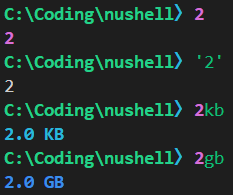
# User-Facing Changes
See above.
# Tests + Formatting
Don't forget to add tests that cover your changes.
Make sure you've run and fixed any issues with these commands:
- `cargo fmt --all -- --check` to check standard code formatting (`cargo
fmt --all` applies these changes)
- `cargo clippy --workspace -- -D warnings -D clippy::unwrap_used -A
clippy::needless_collect` to check that you're using the standard code
style
- `cargo test --workspace` to check that all tests pass
# After Submitting
If your PR had any user-facing changes, update [the
documentation](https://github.com/nushell/nushell.github.io) after the
PR is merged, if necessary. This will help us keep the docs up to date.
Co-authored-by: Reilly Wood <26268125+rgwood@users.noreply.github.com>
# Description

Purely for consistency, various remaining instances of `$nothing`
(almost all of which were in test code) have been changed to `null`.
Now, the only place that refers to `$nothing` is the parser code which
implements it.

# User-Facing Changes

The default config.nu now uses `null` in certain places where it used
`$nothing`.

# Tests + Formatting

Don't forget to add tests that cover your changes.

Make sure you've run and fixed any issues with these commands:

- `cargo fmt --all -- --check` to check standard code formatting (`cargo
fmt --all` applies these changes)
- `cargo clippy --workspace -- -D warnings -D clippy::unwrap_used -A
clippy::needless_collect` to check that you're using the standard code
style
- `cargo test --workspace` to check that all tests pass

# After Submitting

If your PR had any user-facing changes, update [the
documentation](https://github.com/nushell/nushell.github.io) after the
PR is merged, if necessary. This will help us keep the docs up to date.
# Description

When running `nu script.nu`, the `$env.FILE_PWD` will be set to the
directory where the script is.

Also makes the error message a bit nicer:
```
> target/debug/nu asdihga
Error: nu::shell::file_not_found (link)

  × File not found
   ╭─[source:1:1]
 1 │ nu
   · ▲
   · ╰── Could not access file 'asdihga': "No such file or directory (os error 2)"
   ╰────

```

# User-Facing Changes

`FILE_PWD` environment variable is available when running a script as
`nu script.nu`.

# Tests + Formatting

Don't forget to add tests that cover your changes.

Make sure you've run and fixed any issues with these commands:

- `cargo fmt --all -- --check` to check standard code formatting (`cargo
fmt --all` applies these changes)
- `cargo clippy --workspace -- -D warnings -D clippy::unwrap_used -A
clippy::needless_collect` to check that you're using the standard code
style
- `cargo test --workspace` to check that all tests pass

# After Submitting

If your PR had any user-facing changes, update [the
documentation](https://github.com/nushell/nushell.github.io) after the
PR is merged, if necessary. This will help us keep the docs up to date.
* start working on source-env

* WIP

* Get most tests working, still one to go

* Fix file-relative paths; Report parser error

* Fix merge conflicts; Restore source as deprecated

* Tests: Use source-env; Remove redundant tests

* Fmt

* Respect hidden env vars

* Fix file-relative eval for source-env

* Add file-relative eval to "overlay use"

* Use FILE_PWD only in source-env and "overlay use"

* Ignore new tests for now

This will be another issue

* Throw an error if setting FILE_PWD manually

* Fix source-related test failures

* Fix nu-check to respect FILE_PWD

* Fix corrupted spans in source-env shell errors

* Fix up some references to old source

* Remove deprecation message

* Re-introduce deleted tests

Co-authored-by: kubouch <kubouch@gmail.com>
* Add decimals to int when using `into string --decimals`

* Add tests for `into string` when converting int with `--decimals`

* Apply formatting

* Merge `into_str` test files

* Comment out unused code and add TODOs

* Use decimal separator depending on system locale

* Add test helper to run closure in different locale

* Add tests for int-to-string conversion using different locales

* Add utils function to get system locale

* Add panic message when locking mutex fails

* Catch and resume panic later to prevent Mutex poisoning when test fails

* Move test to `nu-test-support` to keep `nu-utils` free of `nu-*` dependencies

See https://github.com/nushell/nushell/pull/6085#issuecomment-1193131694

* Rename test support fn `with_fake_locale` to `with_locale_override`

* Move `get_system_locale()` to `locale` module

* Allow overriding locale with special env variable (when not in release)

* Use special env var to override locale during testing

* Allow callback to return a value in `with_locale_override()`

* Allow multiple options in `nu!` macro

* Allow to set locale as `nu!` macro option

* Use new `locale` option of `nu!` macro instead of `with_locale_override`

Using the `locale` options does not lock the `LOCALE_OVERRIDE_MUTEX`
mutex in `nu-test-support::locale_override` but instead calls the `nu`
command directly with the `NU_LOCALE_OVERRIDE` environment variable.
This allows for parallel test excecution.

* Fix: Add option identifier for `cwd` in usage of `nu!` macro

* Rely on `Display` trait for formatting `nu!` macro command

- Removed the `DisplayPath` trait
- Implement `Display` for `AbsolutePath`, `RelativePath` and
  `AbsoluteFile`

* Default to locale `en_US.UTF-8` for tests when using `nu!` macro

* Add doc comment to `nu!` macro

* Format code using `cargo fmt --all`

* Pass function directly instead of wrapping the call in a closure

https://rust-lang.github.io/rust-clippy/master/index.html#redundant_closure

* Pass function to `or_else()` instead of calling it inside `or()`

https://rust-lang.github.io/rust-clippy/master/index.html#or_fun_call

* Fix: Add option identifier for `cwd` in usage of `nu!` macro
 Piepmatz
